
Loading, please wait...
LOT 1211
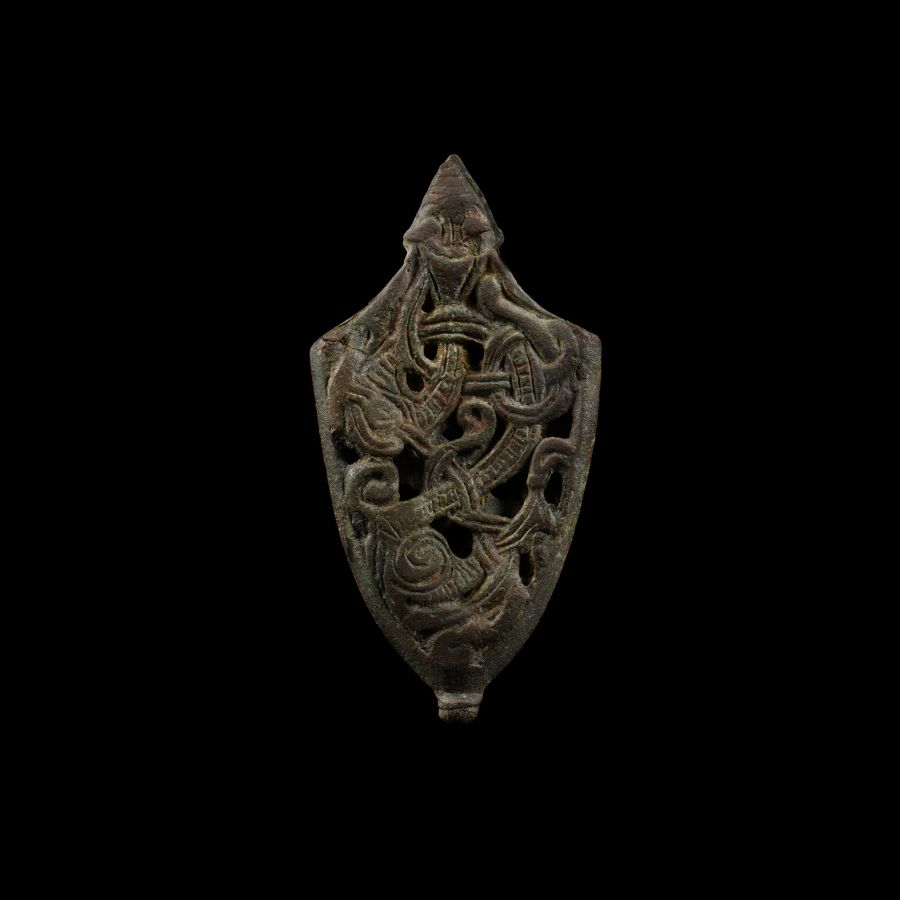
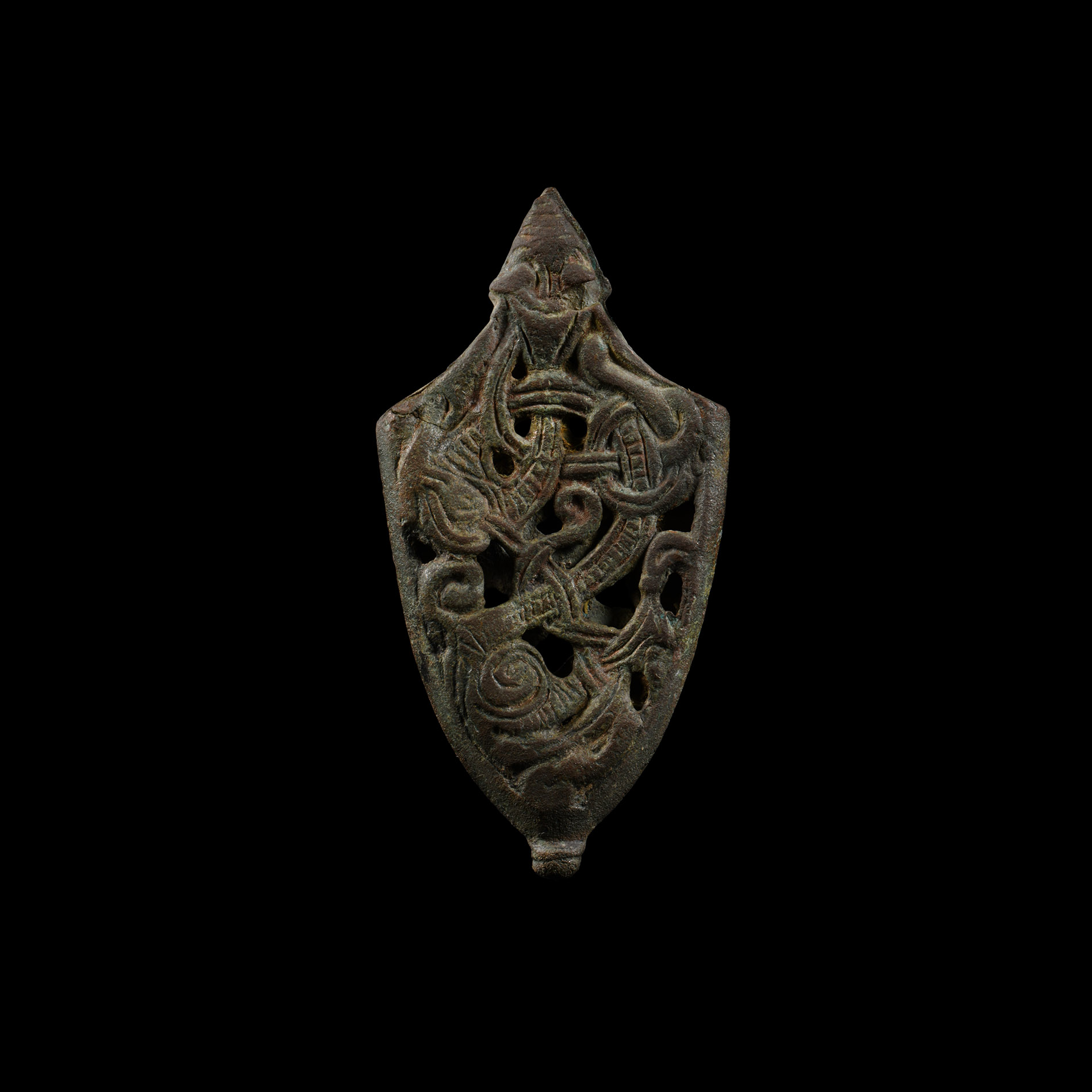
Viking Age Bronze Sword Scabbard Chape
9TH-11TH CENTURY A.D.
3 1/8 in. (34.9 grams, 80 mm).
Displaying openwork interlaced zoomorphs to both faces. [No Reserve]
ProvenanceFrom the collection of a North American gentleman, formed in the 1990s.
LiteratureCf. Yotov, V., The Vikings on the Balkans, Varna, 2003, p.10, for similar.
FootnotesThe decoration of one side shows a composition of interwoven dragons, with their heads in a side view (Jellinge Style). The ornamentation belongs to a group of the first two styles in P. Paulsen's classification, i.e. the 'German four legged beast'.
CONDITIONTimeLine Auctions follows a vetting process to ensure the authenticity and legality of all items, reinforcing our commitment to integrity and responsible trading. Each antiquity, antique, and coin lot undergoes thorough examination by a vetting committee of at least ten external specialists, professional trade association members, scientists, and archaeologists: Our Vetting Process
AUCTIONS:
TimeLine is a leading auction house specialising in antiquities, ancient art, collectables, natural history, coins, medals, and books. Our auctions offer museums, collectors, historians, and enthusiasts the opportunity to acquire unique and historically significant pieces.
-
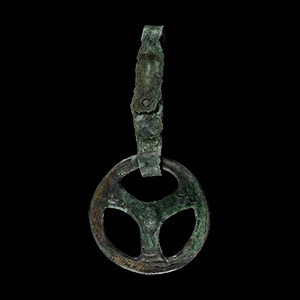
Viking Age Bronze Trefoil Strap Junction
9th-11th century A.D.Sold for (Inc. bp): £52
Composed of a slightly domed openwork body, the central arms with simple incised geometric detailing and central boss, free-running attachment bars above. 15.5 grams, 89 mm
From the collection of a North American gentleman, formed in the 1990s. -
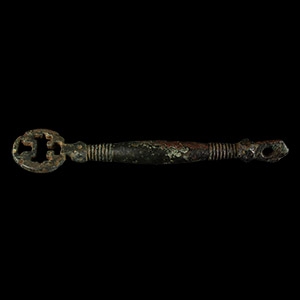
Viking Age Decorated Bronze Key
9th-11th century A.D.Estimate: £200 - 300 (‡+bp*)
Opening Bid: £100
Comprising a round-section tapering shank with ribbed collar to each end; polyhedral block to each end, quatrefoil bit with openwork design, pierced suspension lug. 43.8 grams, 11.6 cm
From the collection of a North American gentleman, formed in the 1990s. -
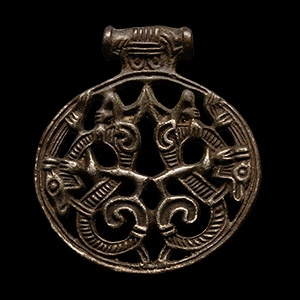
Viking Age Silver Gripping Beasts Pendant
10th century A.D.Estimate: £1,800 - 2,400 (‡+bp*)
Opening Bid: £1,000
Composed of an openwork discoid body with integral T-shaped tubular loop; raised gusseted rim enclosing a pair of S-shaped beasts with billetted bodies and comma-shaped tails, enmeshed gripping paws clutching the rim and their own bodies. 12.4 grams, 43 mm
Acquired on the European art market in the 1990s. Ex property of a German gentleman.
Despite the long period of overlap of Borre and Jellinge art styles, there are only few examples of their fusion. The principal and most popular motif of the Borre style displays an animal with gripping paws, usually enmeshed in a circular frame, while a typical Jellinge style beast is more slender with long, S-shaped body and ribbon decoration. The most famous example of a pendant featuring a fusion of these styles was found in a hoard from Vårby (Sweden), formed as a circle with a pair of Jellinge-style beasts with ribbon-shaped bodies in profile and heads with open jaws and extended tongues; however, each is provided with gripping paws and an enmeshed body, which are typical features of the Borre style. A few examples of these pendants were also found near the important trading settlement of Gnezdovo, near Smolensk, Russia.
