
Loading, please wait...
LOT 2049
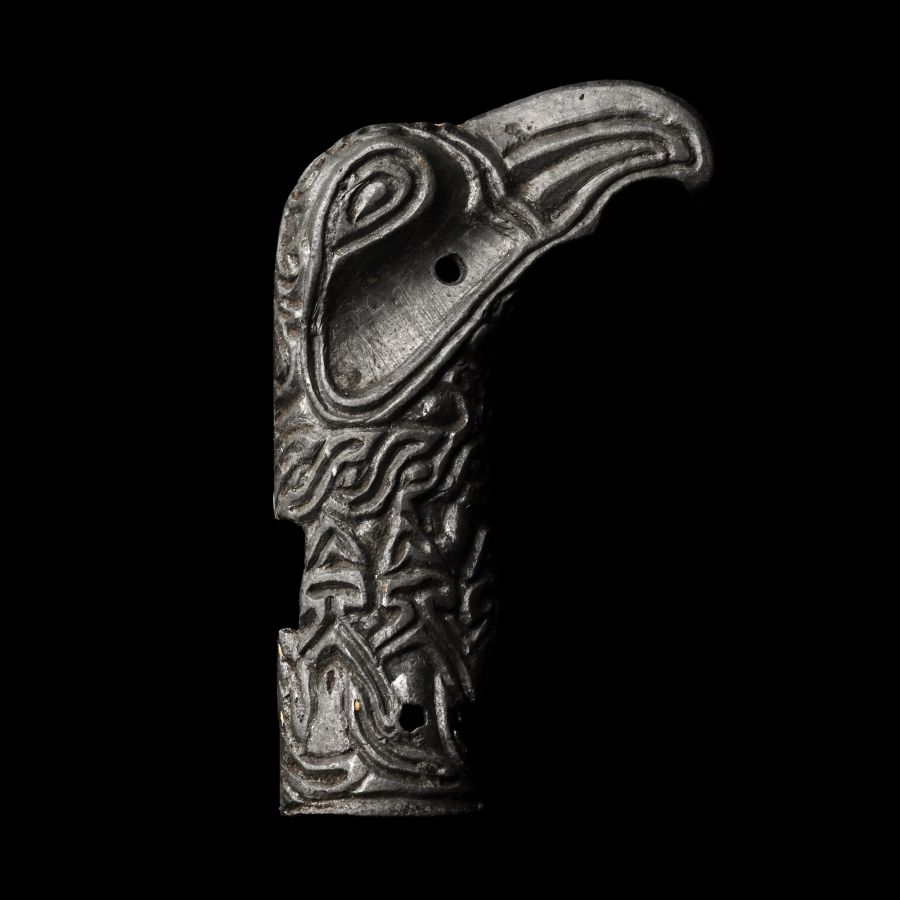
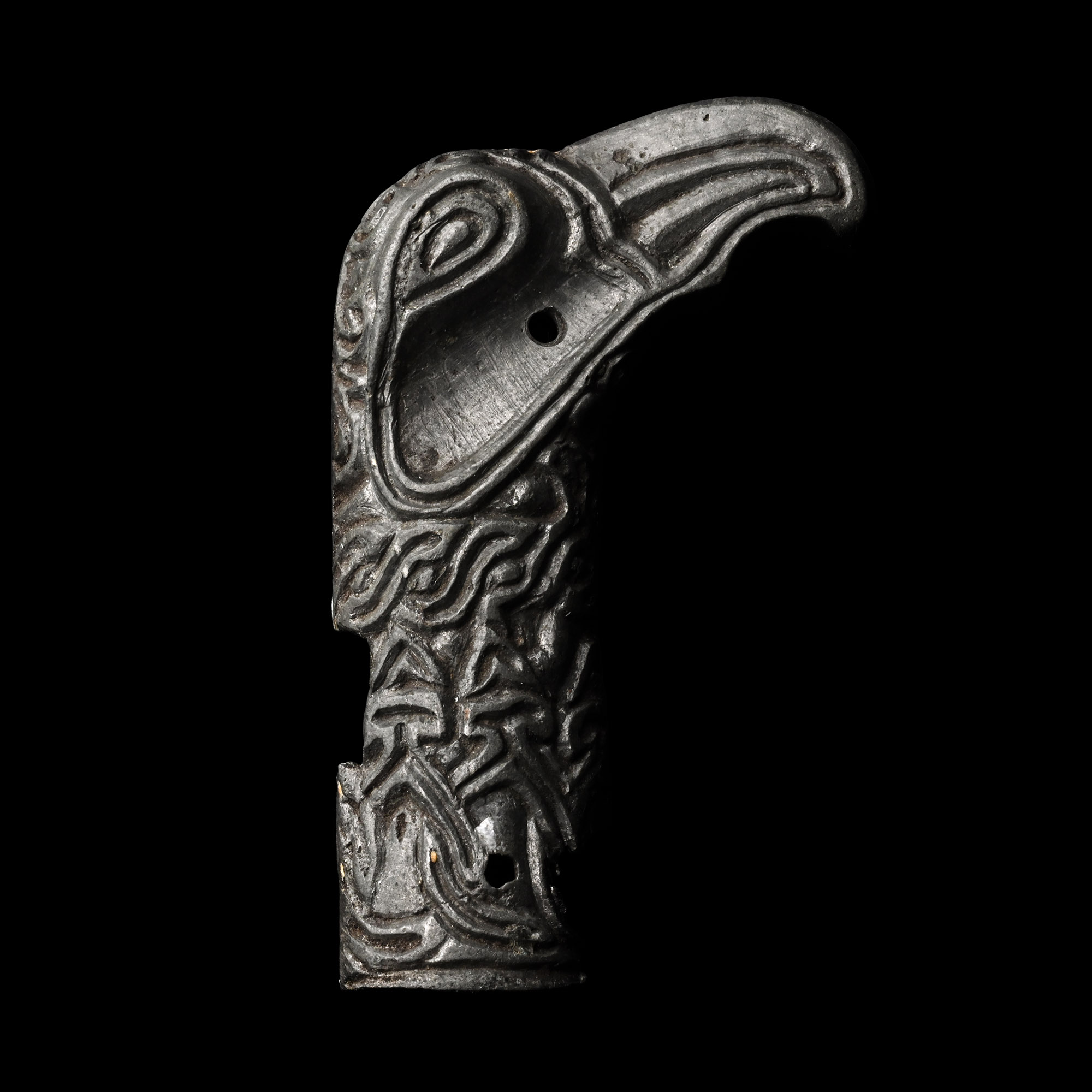
Viking Age Bronze Riding Crop Terminal Plate with Eagle's Head
CIRCA 9TH-10TH CENTURY A.D.
2 1/4 in. (14.19 grams, 56 mm).
Displaying stylised feather, head and beak detailing; pierced twice for attachment; hollow-formed front plate. [No Reserve]
ProvenancePrivate collection formed in Europe in the 1980s.
Westminster collection, central London, UK.
TimeLine Auctions follows a vetting process to ensure the authenticity and legality of all items, reinforcing our commitment to integrity and responsible trading. Each antiquity, antique, and coin lot undergoes thorough examination by a vetting committee of at least ten external specialists, professional trade association members, scientists, and archaeologists: Our Vetting Process
AUCTIONS:
TimeLine is a leading auction house specialising in antiquities, ancient art, collectables, natural history, coins, medals, and books. Our auctions offer museums, collectors, historians, and enthusiasts the opportunity to acquire unique and historically significant pieces.
LOT 2049
Viking Age Bronze Riding Crop Terminal Plate with Eagle's Head
Sold for (Inc. bp): £195
-
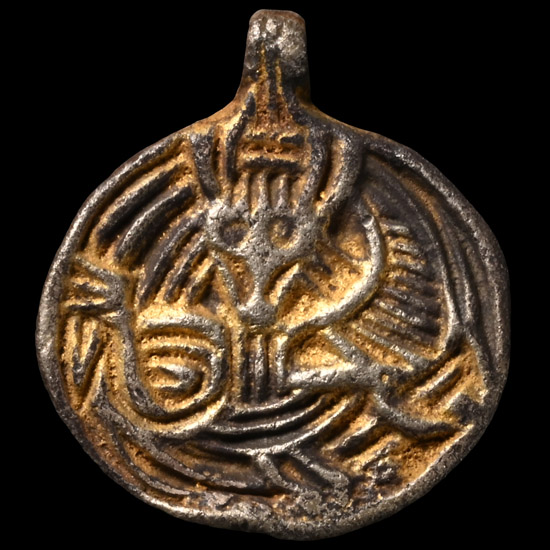
Viking Age Scandinavian Silver-Gilt Pendant with Mask
Circa 9th-11th century A.D.Sold for (Inc. bp): £975
With integral loop, border enclosing a low-relief image of a male facing mask between two birds embraced at the necks; Kipplingeberg type. 3.81 grams, 23 mm
Private collection formed in Europe in the 1980s. Westminster collection, central London, UK. -
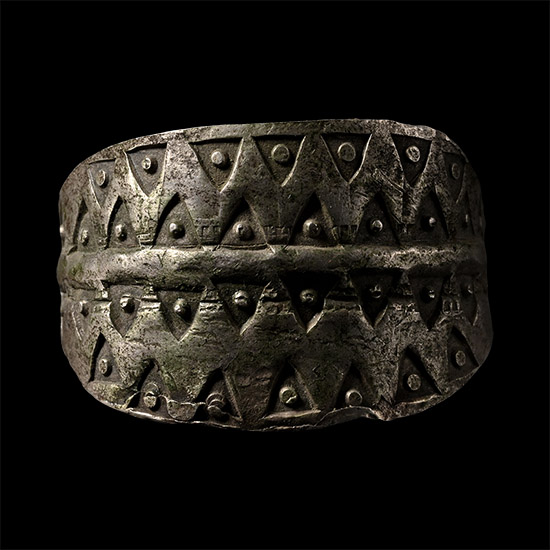
Viking Silver Stamped Ring
Circa 9th-11th century A.D.Sold for (Inc. bp): £780
Penannular type with the ends wound around the shank; median rib separating two rows of punched triangles. 7.55 grams, 27.75 mm overall, 24.61 x 22.53 mm internal diameter (approximate size British Z 1/2, USA 12 1/2, Europe 29.43, Japan 28)
From the private collection of a London gentleman, from his grandfather's collection formed before the early 1970s. -
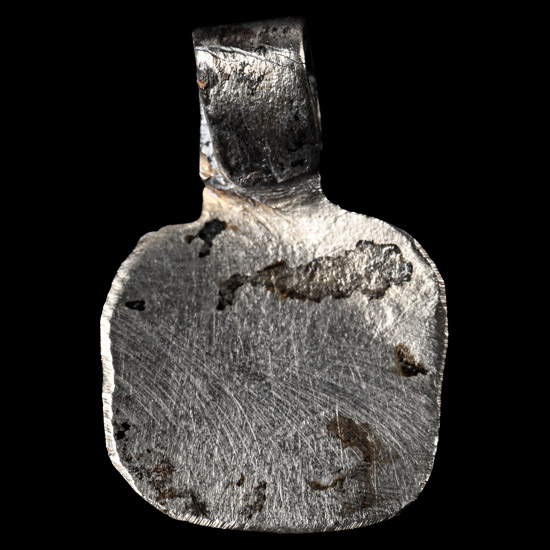
Viking Age Silver Amuletic Pendant
Circa 900-1100 A.D.Sold for (Inc. bp): £65
Flat-section rectangular disc with a large loop. 0.57 grams, 17 mm
From an ancient art collection, formerly acquired in the UK, European, and USA art markets, from pre-2000 collections. Property of a West Northamptonshire, UK, gentleman.
