
Loading, please wait...



LOT 1743
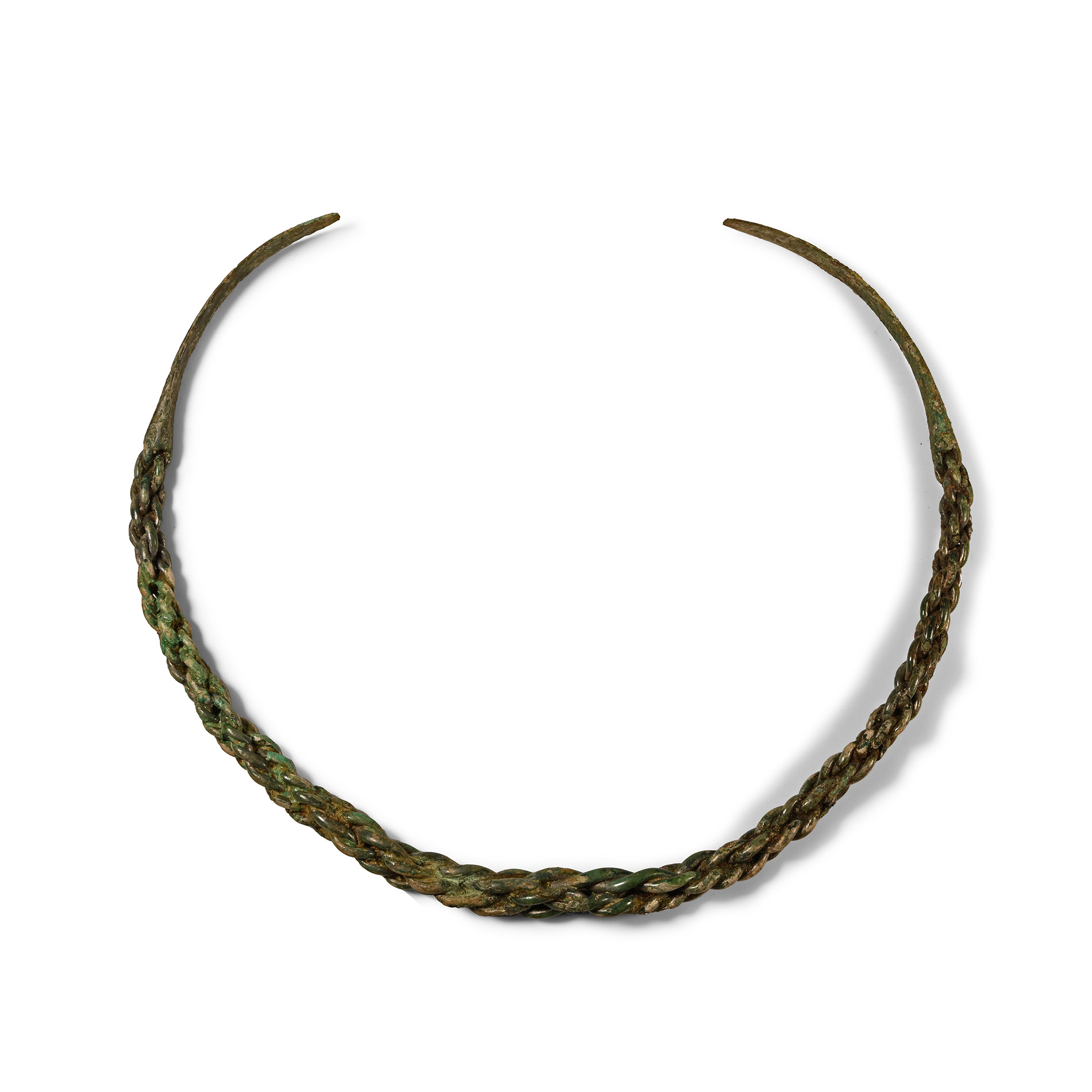
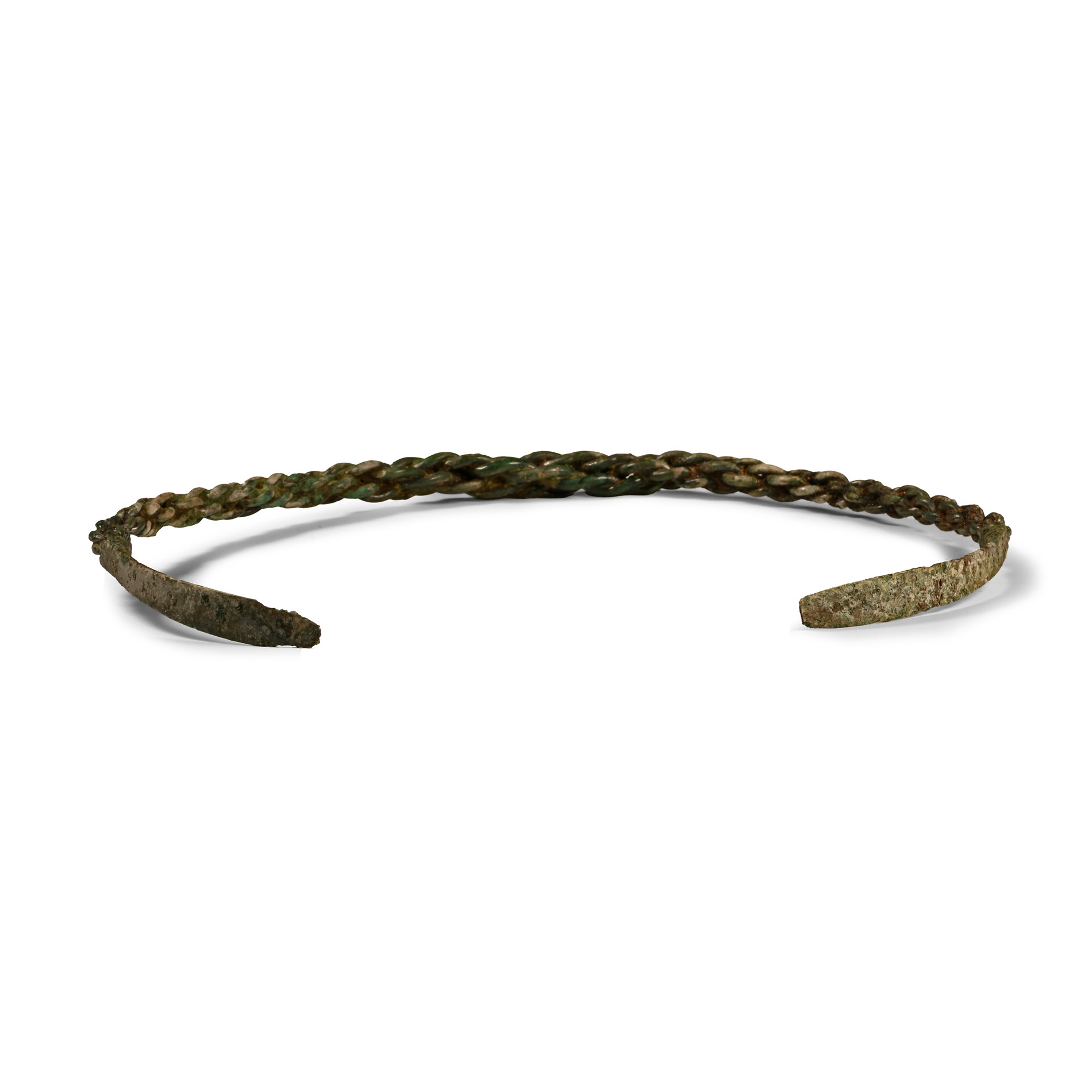
Viking Age Bronze Plaited Neck Torc
CIRCA 9TH-11TH CENTURY A.D.
8 in. (99 grams, 20.5 cm).
Comprising a braided shank developing to flat-section plaque finials. [No Reserve]
ProvenanceUK gallery, early 2000s.
CONDITIONTimeLine Auctions follows a vetting process to ensure the authenticity and legality of all items, reinforcing our commitment to integrity and responsible trading. Each antiquity, antique, and coin lot undergoes thorough examination by a vetting committee of at least ten external specialists, professional trade association members, scientists, and archaeologists: Our Vetting Process
AUCTIONS:
TimeLine is a leading auction house specialising in antiquities, ancient art, collectables, natural history, coins, medals, and books. Our auctions offer museums, collectors, historians, and enthusiasts the opportunity to acquire unique and historically significant pieces.
-

Viking Bronze Decorated Spoon
10th century A.D.Sold for (Inc. bp): £585
With shallow bowl and bulb to the neck, square-section handle with twisted shank, collar and knop finial; reverse of bowl with lattice motif; mounted on a custom-made stand. 15.4 grams, 13.5 cm (39 grams total, 14.7 cm including stand)
Acquired on the London art market, 1995. Private collection, London.
The lattice motif has parallels in the art of the Vars and other cultures of the Hungarian plain. Scandinavian contact with that part of Europe was maintained by trade and settlement along the Volga and other waterways. The city of Kyiv was ruled by Scandinavian Rus for some centuries. -

Viking Age Bronze Artefact Group
Circa 9th-11th century A.D.Sold for (Inc. bp): £46
Including spring coils with spike finial. 39.8 grams total, 66-86 mm
Acquired on the European art market since the early 2000s. From the private Northern Ireland collection of R.M. -
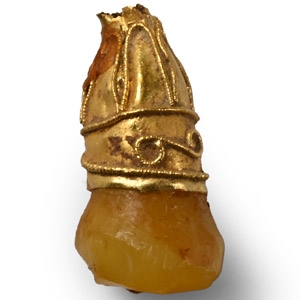
Viking Age Gold 'Elf Shot' Pendant
9th-11th century A.D. or earlierSold for (Inc. bp): £208
Decorated sheet gold sleeve, hoof-shaped stone mounted in the socket; loop absent. 0.18 grams, 10 mm
Acquired on the UK art market before 2000. Property of an Essex, UK, gentleman.
This amulet was believed to offer protection against 'Elfshot'. The attack of elves was believed responsible for mysterious suffering in men and livestock: sudden shooting pains localised to a particular area of the body, such as in rheumatism, arthritis or muscle stitches or cramps. Elves were thought to shoot darts or arrows where such pains had no obvious external cause. Belief in elfshot persisted into the 20th century in rural areas, and as proof country folk would sometimes find small arrowheads (the remains of Neolithic or Mesolithic flints, or naturally-occurring spear-shaped stones) that were believed to be the magical weapons that caused the afflictions. Belief in elfshot began in the Pagan Germanic period.
