
Loading, please wait...
LOT 1532
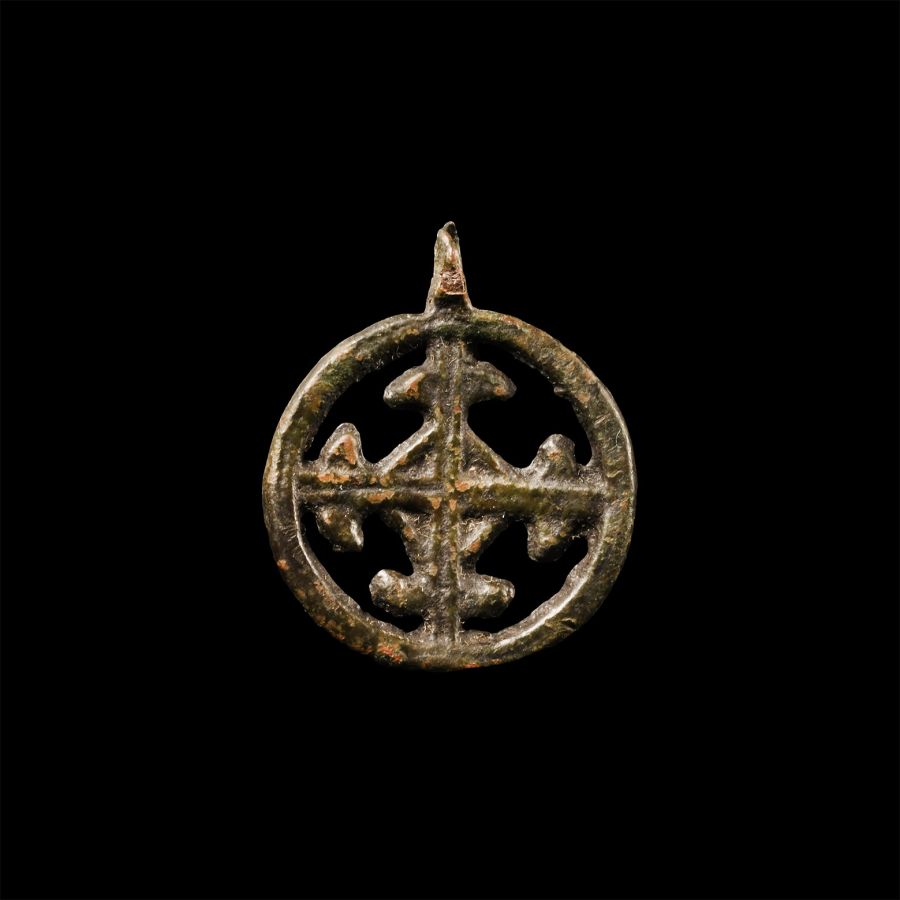
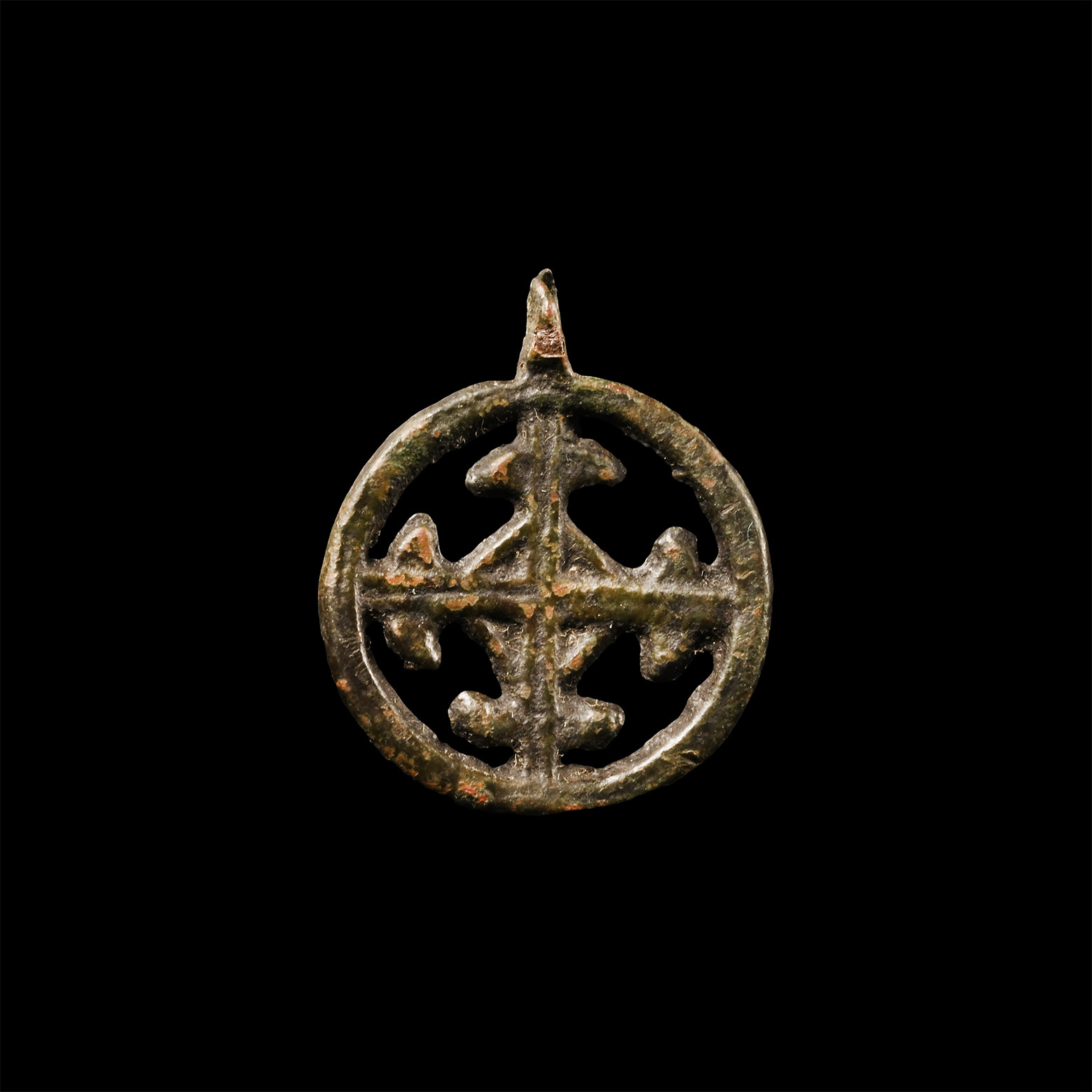
Viking Age Bronze Pendant with Cross
9TH-12TH CENTURY A.D.
1 in. (2.2 grams, 26 mm).
With four voids forming the cross-potent motif to the centre, pierced lug suspension. [No Reserve]
ProvenanceAcquired 1970s.
From the private collection of a Northern Ireland gentleman.
Ex private Merseyside, UK, collection.
Cf. Sedov, B.B., Finno-Ugri i Balti v Epokhi Srednevekovija, Moscow, 1987, pl.LVIII (19).
CONDITIONTimeLine Auctions follows a vetting process to ensure the authenticity and legality of all items, reinforcing our commitment to integrity and responsible trading. Each antiquity, antique, and coin lot undergoes thorough examination by a vetting committee of at least ten external specialists, professional trade association members, scientists, and archaeologists: Our Vetting Process
AUCTIONS:
TimeLine is a leading auction house specialising in antiquities, ancient art, collectables, natural history, coins, medals, and books. Our auctions offer museums, collectors, historians, and enthusiasts the opportunity to acquire unique and historically significant pieces.
-
Viking Age Bronze Mount Collection
6th-11th century A.D.Sold for (Inc. bp): £65
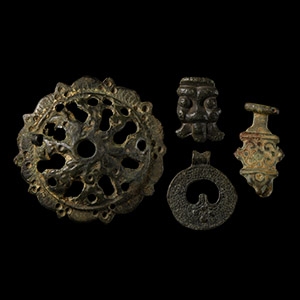
Comprising an openwork floral example with domed face; one with T-shaped top and scrolling ornament; stylised face from a cruciform brooch, likely the English equivalent of Thor; openwork lunate pendant with suspension loop. 30 grams total, 20-46 mm
From the collection of a North American gentleman, formed in the 1990s. -
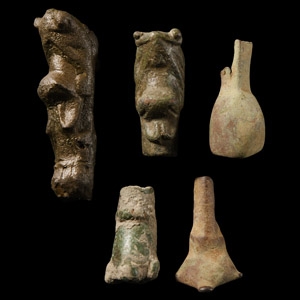
Viking Bronze Stirrup Terminal Collection
Circa 10th-11th century A.D.Sold for (Inc. bp): £65
Comprising one example accompanied by a Portable Antiquities Scheme record for an Anglo-Scandinavian terminal with a trilobate end resembling an animal's foot, William's Class L; accompanied by four additional terminals of different types, some with zoomorphic designs in relief. 103 grams total, 27-53 mm
Found Berkshire, UK. Accompanied by a copy of the British Museum's Portable Antiquities Scheme (PAS) report no.BERK-138BD4. -
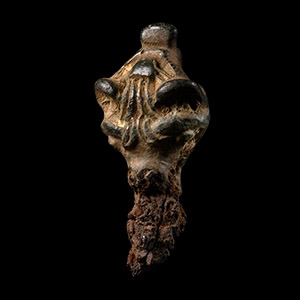
Viking Gilt Bronze Beast Head Finial
9th-11th century A.D.Sold for (Inc. bp): £65
Or a brooch, with remains of attachment mechanism to reverse; trace remains of gilding. 9.7 grams, 33 mm
From the collection of a North American gentleman, formed in the 1990s.
