
Loading, please wait...
LOT 1505
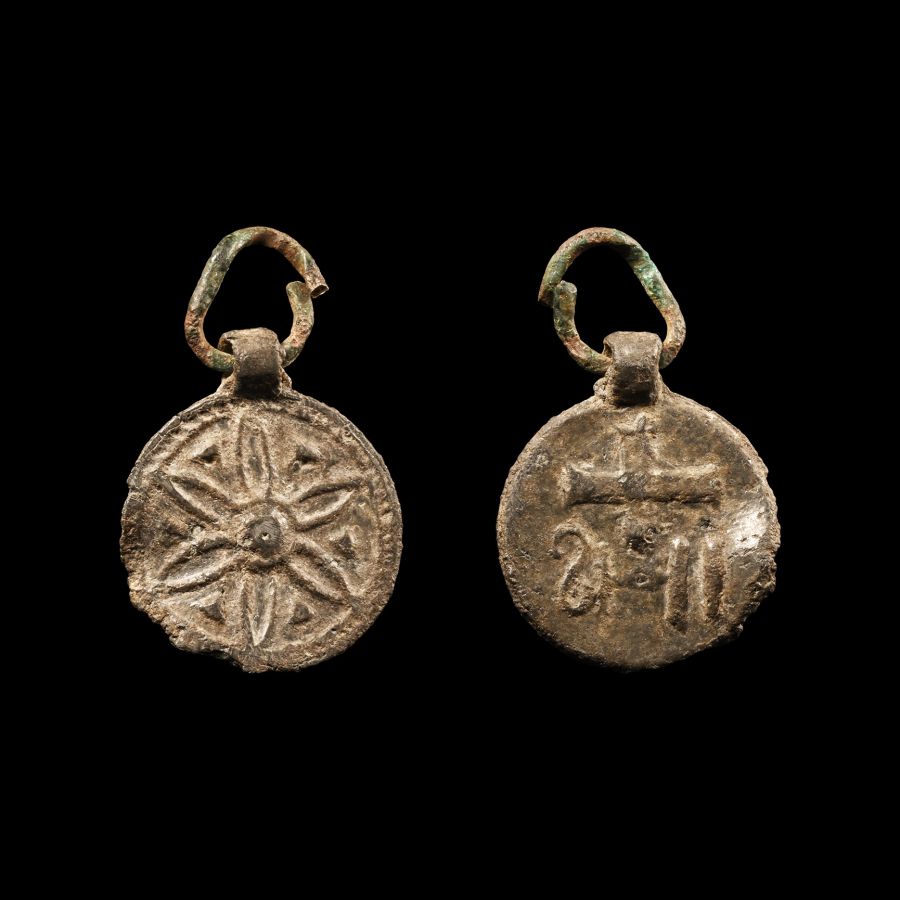
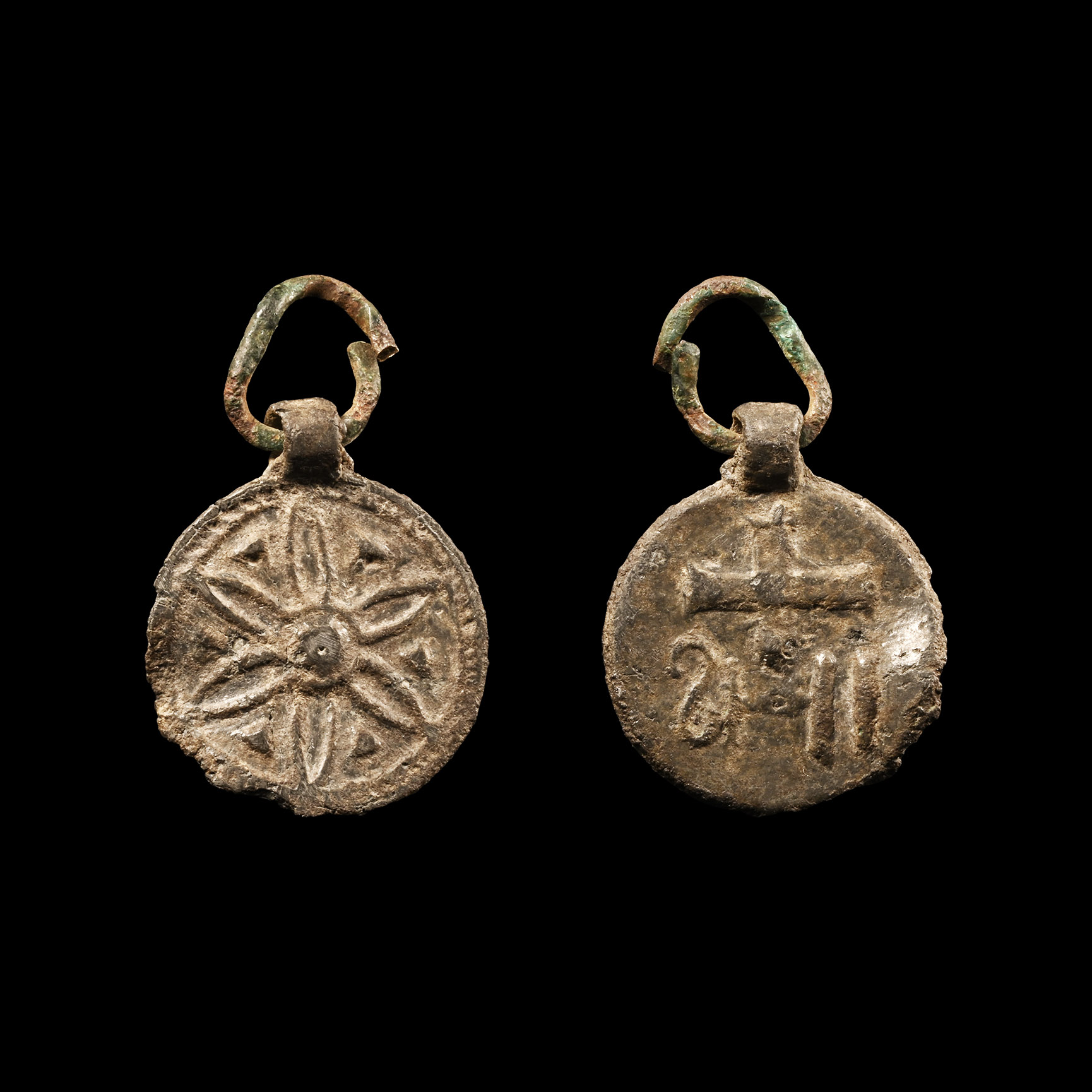
Viking Age Bronze Pendant with Cross and Flower
9TH-12TH CENTURY A.D.
1 1/4 in. (3.27 grams, 31 mm).
The discoid body displaying a cross to one face and a stylised flowerhead to the other; suspension loop and ring to the top edge. [No Reserve]
ProvenancePrivate collection formed 1960s-1980s.
Ex private Merseyside, UK, collection.
TimeLine Auctions follows a vetting process to ensure the authenticity and legality of all items, reinforcing our commitment to integrity and responsible trading. Each antiquity, antique, and coin lot undergoes thorough examination by a vetting committee of at least ten external specialists, professional trade association members, scientists, and archaeologists: Our Vetting Process
AUCTIONS:
TimeLine is a leading auction house specialising in antiquities, ancient art, collectables, natural history, coins, medals, and books. Our auctions offer museums, collectors, historians, and enthusiasts the opportunity to acquire unique and historically significant pieces.
-
Viking Age Silver-Gilt Mount with Figure
Circa 10th century A.D.Estimate: £800 - 1,000 (+bp*)
Opening Bid: £320
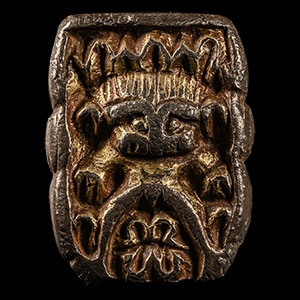
Sub-rectangular with lip to the reverse; high-relief facing figure with band of straight hair, omega-shaped brow and pellet eyes, stubby body and arms, splayed legs above two omega-shaped elements forming a rosette; mounting plate absent. 15.2 grams, 32 mm
Acquired early 1990s. From an East Anglian private collection.
The identity of the facing figure is unknown. There is an earlier, probably 9th century, Anglo-Saxon strap end with a facing nude male in low-relief which might be comparable (Thomas, 2007, item 8). -
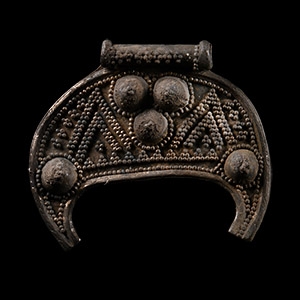
Viking Silver Filigree Lunar Pendant
9th-11th century A.D.Sold for (Inc. bp): £468
With applied filigree and granule detailing, five domes with granule clusters at the apex, tubular suspender, straps to the reverse. 4.21 grams, 33 mm
From the collection of a North American gentleman, formed in the 1990s. -
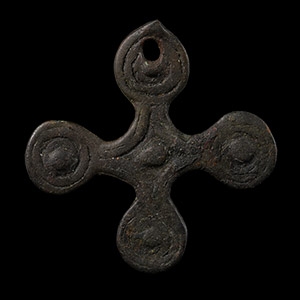
Viking Age Bronze Lobed Cross Pendant
9th-11th century A.D.Sold for (Inc. bp): £52
Cruciform in plan with lobe to end of each arm, inlaid pellet and ring to each arm and pellet to the centre; reinforcing cross to the reverse; pierced for suspension. 10.9 grams, 44 mm
From the collection of a North American gentleman, formed in the 1990s.
