
Loading, please wait...
LOT 1229
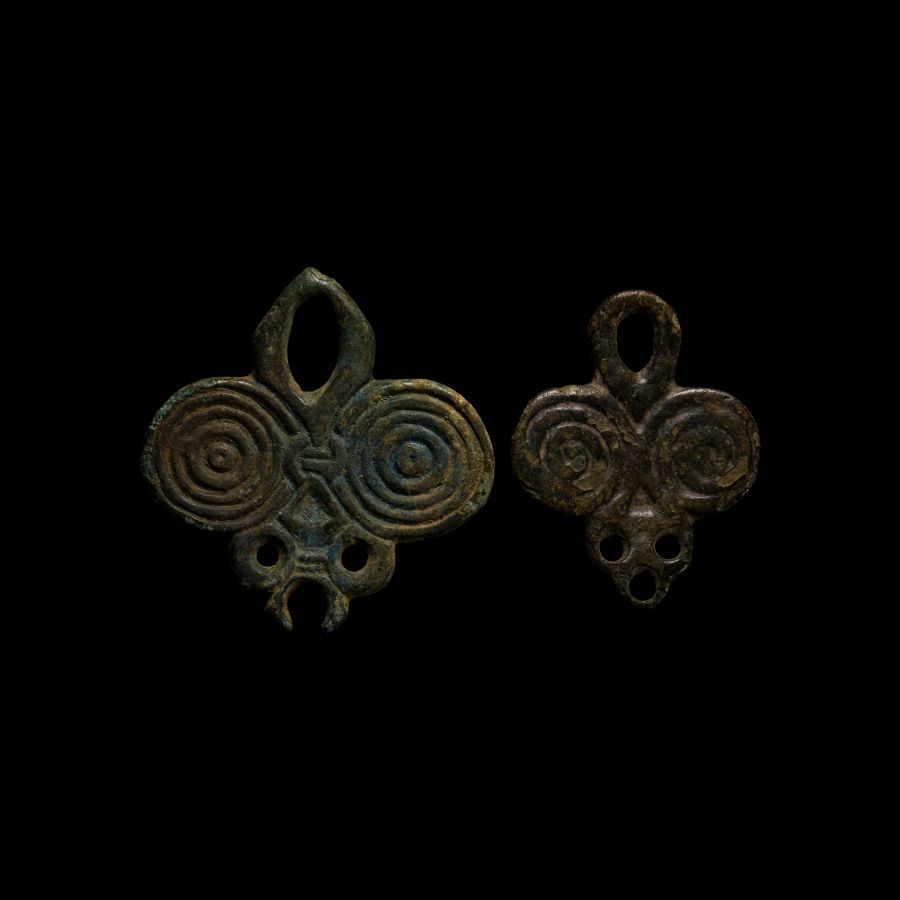
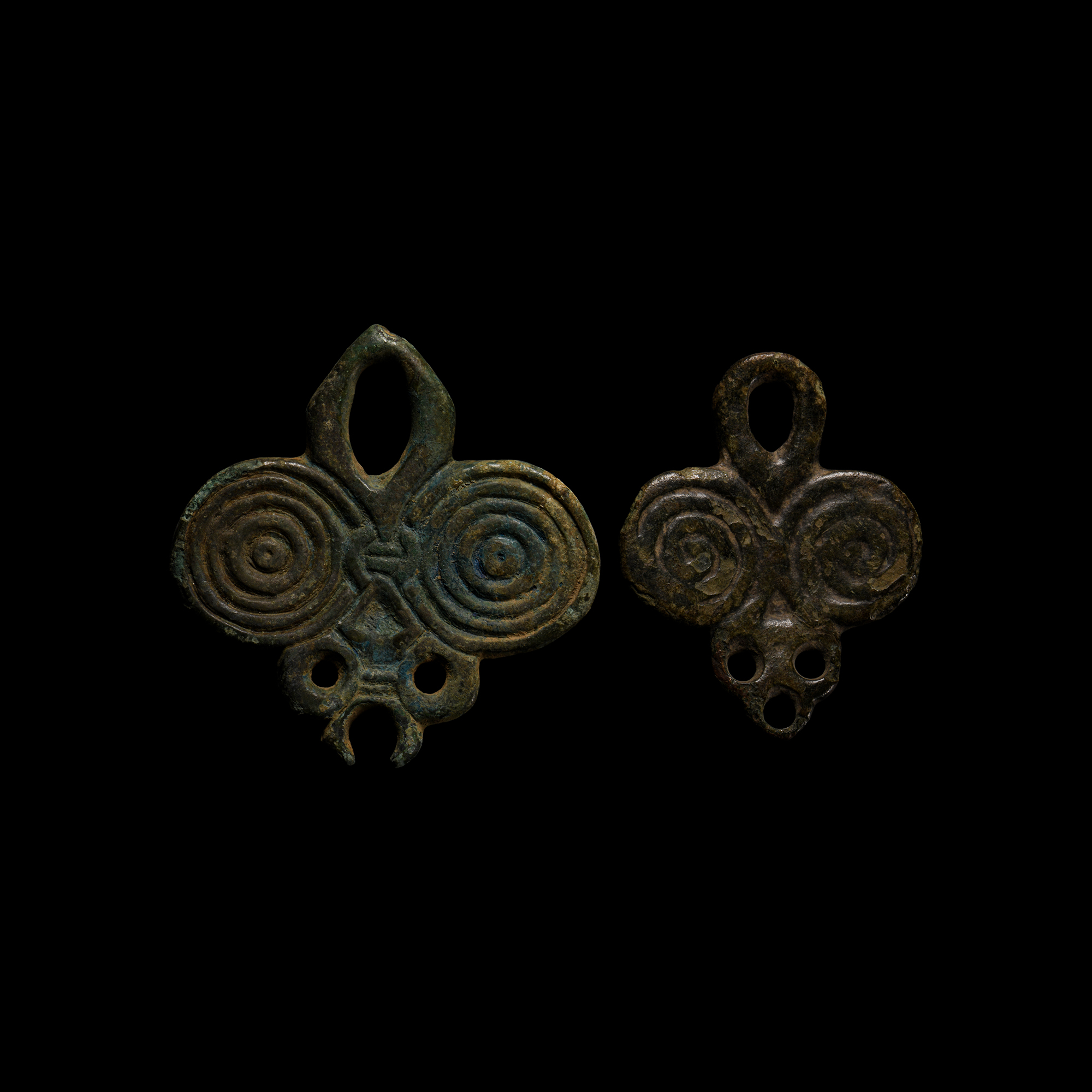
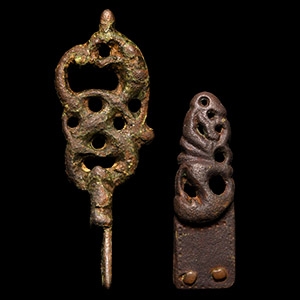
Viking Age Bronze Pendant Group
9TH-11TH CENTURY A.D.
1 5/8 - 1 3/4 in. (28 grams total, 42-46 mm).
Comprising two openwork zoomorphic pendants featuring large circular eyes. [2, No Reserve]
ProvenanceFrom the collection of a North American gentleman, formed in the 1990s.
CONDITIONTimeLine Auctions follows a vetting process to ensure the authenticity and legality of all items, reinforcing our commitment to integrity and responsible trading. Each antiquity, antique, and coin lot undergoes thorough examination by a vetting committee of at least ten external specialists, professional trade association members, scientists, and archaeologists: Our Vetting Process
AUCTIONS:
TimeLine is a leading auction house specialising in antiquities, ancient art, collectables, natural history, coins, medals, and books. Our auctions offer museums, collectors, historians, and enthusiasts the opportunity to acquire unique and historically significant pieces.
-
.jpg)
Merovingian Gold Cloisonne Pendant
Late 7th century A.D.Sold for (Inc. bp): £156
In the shape of a beetle(?) with a flat surface on one side, and divided on the other side by five spaces intended for cloisonne insertions; small loop for suspension in the upper part. 0.68 grams, 15 mm
From a late Japanese specialist collector, 1970-2000s.
The cloisonne decoration, probably of Constantinopolitan origin, became an object of local production in the Merovingian kingdom since the 6th century A.D. Decorative objects of this type are common in female and male tombs, intended for the ornamentation of belts and household objects, arms and clothing. -
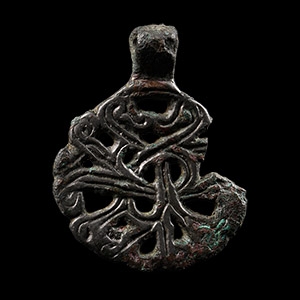
Viking Age Bronze Openwork Pendant
9th-11th century A.D.Sold for (Inc. bp): £46
Featuring a central trefoil knot and radiating bars forming an interlaced panel; suspension loop above; chipped. 7.335 grams, 38 mm
Ex property of a European gentleman living in Northamptonshire, before 2014. From the collection of a North American gentleman. -
Viking Age Bronze Dragon Strap End Collection
9th-11th century A.D.Sold for (Inc. bp): £117
Each with an openwork entwined beast; two rivets to one, a pierced mounting arm to the other. 25.5 grams total, 43-61 mm
From the collection of a North American gentleman, formed in the 1990s.
