
Loading, please wait...
LOT 1275
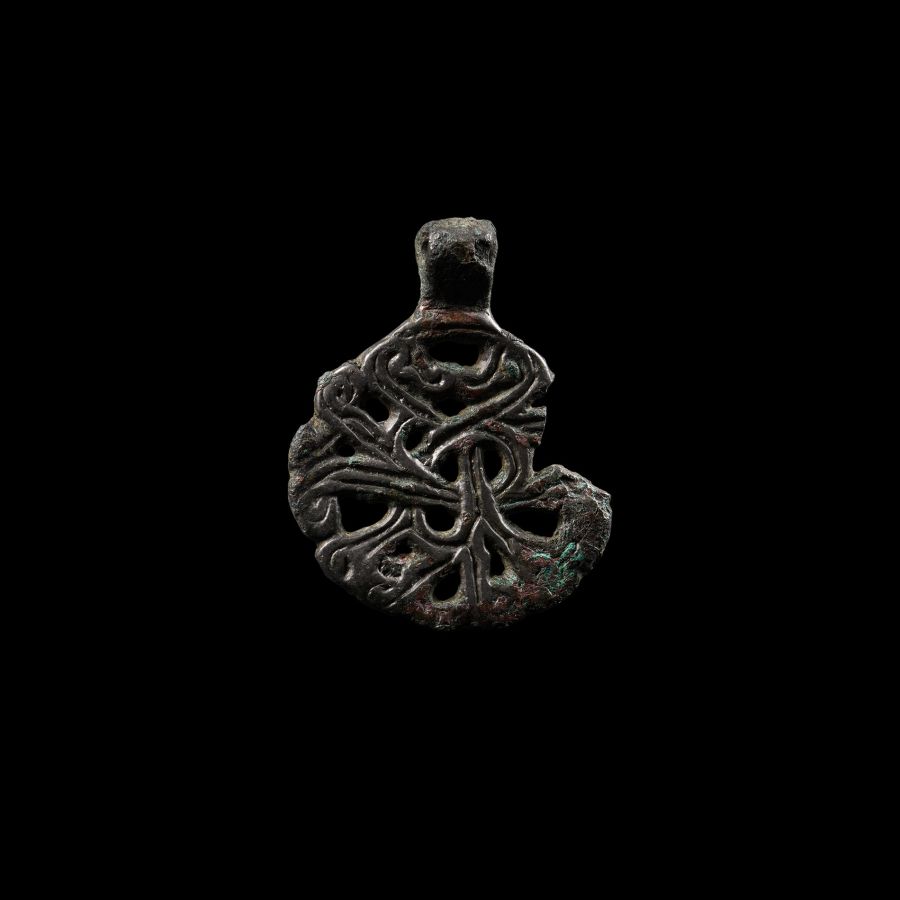
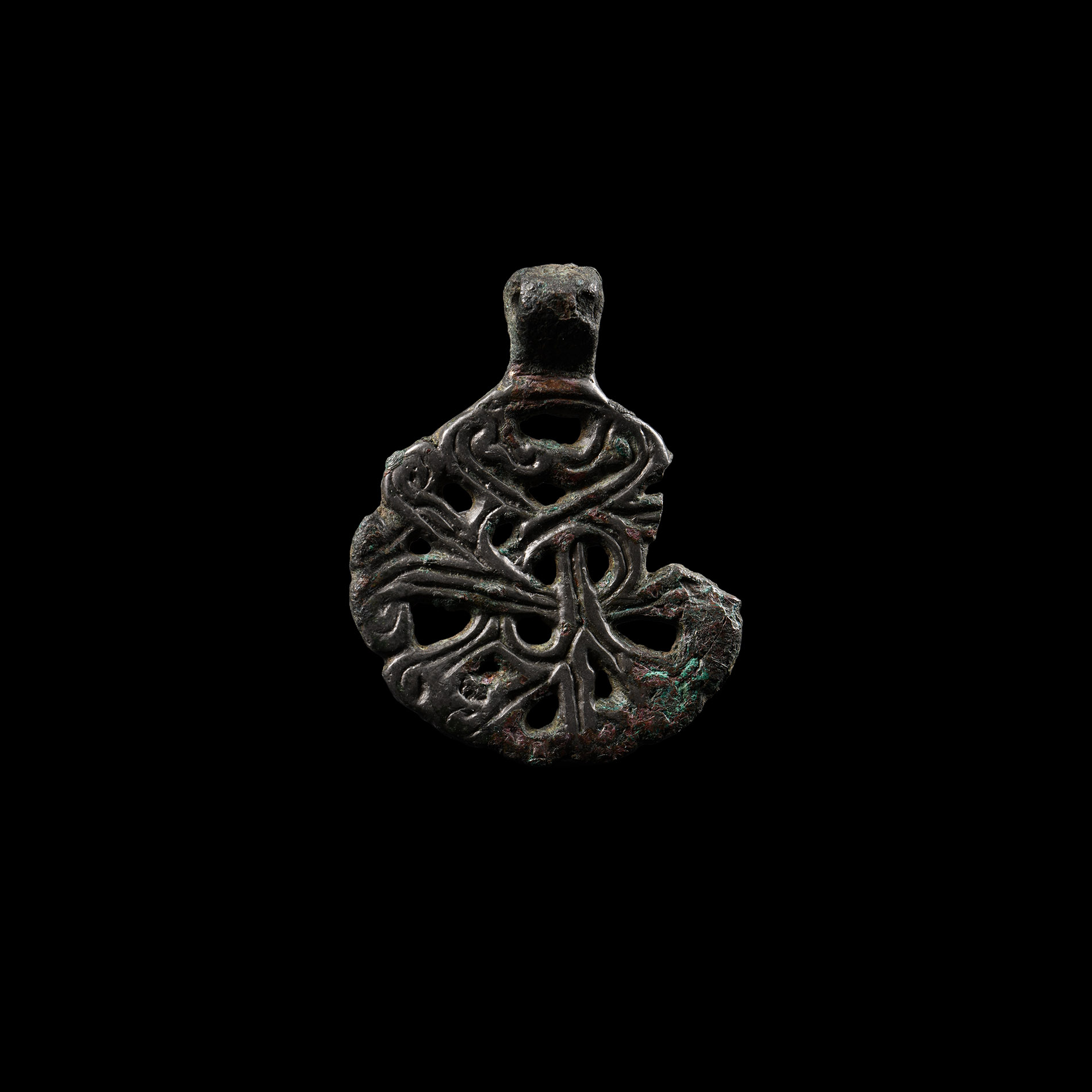
Viking Age Bronze Openwork Pendant
9TH-11TH CENTURY A.D.
1 1/2 in. (7.335 grams, 38 mm).
Featuring a central trefoil knot and radiating bars forming an interlaced panel; suspension loop above; chipped. [No Reserve]
ProvenanceEx property of a European gentleman living in Northamptonshire, before 2014.
From the collection of a North American gentleman.
TimeLine Auctions follows a vetting process to ensure the authenticity and legality of all items, reinforcing our commitment to integrity and responsible trading. Each antiquity, antique, and coin lot undergoes thorough examination by a vetting committee of at least ten external specialists, professional trade association members, scientists, and archaeologists: Our Vetting Process
AUCTIONS:
TimeLine is a leading auction house specialising in antiquities, ancient art, collectables, natural history, coins, medals, and books. Our auctions offer museums, collectors, historians, and enthusiasts the opportunity to acquire unique and historically significant pieces.
-
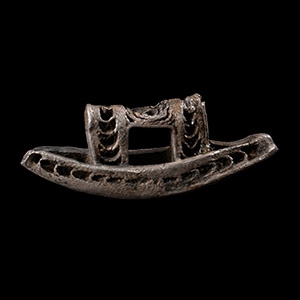
Viking Age Silver Boat-Shaped Pendant
9th-11th century A.D.Sold for (Inc. bp): £65
Composed of a shallow crescentic body and openwork filigree loop. 1.47 grams, 24 mm
From the collection of a North American gentleman, formed in the 1990s. -
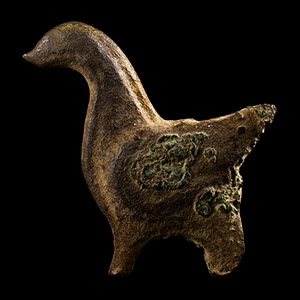
Viking Age Bronze Bird Brooch
10th-11th century A.D.Sold for (Inc. bp): £104
Modelled facing left, stylised wing and body detailing; remains of a fitting element to reverse. 6.06 grams, 30 mm
From the collection of a North American gentleman, formed in the 1990s.
Bird brooches from the late(r) Viking era have been found in Scandinavia as well in areas occupied and inhabited by the Vikings and Norsemen within England, in Anglo-Scandinavian and Anglo-Saxon contexts. These so-called bird shaped brooches can be dated to the 11th and even early 12th century. Stylistically the brooch here cannot be categorised as a distinct 'Viking style' such as the late Urnes style, although some types of other bird shaped brooches shows us connections to the Ringerike and Urnes style. The decoration and form of the bird on the brooch here is more influenced by the development of Romanesque styles spreading from the Continent into Scandinavian art, like the style of a bird, depicted on the right corner next to the door portal of Rimsø Kirke, Jylland, completed in 1150 A.D. -
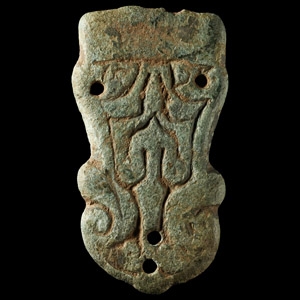
Baltic Viking Bronze Strap End
9th-11th century A.D.Sold for (Inc. bp): £52
Tongue-shaped plaque with fixing lug to the reverse and four rivet-holes; Byzantine-inspired design of fleshy vegetation within segmented border. 18.8 grams, 51 mm
UK private collection formed before 2000. Ex North London, UK, gallery.
