
Loading, please wait...
LOT 2060
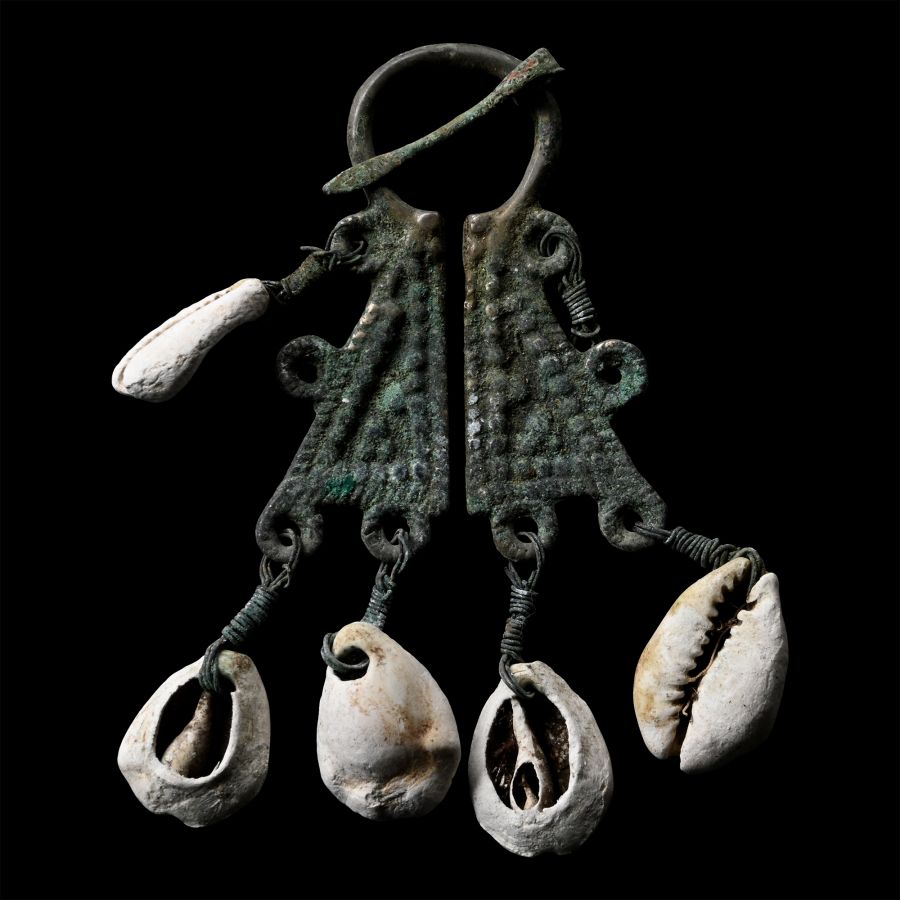
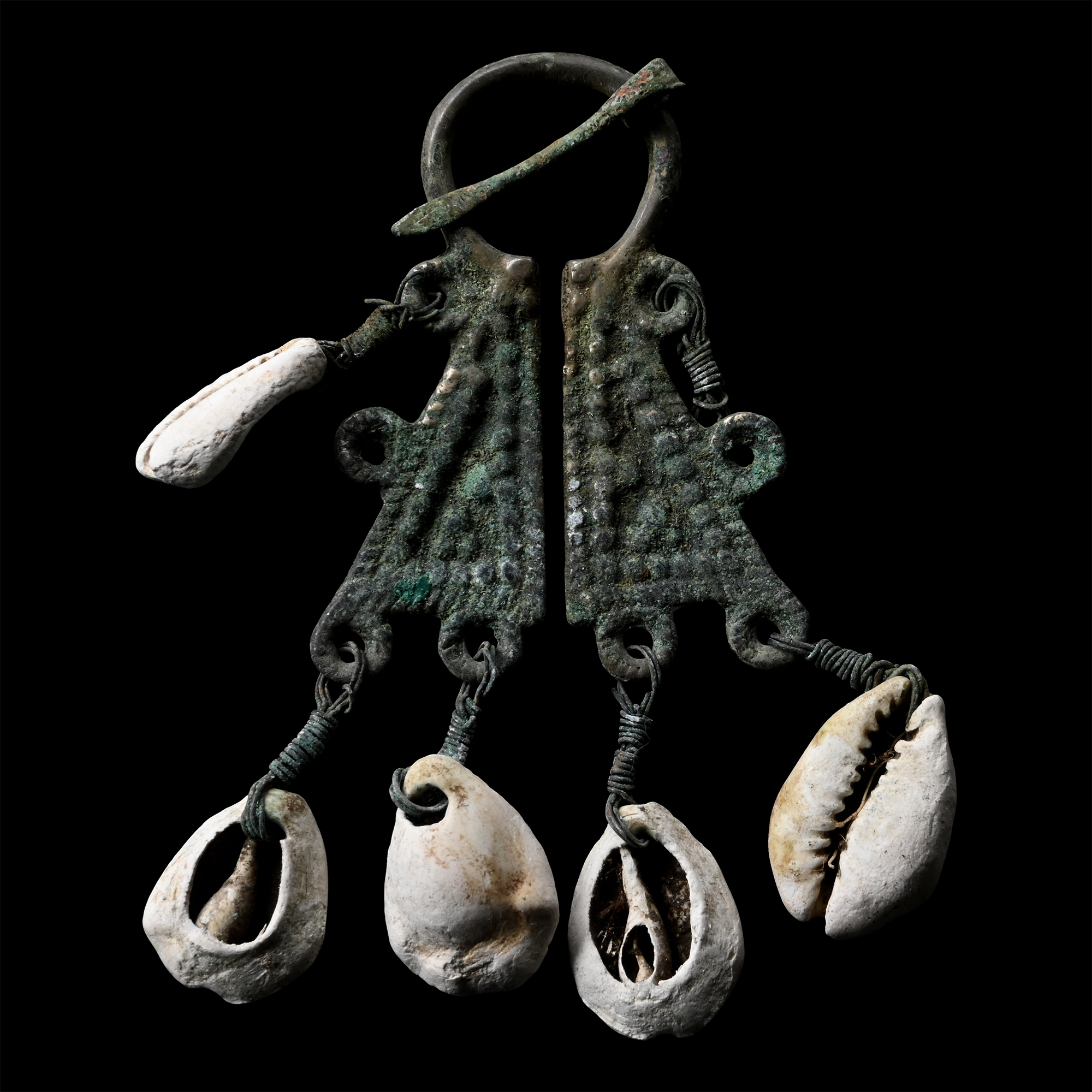
Viking Age Bronze Omega Brooch with Shell Dangles
MORDVINIAN, 12TH-14TH CENTURY A.D.
3 3/8 in. (20.8 grams, 85 mm).
A flat-section omega brooch comprising a penannular band and two trapezoidal plates; an articulate tongue; plates with raised pellets and four pierced lugs to the outer edges; cowrie shells suspended from the lugs beneath. [No Reserve]
ProvenanceFrom the private collection of a European gentleman (1942-2024), formed since the 1970s.
LiteratureSee Sedov, B.B., Finno-Ugri i Balti v Epokhi Srednevekovija, Moscow, 1987, pl. XLIV, item 11.
CONDITIONTimeLine Auctions follows a vetting process to ensure the authenticity and legality of all items, reinforcing our commitment to integrity and responsible trading. Each antiquity, antique, and coin lot undergoes thorough examination by a vetting committee of at least ten external specialists, professional trade association members, scientists, and archaeologists: Our Vetting Process
AUCTIONS:
TimeLine is a leading auction house specialising in antiquities, ancient art, collectables, natural history, coins, medals, and books. Our auctions offer museums, collectors, historians, and enthusiasts the opportunity to acquire unique and historically significant pieces.
-
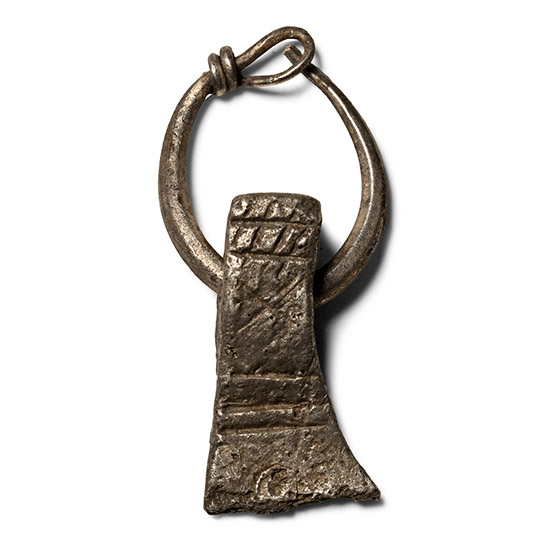
Viking Age Silver Axehead Pendant
Circa 9th-11th century A.D.Sold for (Inc. bp): £260
Axe-shaped pendant with hammer extension and linear decoration, round-section suspension loop threaded through the socket. 4.34 grams, 30 mm
Ex German art market, 2000s. Acquired from an EU collector living in London. From the collection of a Surrey, UK, gentleman. -
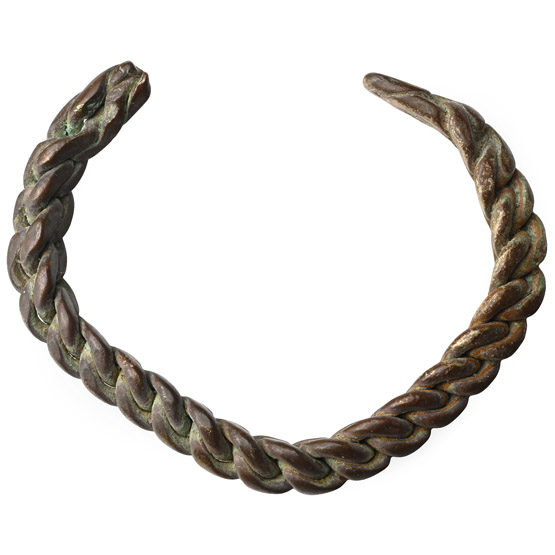
Viking Age Bronze Twisted Bar Bracelet
Circa 9th-11th century A.D.Sold for (Inc. bp): £85
Two rods tightly twisted and curved into a penannular shape, hammered flat towards the ends. 29.9 grams, 67 mm
Ex Arundel, East Sussex, UK, private collection, 1970s-2000. -
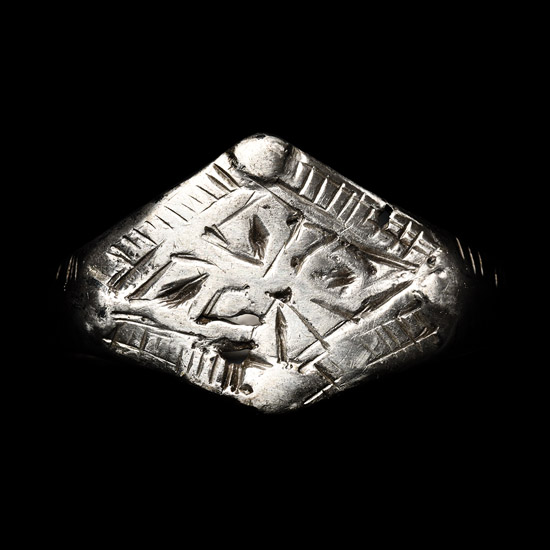
Viking Age Silver Ring
Circa 900-1100 A.D.Sold for (Inc. bp): £124
Comprising a D-section hoop and a lozenge-shaped bezel with four raised bosses and a central cross motif within a hatched border. 2.29 grams, 23.05 mm overall, 20.63 mm internal diameter (approximate size British S1/2, USA 9 1/4, Europe 20.63, Japan 19)
Ex property of an Oxfordshire art professional; previously in an old British collection, formed in the 1980s. Property of a West Northamptonshire, UK, gentleman.
