
Loading, please wait...
LOT 1377
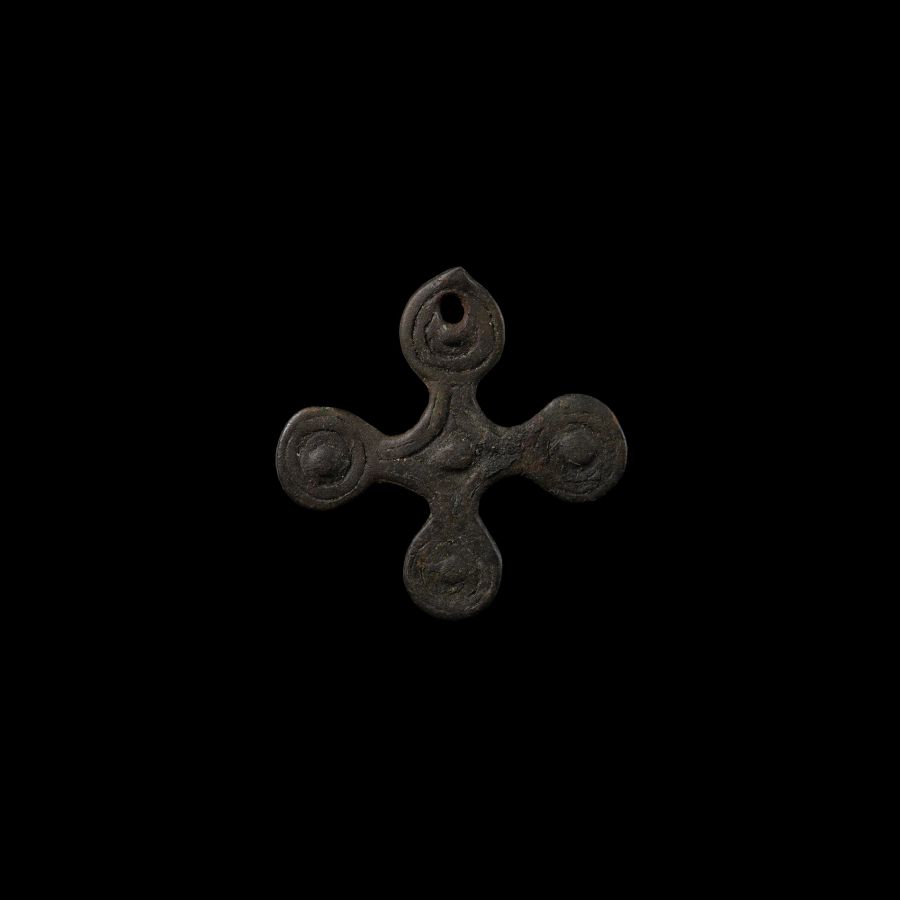
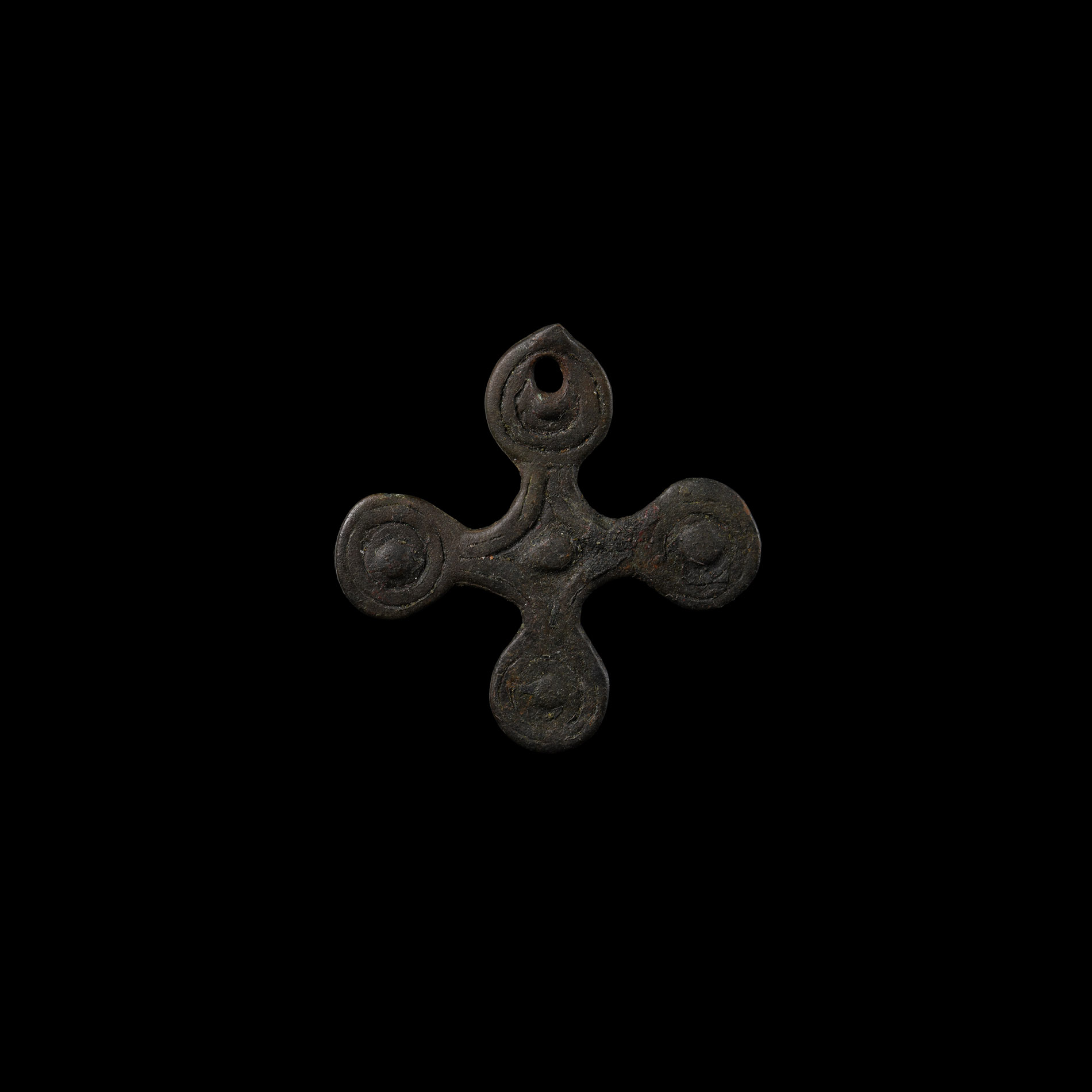
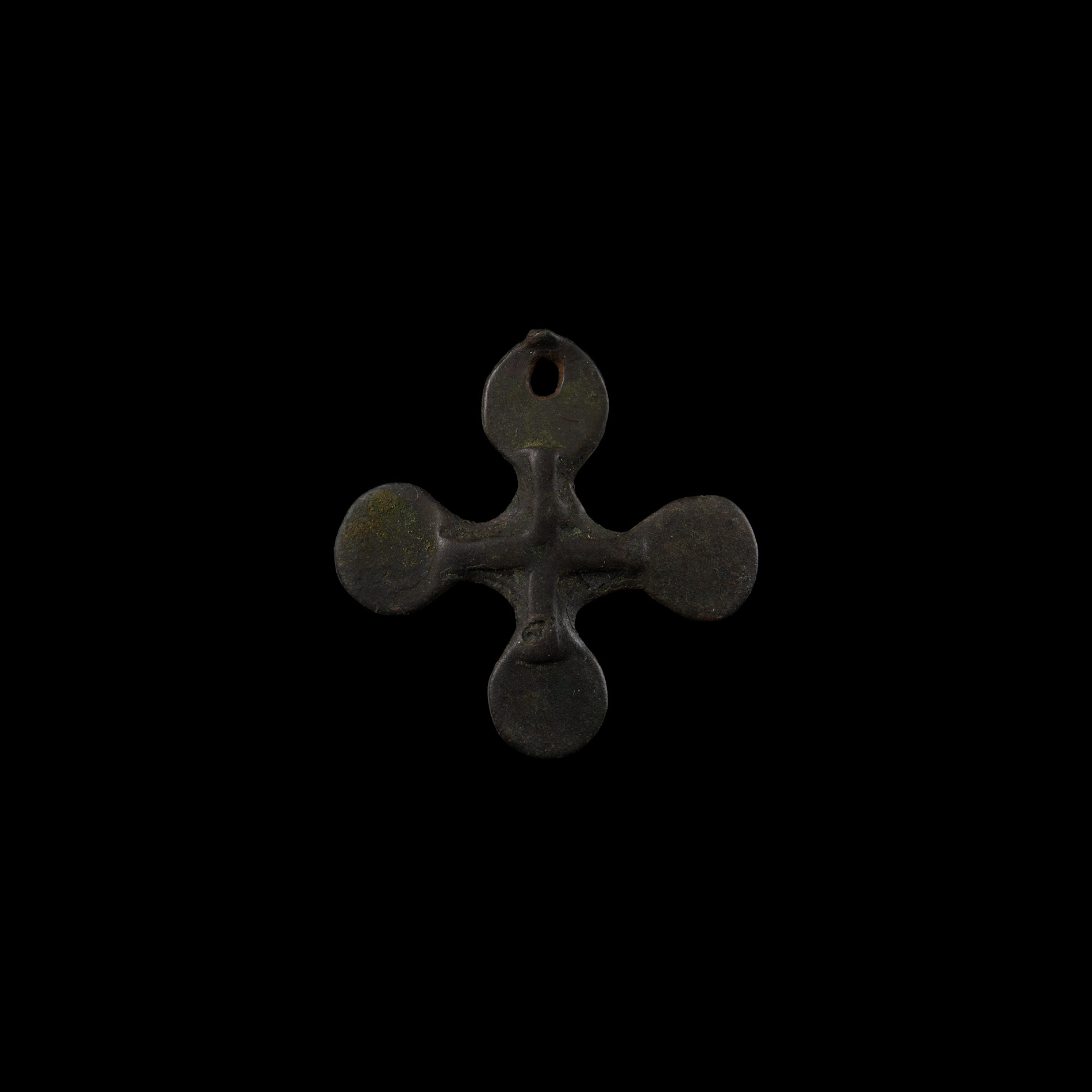
Viking Age Bronze Lobed Cross Pendant
9TH-11TH CENTURY A.D.
1 3/4 in. (10.9 grams, 44 mm).
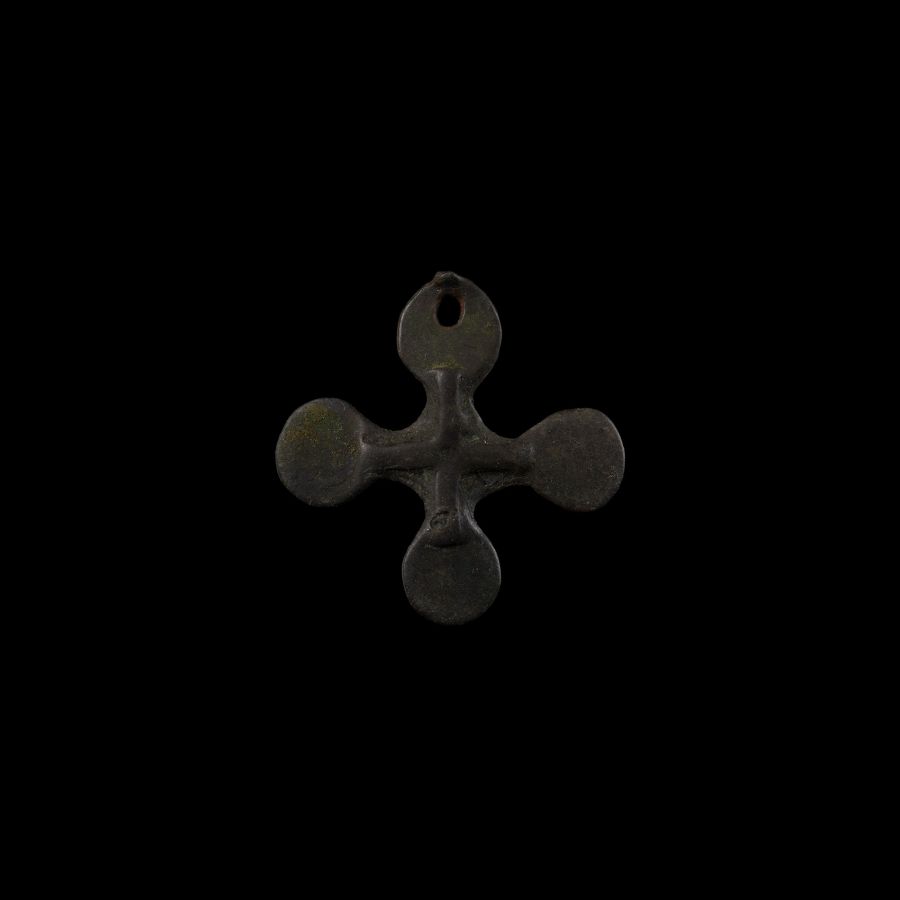
Cruciform in plan with lobe to end of each arm, inlaid pellet and ring to each arm and pellet to the centre; reinforcing cross to the reverse; pierced for suspension. [No Reserve]
ProvenanceFrom the collection of a North American gentleman, formed in the 1990s.
LiteratureCf. Hammond, B., British Artefacts vol.2 - Middle Saxon & Viking, Witham, 2010, item 1.1.6-e.
CONDITIONTimeLine Auctions follows a vetting process to ensure the authenticity and legality of all items, reinforcing our commitment to integrity and responsible trading. Each antiquity, antique, and coin lot undergoes thorough examination by a vetting committee of at least ten external specialists, professional trade association members, scientists, and archaeologists: Our Vetting Process
AUCTIONS:
TimeLine is a leading auction house specialising in antiquities, ancient art, collectables, natural history, coins, medals, and books. Our auctions offer museums, collectors, historians, and enthusiasts the opportunity to acquire unique and historically significant pieces.
-
Viking Silver Zoomorphic Hook Fastener
9th-11th century A.D.Sold for (Inc. bp): £78
Of sub-triangular shape, incised segmented border; pierced. 2.24 grams, 31 mm
From the collection of a North American gentleman, formed in the 1990s. -
Viking Age Cowrie Shell Pendant Collection
Circa 9th-11th century A.D.Sold for (Inc. bp): £46
Comprising a group of natural shells with domes cut away to form pendants or beads. 48 grams total, 13-21 mm
UK gallery, early 2000s. -
.jpg)
Viking Age Bronze Knife Handle
10th-11th century A.D.Sold for (Inc. bp): £156
With tubular bronze handle and low-relief interlaced geometric designs. 58 grams, 10.3 cm
From the collection of a North American gentleman, formed in the 1990s.
Ornamented bronze knife handles became an integral part of medieval culture also in Finno-Ugric lands. The blades of the knives were in iron, with bronze handles, and had an oval cross-section slightly expanding upwards. In a certain number of female burials, knives were found in sheaths with a bronze lamellar lining, decorated with complex floral ornamentation.
