
Loading, please wait...
LOT 1222
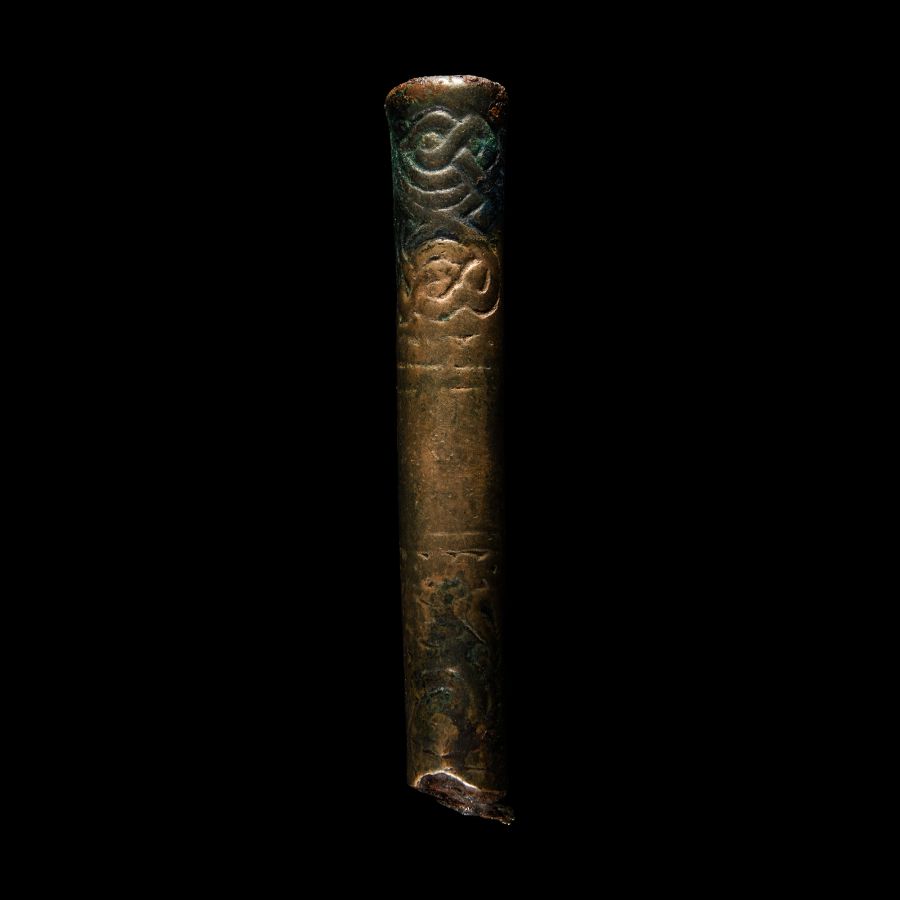
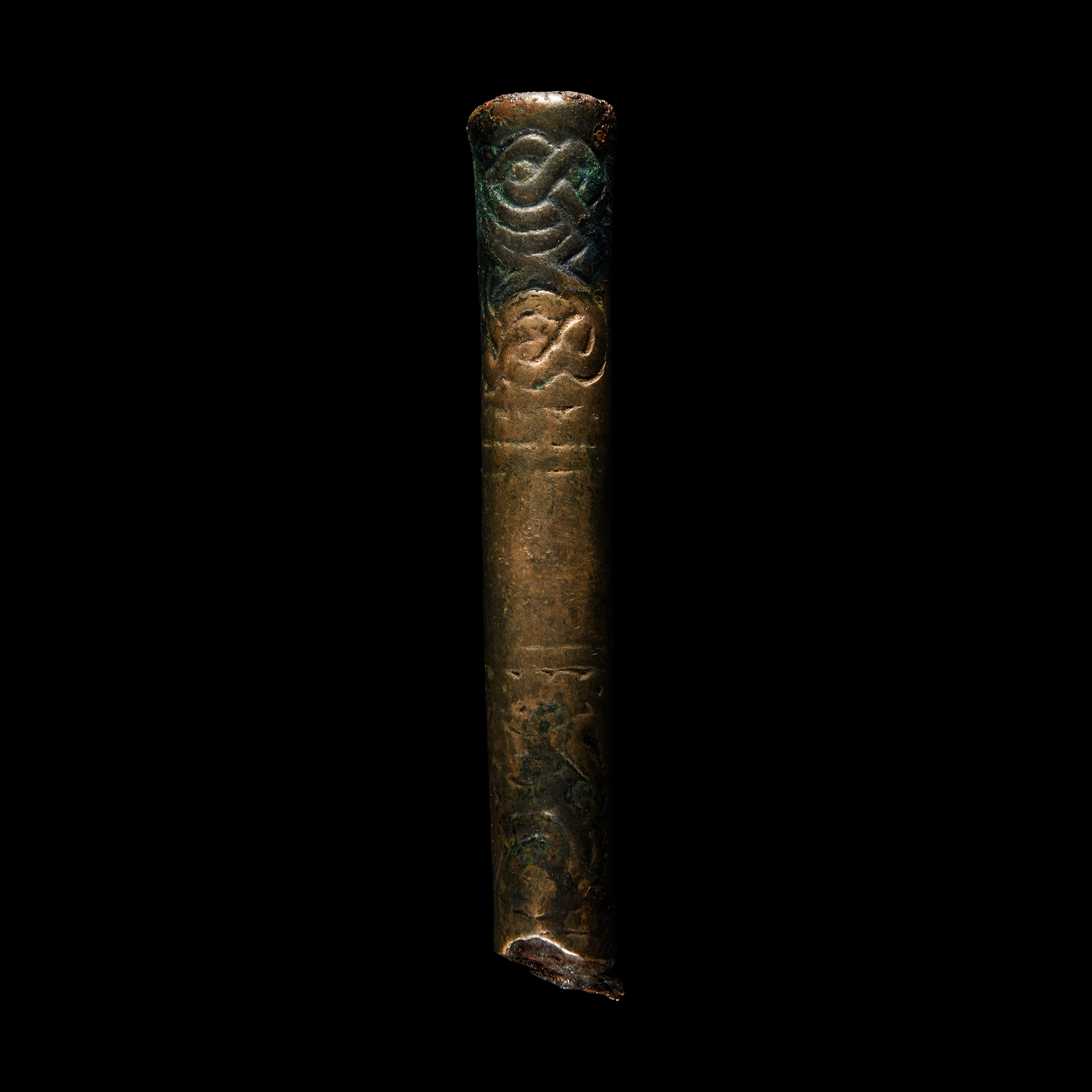
Viking Age Bronze Knife Handle
9TH-10TH CENTURY A.D.
4 in. (59.4 grams, 10 cm).
Composed of a tubular bronze handle with engraved interlaced geometric design. [No Reserve]
ProvenanceFrom the collection of a North American gentleman, formed in the 1990s.
LiteratureCf. Sedov, B.B., Finno-Ugri i Balti v Epokhi Srednevekovija, Moscow, 1987, pl.XII, item 11.
FootnotesA similar knife can be seen in a female grave from Tuukkala, Mikkeli, Finland, still with its blade and housed in a magnificent bronze openwork scabbard. Knives were used by men and women in many different ways, including for war.
CONDITIONTimeLine Auctions follows a vetting process to ensure the authenticity and legality of all items, reinforcing our commitment to integrity and responsible trading. Each antiquity, antique, and coin lot undergoes thorough examination by a vetting committee of at least ten external specialists, professional trade association members, scientists, and archaeologists: Our Vetting Process
AUCTIONS:
TimeLine is a leading auction house specialising in antiquities, ancient art, collectables, natural history, coins, medals, and books. Our auctions offer museums, collectors, historians, and enthusiasts the opportunity to acquire unique and historically significant pieces.
-
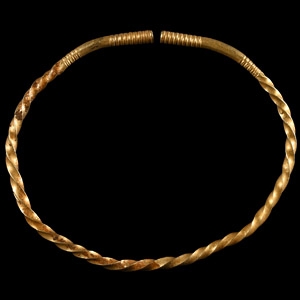
Viking Age Gold Twisted Bracelet
9th-11th century A.D. or earlierSold for (Inc. bp): £1,235
Composed of a slender, decoratively twisted penannular hoop with expanded collared terminals. 9.51 grams, 61 mm
From the collection of a North American gentleman, formed in the 1990s. -
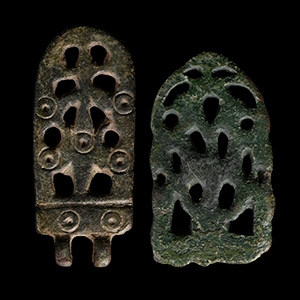
Viking Age Bronze Openwork Strap End Group
9th-11th century A.D.Sold for (Inc. bp): £46
One bifacial tongue-shaped strap end with openwork scheme and punched ring-and-dot motifs; one composed of an openwork interlaced vegetal design. 23 grams total, 39-44 mm
From the collection of a North American gentleman, formed in the 1990s. -
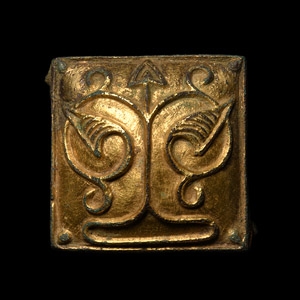
Viking Rus Gilt Brooch with Floral Motif
11th-12th century A.D.Sold for (Inc. bp): £312
Square in plan with a convex underside and domed upper face, decorated with symmetrical scrolling vegetation in raised relief; pin lug and catchplate to reverse. 19.08 grams, 33 mm
Fine condition.
Acquired in the 1980s-1990s. Ex an important central London gallery, London W1.
These kind of appliques were used for belts, harnesses, quivers, saddles and various other Rus and Steppe warrior fittings.
