
Loading, please wait...
LOT 1469
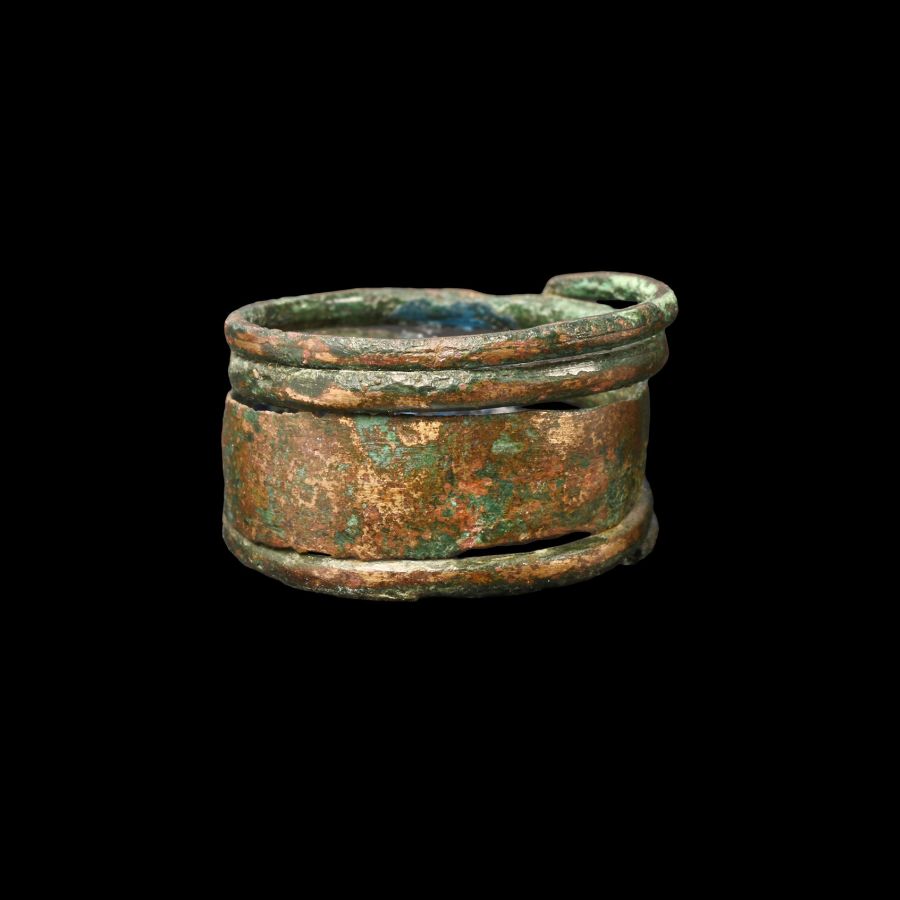
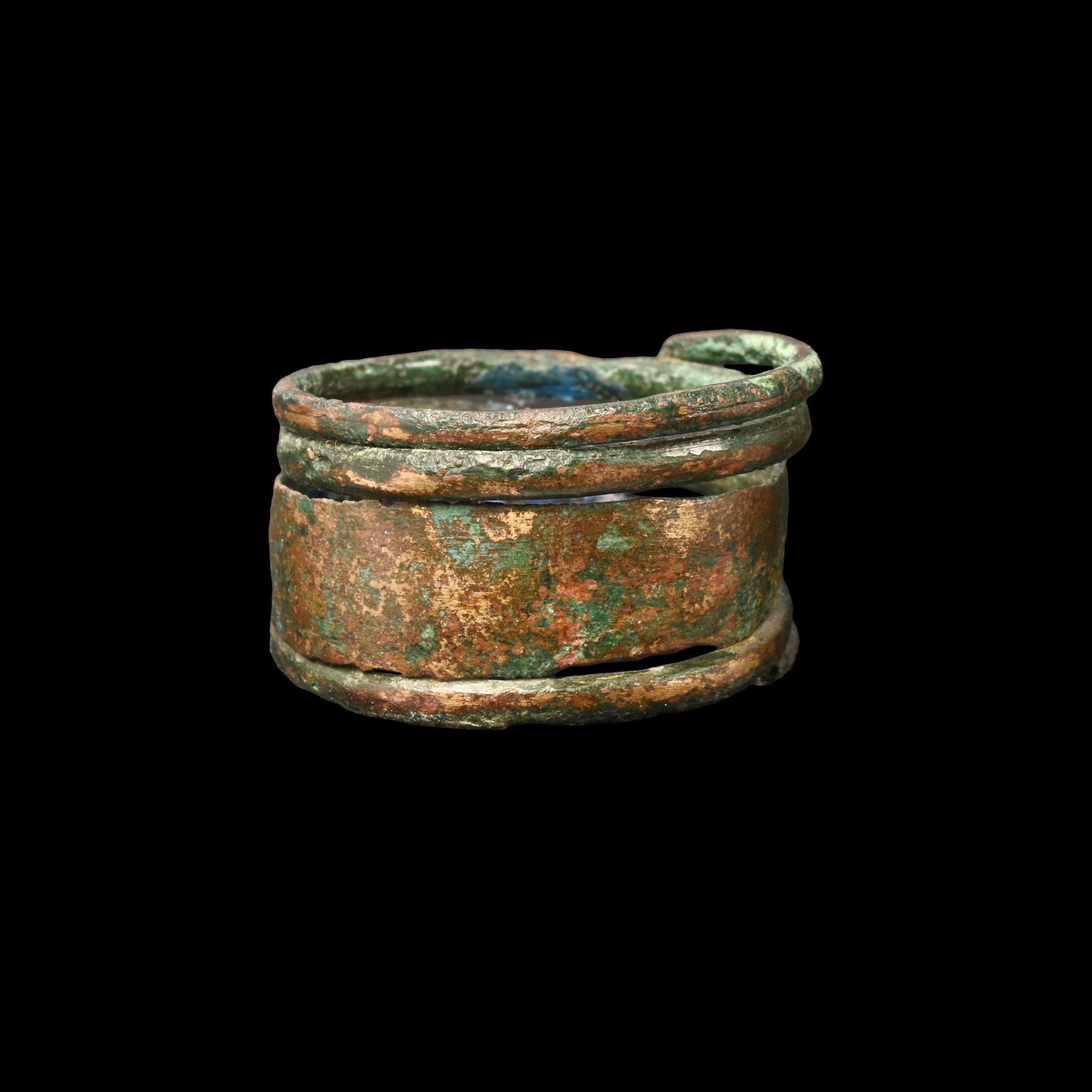
Viking Age Bronze Expandable Ring
CIRCA 8TH CENTURY A.D.
3/4 in. (5.25 grams, 22.88 mm overall, 19.67 mm internal diameter (approximate size British R 1/2, USA 8 3/4, Europe 19.38, Japan 18)).
With broad hoop tapering to round-section extensions forming a coiled continuation of the hoop; Baltic Semigallian type. [No Reserve]
ProvenanceFrom the collection of Alan Hardcastle.
Ex private Merseyside, UK, collection since 2015.
Cf. Griciuviene, E., Žiemgaliai. The Semigalians, Vilnius, 2005, item 525.
CONDITIONTimeLine Auctions follows a vetting process to ensure the authenticity and legality of all items, reinforcing our commitment to integrity and responsible trading. Each antiquity, antique, and coin lot undergoes thorough examination by a vetting committee of at least ten external specialists, professional trade association members, scientists, and archaeologists: Our Vetting Process
AUCTIONS:
TimeLine is a leading auction house specialising in antiquities, ancient art, collectables, natural history, coins, medals, and books. Our auctions offer museums, collectors, historians, and enthusiasts the opportunity to acquire unique and historically significant pieces.
-
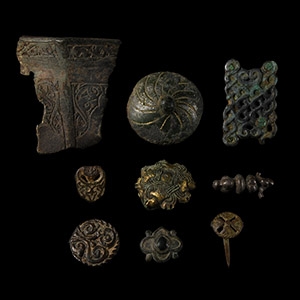
Viking Age Bronze Artefact Collection
10th century A.D. and laterSold for (Inc. bp): £85
Comprising: an openwork mount with interlace motif; metallic pot sherd with incised vegetal forms in panels; domed discoid mount with knop at centre of radiating arms with trace remains of gilding; quatrefoil brooch with addorsed bird heads, remains of catchplate to reverse; multiple decorated pins and strap end with trace remains of gilding. 88 grams total, 15-46 mm
From the collection of a North American gentleman, formed in the 1990s. -
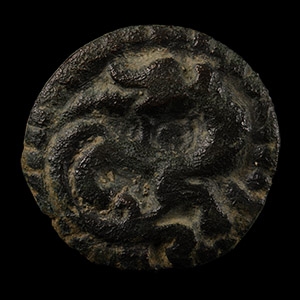
Viking Age Bronze Disc Brooch with Beast Facing Back
9th-11th century A.D.Sold for (Inc. bp): £156
Composed of a flat-section discoid body with pelletted border, low-relief motif of an advancing beast in regardant pose, tail curled beneath the body, the mouth open; pin-lug and catchplate to the reverse; Baltic workmanship. 9.17 grams, 26.61 mm
Ex property of a Dutch collector before 2014. From the collection of a North American gentleman
The brooch is a later Scandinavian copy of a 9th century Anglo-Saxon brooch type with a regardant horse. The present example has a more dragon-like beast in similar pose with serpentine head and extended tongue. -
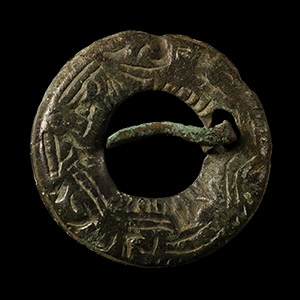
Viking Age Bronze Annular Brooch
10th century A.D.Sold for (Inc. bp): £65
Formed as a slightly domed upper face decorated with Jellinge Style zoomorphic ornament in low relief, pierced to accept a slender bronze pin. 8.6 grams, 34 mm
From the collection of a North American gentleman, formed in the 1990s.
