
Loading, please wait...
LOT 1349
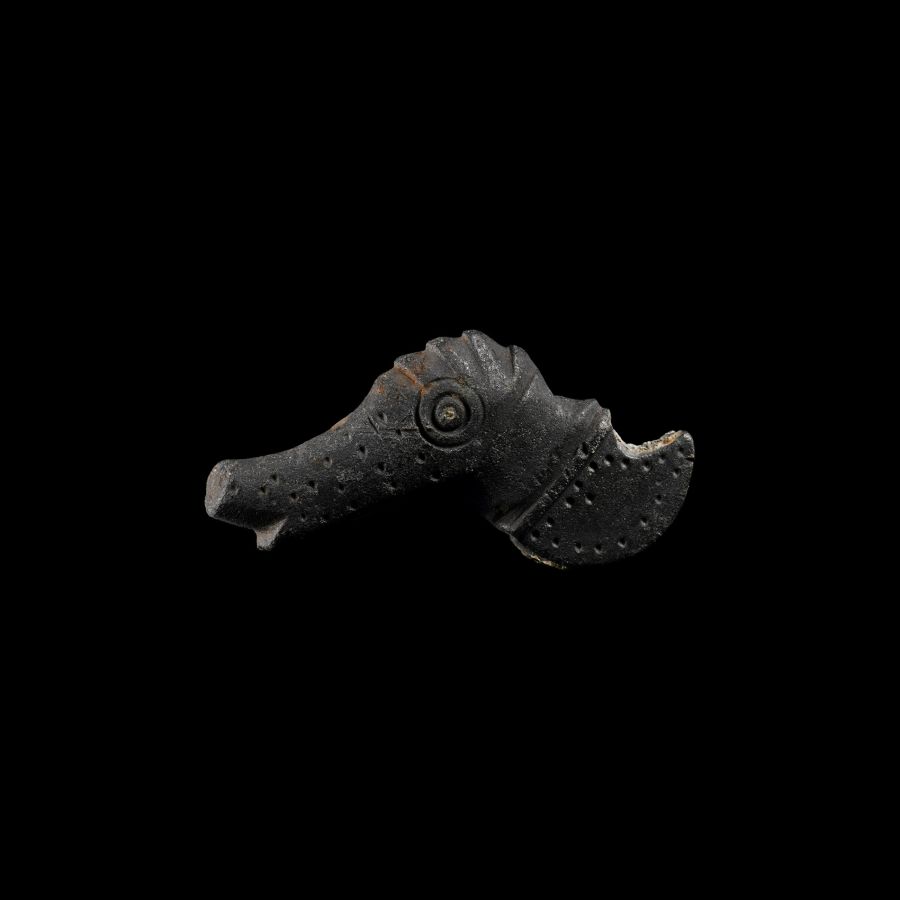
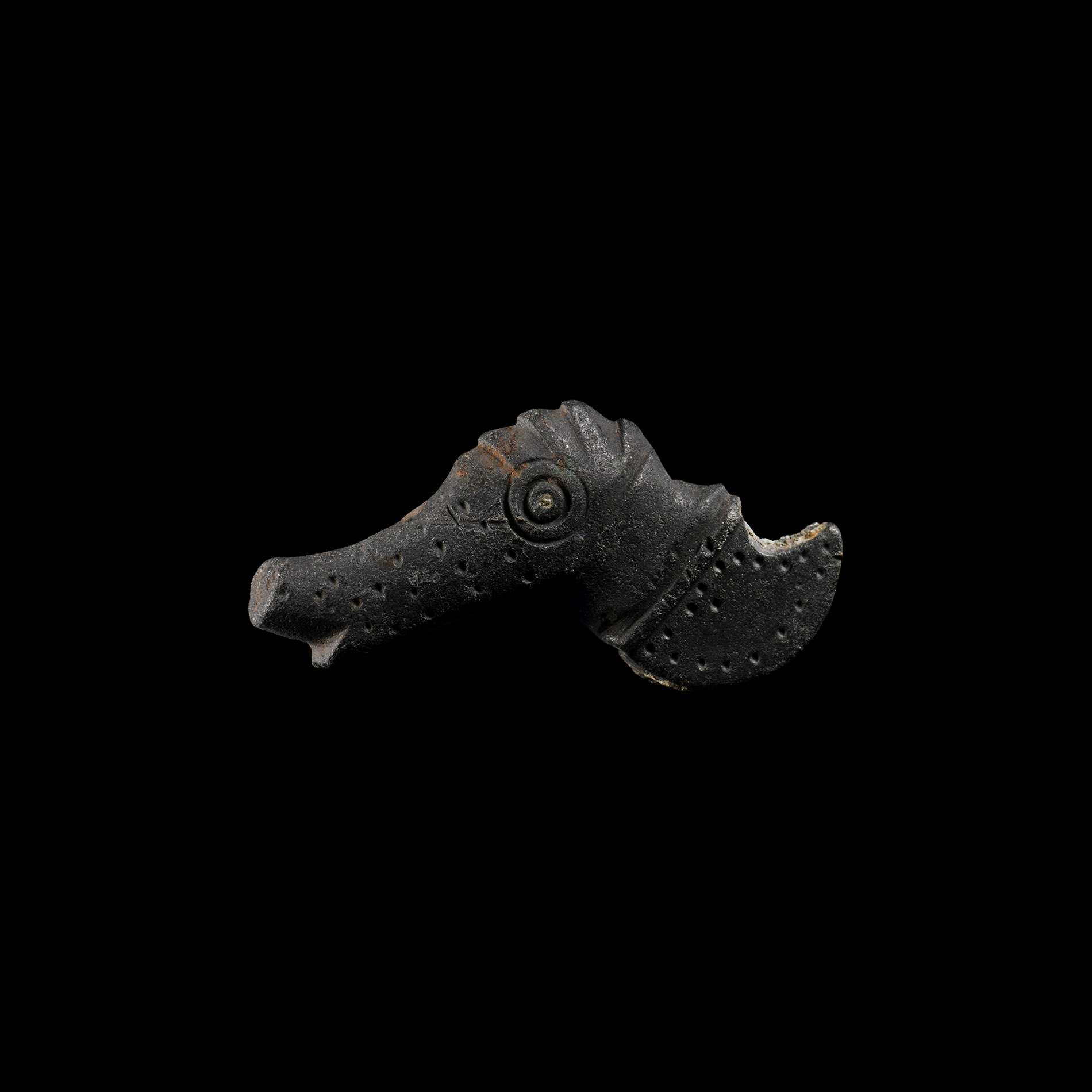
Viking Age Bronze Dragon-Headed Knife Handle
8TH-10TH CENTURY A.D.
1 1/4 in. (14.7 grams, 33 mm).
Elliptical in cross-section with a ring-and-dot eye to each face, ridged coxcomb and upturned muzzle; split flange to the rear to accept a small blade; punched point detailing. [No Reserve]
ProvenanceAcquired in the 1990s.
Ex property of a German collector.
TimeLine Auctions follows a vetting process to ensure the authenticity and legality of all items, reinforcing our commitment to integrity and responsible trading. Each antiquity, antique, and coin lot undergoes thorough examination by a vetting committee of at least ten external specialists, professional trade association members, scientists, and archaeologists: Our Vetting Process
AUCTIONS:
TimeLine is a leading auction house specialising in antiquities, ancient art, collectables, natural history, coins, medals, and books. Our auctions offer museums, collectors, historians, and enthusiasts the opportunity to acquire unique and historically significant pieces.
-
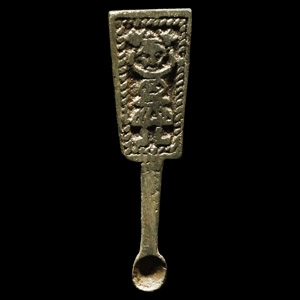
Viking Age Bronze Apothecary Spoon with Bound Loki
Circa 10th-11th century A.D.Sold for (Inc. bp): £260
The miniature oval-shaped bowl and tapering stem terminating in a trapezoidal panel displaying the god Loki standing facing, hands raised above the head, within a ropework border; two mounting rivets to the reverse. 4.3 grams, 41 mm
From the private collection of a London gentleman, from his grandfather's collection formed before the early 1970s.
Loki was the Norse god of mischief, trickery and deception. -
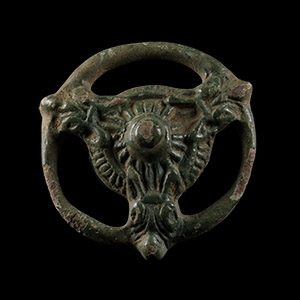
Viking Age Bronze Belt Strap Distributor with Beast-Heads
9th-11th century A.D.Sold for (Inc. bp): £247
Central dome with three radiating beast-heads gripping the outer ring in their jaws. 18.5 grams, 40 mm
From the collection of a North American gentleman, formed in the 1990s. -
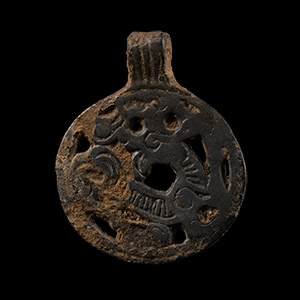
Viking Age Jellinge Style Bronze Regardant Beast Pendant
Late 10th-early 11th century A.D.Sold for (Inc. bp): £143
With integral loop, openwork regardant Jellinge style beast with tendrils and border. 6.06 grams, 35 mm
From the collection of a North American gentleman, formed in the 1990s.
There is a class of discoid pendants with banded borders and contorted figures found in the hinterland of the Baltic region, associated with the influence of Scandinavian 'Rus' settlers. The design of these items recalls specific elements of Viking art - for example, the 'gripping hands' motif is a feature of the Oseberg Style named after the famous Norwegian ship-burial.
