
Loading, please wait...
LOT 1337
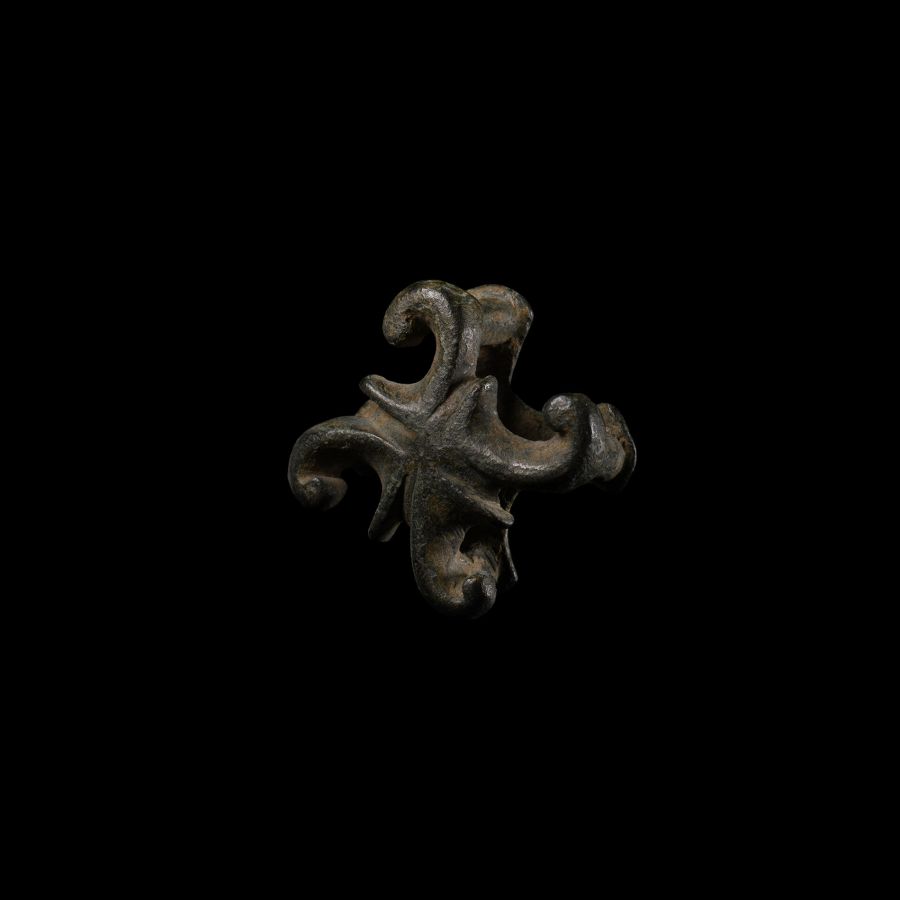
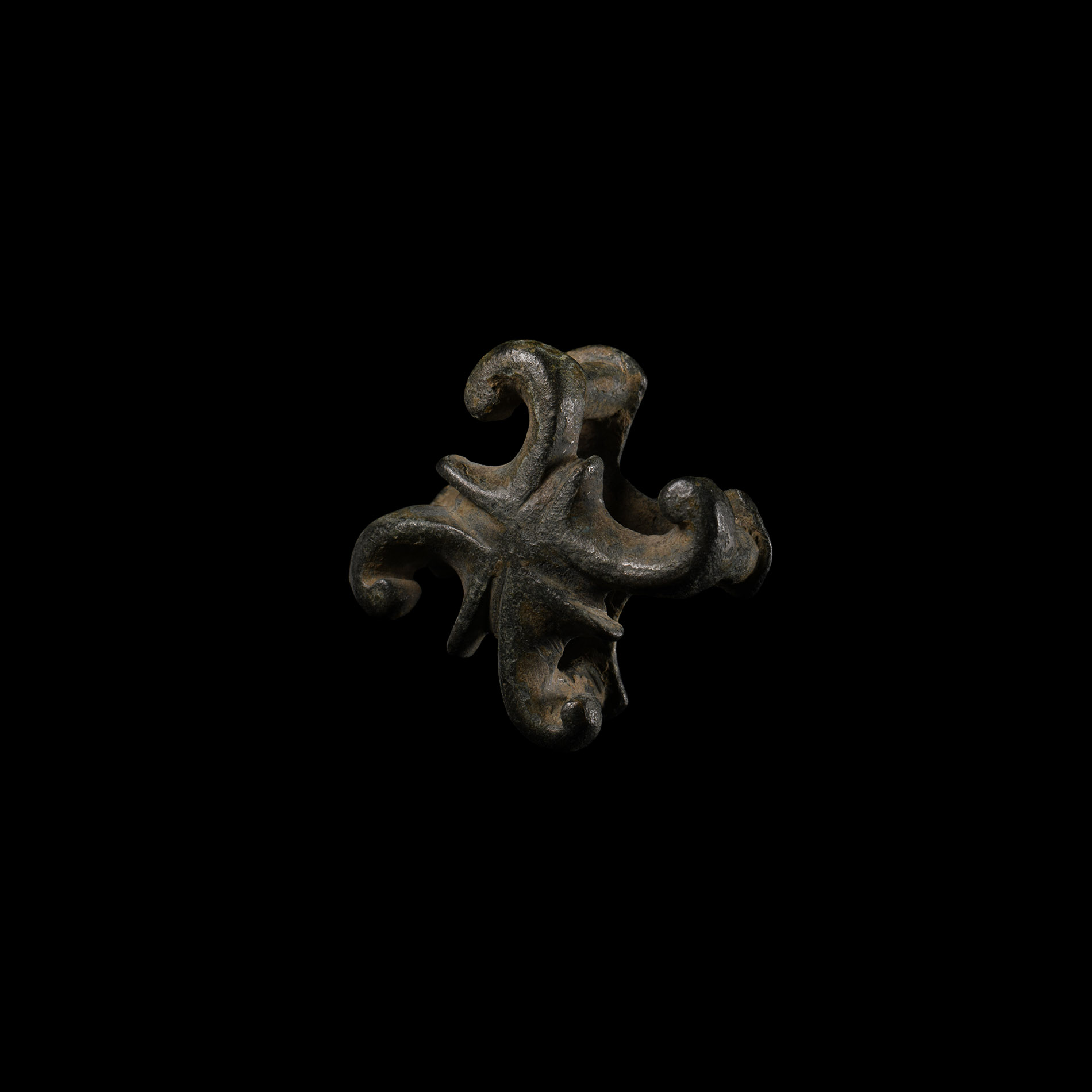
Viking Age Bronze Cross Mount
9TH-11TH CENTURY A.D.
1 in. (17.7 grams, 26 mm).
Or strap distributor; formed with four scrolled arms radiating from the quadrants of a central cross; four cylindrical struts to the reverse and a similarly-shaped reverse plate. [No Reserve]
ProvenanceFrom the collection of a North American gentleman, formed in the 1990s.
CONDITIONTimeLine Auctions follows a vetting process to ensure the authenticity and legality of all items, reinforcing our commitment to integrity and responsible trading. Each antiquity, antique, and coin lot undergoes thorough examination by a vetting committee of at least ten external specialists, professional trade association members, scientists, and archaeologists: Our Vetting Process
AUCTIONS:
TimeLine is a leading auction house specialising in antiquities, ancient art, collectables, natural history, coins, medals, and books. Our auctions offer museums, collectors, historians, and enthusiasts the opportunity to acquire unique and historically significant pieces.
-

Viking Age Bronze Hook Fastener with Face
10th-11th century A.D.Sold for (Inc. bp): £91
With hooked 'beak', large discoid eyes with ribbed frame, three sewing loops to the upper edge. 4.9 grams, 31 mm
Acquired on the German art market before 2000. From an old Munich collection. -

Viking Bronze Rider and Valkyrie Mount
Circa 9th century A.D.Sold for (Inc. bp): £2,600
Openwork plate brooch or mount with two pierced lugs to the reverse depicting a rider and standing figure; the horse and figures shown in profile; the rider wearing baggy trousers and a cloak or mantle, a spear carried beneath his leg, his hair worn long and knotted at the rear; the standing figure wearing a floor-length robe and holing a shield; square panel beneath the horse with a grid of nine squares. 6.3 grams, 34 mm
Found near Great Massingham, Norfolk, UK, circa 2010.
The scene depicted on the mount or brooch is often assumed to represent an armed warrior on horseback and a Valkyrie holding a shield. However, the rider's long and looped hairstyle may be typical of females of the period, and the standing figure often appears to be wearing a helmet. In a detailed discussion by Gardeła, Pentz and Price (2022), the standard interpretation is challenged since we do not know whether the scene shows humans or deities, nor whether the rider and attendant might be interpreted as an armed female being welcomed into Freyja's home of Folkvangr. Does the grid beneath the horse imply that there is a gaming-board available to the rider, a typical item of hall-based enjoyment alongside the horn which symbolises beer or mead? Or does this actually show a saddle-cloth, a prosaic piece of riding equipment? -

Viking Age Bronze Bracelet with Interlaced Design
9th-11th century A.D.Sold for (Inc. bp): £143
D-section with heavy basketwork motif to the outer face. 87 grams, 75 mm
From the collection of a North American gentleman, formed in the 1990s.
The bracelet is the product of Baltic workmanship. Certain Baltic tribes of Lithuania did not have any characteristic ethnographic female adornments, but they were strongly influenced by Scandinavian jewellery. Their range can be described by the archaeologists only on the basis of the distribution of the burial complexes.
