
Loading, please wait...
LOT 1215
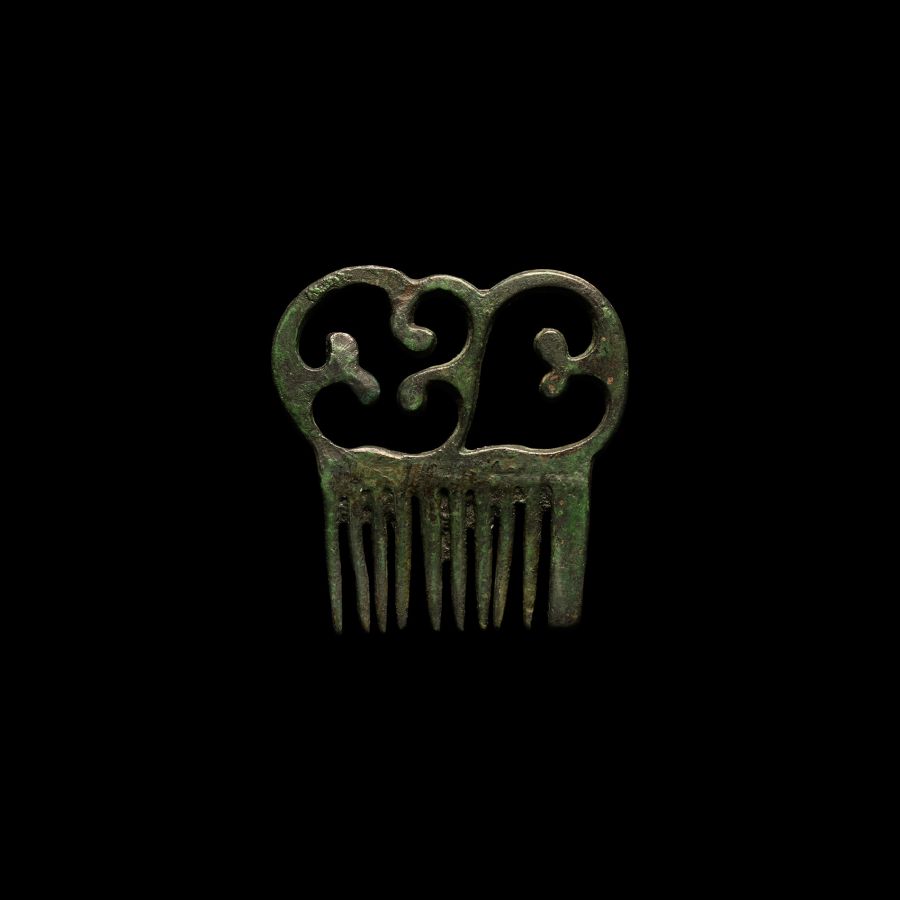
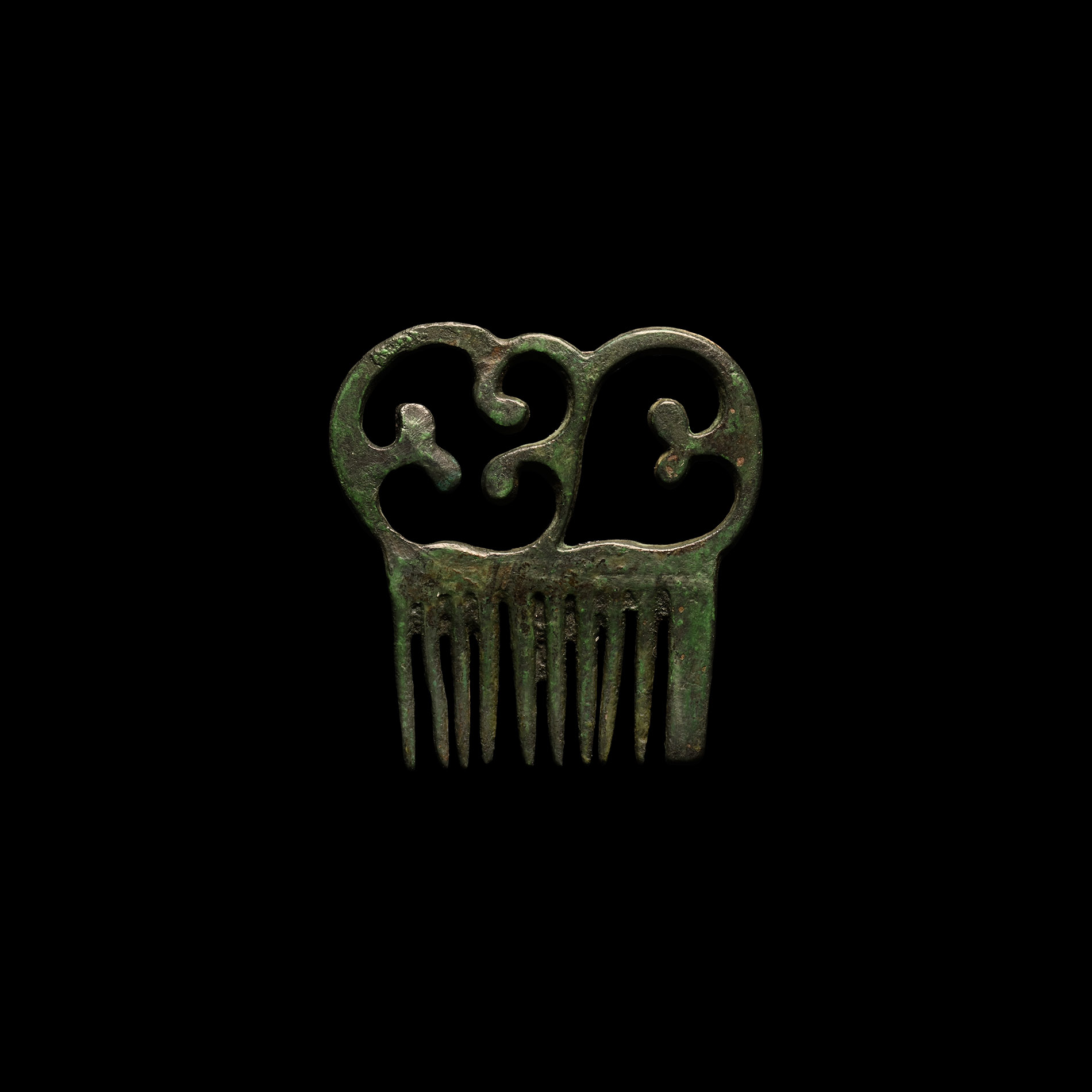
Viking Age Bronze Comb
10TH-12TH CENTURY A.D.
1 3/4 in. (16.5 grams, 44 mm).
Featuring a scalloped handle with openwork scrolling tendrils, complete set of teeth below. [No Reserve]
ProvenanceAcquired 1980-2000.
Ex property of an American collector.
See similar in Arbman, H., Birka I, Die Gräber, Uppsala, 1940, pl.100, no.2, from grave 1162.
FootnotesNorsemen were particularly fastidious about their appearance. The hair and beard were important to the men, for making a statement and to intimidate their opponents. Early combs were made from antler or bone and carried in a small pouch; high status combs were later made from metal (mainly bronze) and have been found as grave goods.
CONDITIONTimeLine Auctions follows a vetting process to ensure the authenticity and legality of all items, reinforcing our commitment to integrity and responsible trading. Each antiquity, antique, and coin lot undergoes thorough examination by a vetting committee of at least ten external specialists, professional trade association members, scientists, and archaeologists: Our Vetting Process
AUCTIONS:
TimeLine is a leading auction house specialising in antiquities, ancient art, collectables, natural history, coins, medals, and books. Our auctions offer museums, collectors, historians, and enthusiasts the opportunity to acquire unique and historically significant pieces.
-
Anglo-Scandinavian Viking Gilt Bronze Entwined Beast Brooch
Circa 9th-11th century A.D.Sold for (Inc. bp): £20
Domed with stylised zoomorphic design, with the remains of the spring hinge and catchplate to verso. 7 grams, 25 mm
Acquired late 1980s-early 1990s. Ex private collection, Nottinghamshire, UK. Acquired on the UK art market in 2012. Property of a Kent lady collector. -
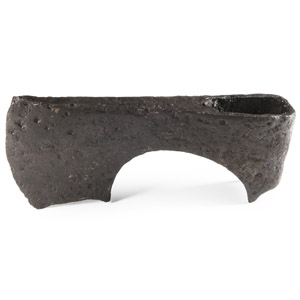
Finno-Ugrian Iron Bearded Axehead
11th-13th century A.D.Sold for (Inc. bp): £78
Triangular in plan with D-shaped socket, square butt, scooped lower profile and curved edge. 616 grams, 16.3 cm
From the private collection of a London gentleman, from his grandfather's collection formed before the early 1970s.
The more commonly used weapons of the Finno-Ugrian people were axes, commonly found in all Finnic areas, as well as spears. Iron axeheads of this typology show a sub-trapezoidal asymmetrical blade, often perforated through the centre. -
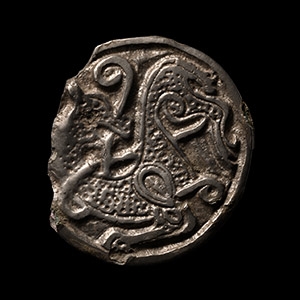
Viking Silver Mammen Style Dragon Pendant
10th-early 11th century A.D.Sold for (Inc. bp): £208
Of discoid form with central motif of a low-relief regardant beast with piriform shoulder and punced body, looped tendrils enmeshing the body. 9.1 grams, 35 mm
From the collection of a North American gentleman, formed in the 1990s.
