Loading, please wait...
LOT 1240
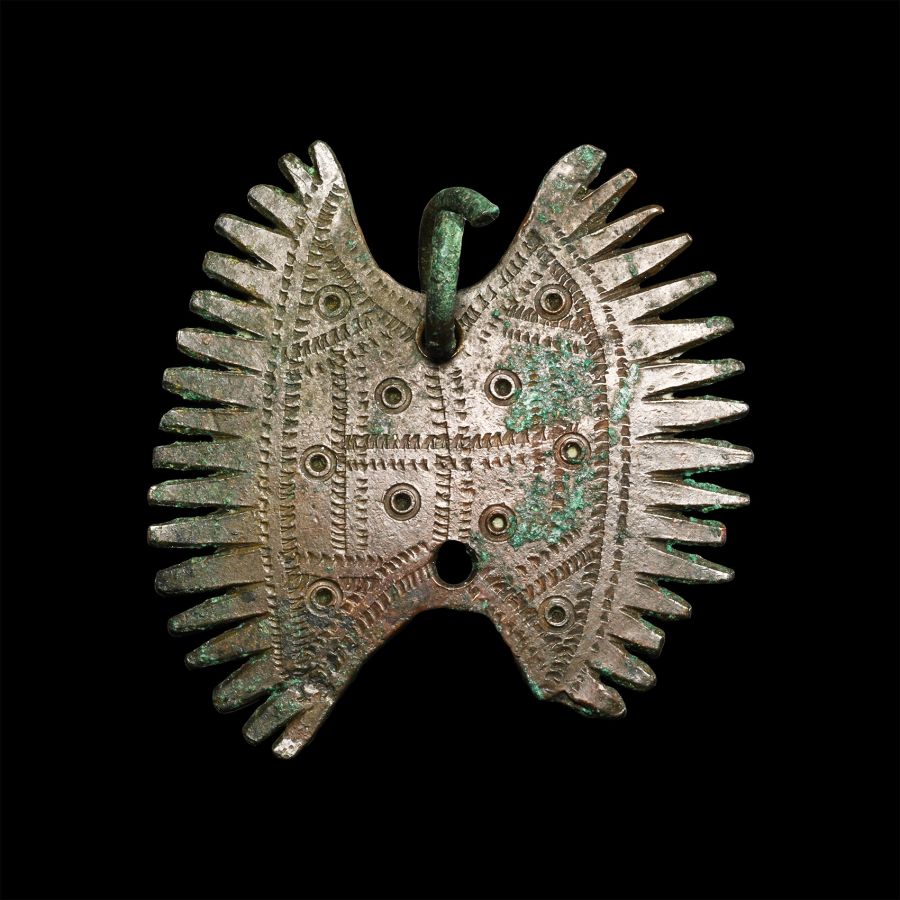
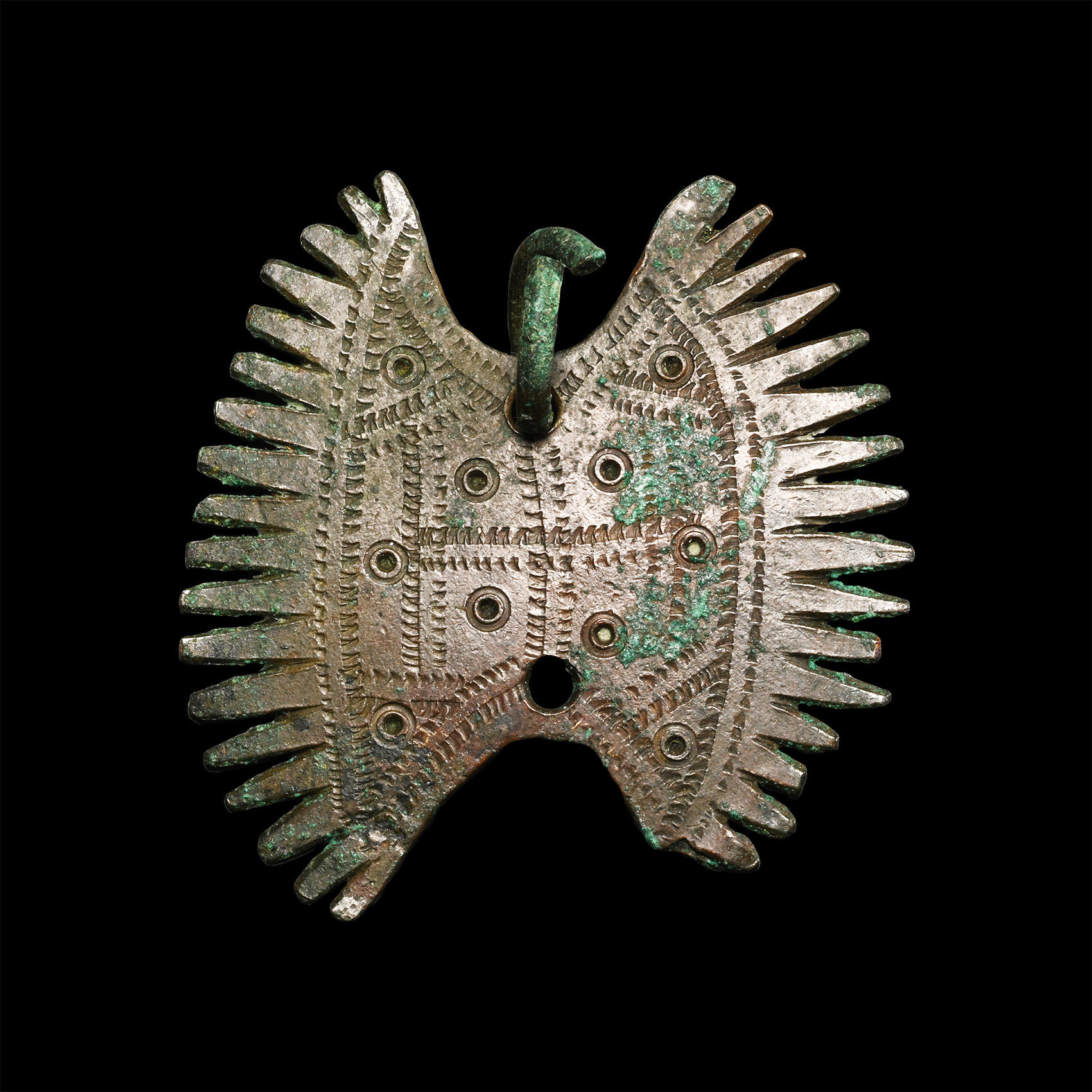
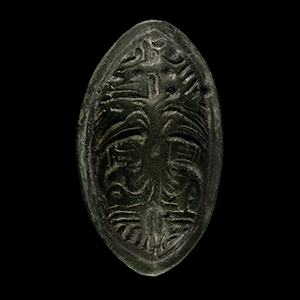
Viking Age Bronze Comb Pendant
9TH-11TH CENTURY A.D.
2 in. (23.2 grams, 53 mm).
With segmented teeth to the edges of the lentoid plaque; ring-and-dot detailing, suspension loop. [No Reserve]
ProvenanceAcquired early 2000s.
Property of a Stowmarket, UK, gentleman.
See Sedov, B.B., Finno-Ugri i Balti v Epokhi Srednevekovija, Moscow, 1987, pl.CVI (4).
CONDITIONTimeLine Auctions follows a vetting process to ensure the authenticity and legality of all items, reinforcing our commitment to integrity and responsible trading. Each antiquity, antique, and coin lot undergoes thorough examination by a vetting committee of at least ten external specialists, professional trade association members, scientists, and archaeologists: Our Vetting Process
AUCTIONS:
TimeLine is a leading auction house specialising in antiquities, ancient art, collectables, natural history, coins, medals, and books. Our auctions offer museums, collectors, historians, and enthusiasts the opportunity to acquire unique and historically significant pieces.
-
Finno-Ugrian Socketted Axehead
10th-13th century A.D.Sold for (Inc. bp): £195
Hand-forged with triangular-section narrow blade widening to a broad bevelled edge with square chin and spur to the rear, socket with flanges to the rear. 569 grams, 17.5 cm
From the private collection of a London gentleman, from his grandfather's collection formed before the early 1970s.
During the mid 13th century, the axes were favourite weapons among Baltic people. For instance, the Curonian army included lightly armed soldiers who fought with spears, shields, fighting knives and axes. A heavily armed soldier could also carry a sword, a helmet, a shield and a wide-bladed axe. -
Viking Age Bronze Sword Scabbard Chape Collection
10th-11th century A.D.Sold for (Inc. bp): £585
Comprising: two examples of a long and narrow tongue-shaped type (Paulsen's Gruppe V 2A, Untergruppe C) with scooped upper edge and palmette motif to the centre, a vertical band of reserved stylised ring-chain decoration on a pounced field, long lateral straps and a knop finial (one with an upper arm absent); a subtriangular type (Paulsen's Gruppe I 2, Untergruppe C) with central openwork panel displaying a bird in flight with the fan-shaped tail marked with radiating lines, trilinear bands to the outer sides, upper edges angled and with a lozengiform 'knot' at the apex; a long and rounded tongue-shaped type (Paulsen's Gruppe I 1) with an openwork centre and Ringerike Style bird formed with looped bands, pellets to the pinions, a triangular in plan head joined to the inner faces of the ropework border forming the upper edge of the chape, with a wolf's head at the apex and stepped knop finial (one face damaged); a single plate from a chape of the same type (Gruppe I 1) with a rounded lower edge and the apex absent. 158 grams total, 59-75 mm
From the collection of a North American gentleman, formed in the 1990s.
The slender, tongue-shaped elongated form (Gruppe V2A, Untergruppe C) is regarded by Paulsen (p.118) as Latvian in origin ("Lettland") and 11th century in date. The broader openwork form (Gruppe I 2, Untergruppe C) is associated with the Baltic island of Gotland, which was a major entrepot in the trade network connecting Sweden with the eastern Baltic and the riverine passage south to the Mediterranean; a 10th century date is preferred for this type. The long openwork form (Gruppe I 1) is Scandinavian in origin and appears first in the 10th century; Paulsen's figure 6 from Oland, Sweden, is a close match to the complete example included here. -
Viking Age Bronze Pendant Group
9th-11th century A.D.Sold for (Inc. bp): £98
Comprising two discoid pendants displaying Odin gripping two ravens; one with suspension loop. 3.51 grams total, 21 mm each
From the collection of a North American gentleman, formed in the 1990s.