
Loading, please wait...
LOT 1470
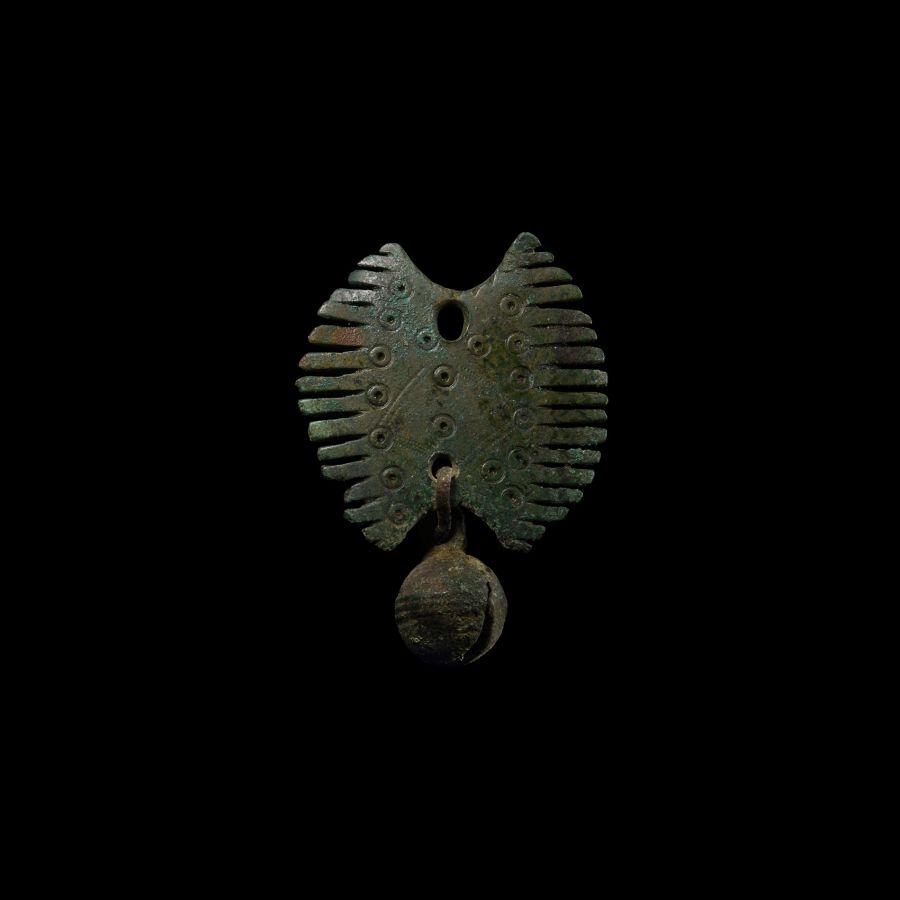
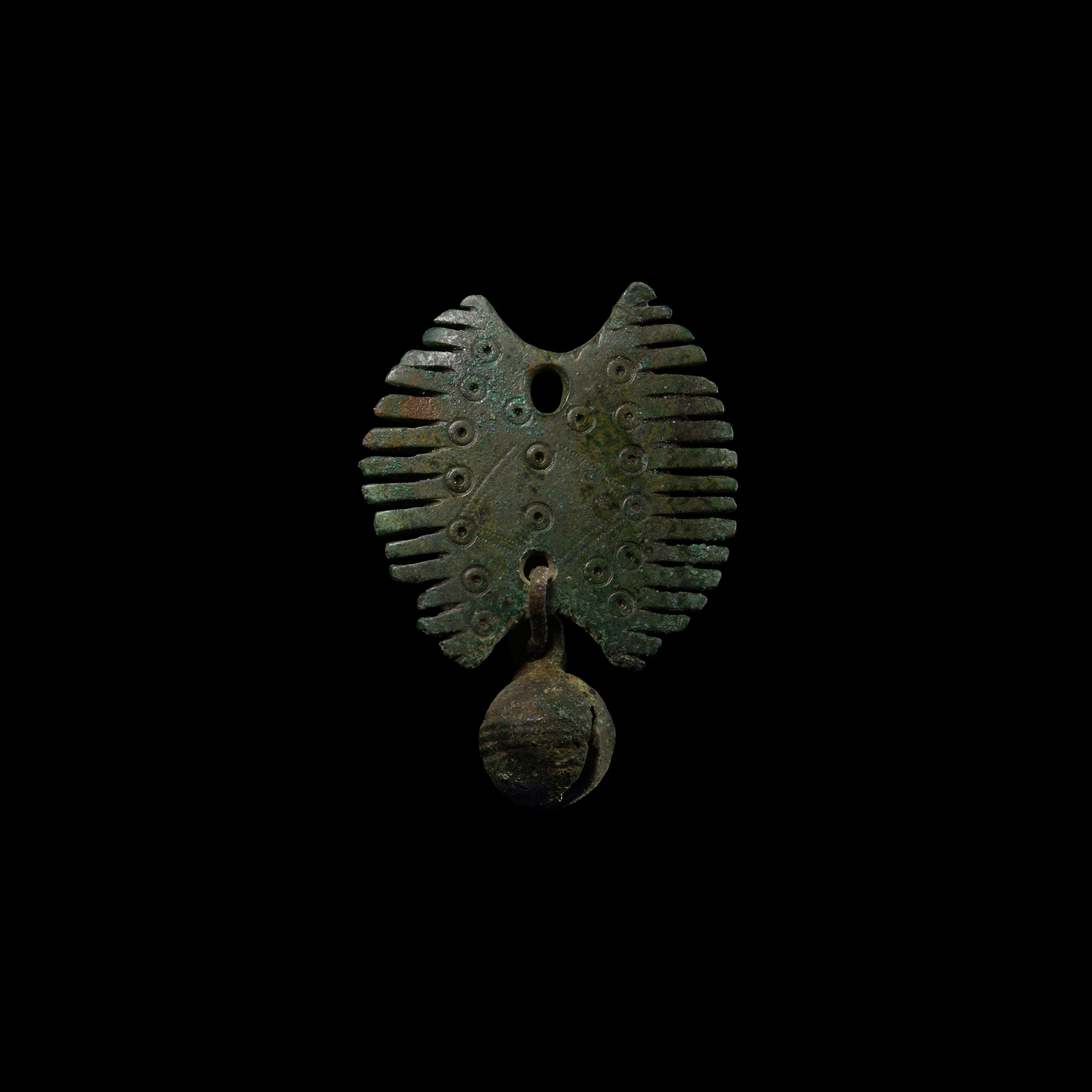
Viking Age Bronze Comb Pendant with Bell
9TH-11TH CENTURY A.D.
2 1/2 in. (24.4 grams, 62 mm).
With segmented teeth to the edges of the lentoid plaque; ring-and-dot detailing; rumbler bell to the lower edge. [No Reserve]
ProvenanceFrom the collection of a North American gentleman, formed in the 1990s.
LiteratureSee Sedov, B.B., Finno-Ugri i Balti v Epokhi Srednevekovija, Moscow, 1987, pl.CVI (4).
CONDITIONTimeLine Auctions follows a vetting process to ensure the authenticity and legality of all items, reinforcing our commitment to integrity and responsible trading. Each antiquity, antique, and coin lot undergoes thorough examination by a vetting committee of at least ten external specialists, professional trade association members, scientists, and archaeologists: Our Vetting Process
AUCTIONS:
TimeLine is a leading auction house specialising in antiquities, ancient art, collectables, natural history, coins, medals, and books. Our auctions offer museums, collectors, historians, and enthusiasts the opportunity to acquire unique and historically significant pieces.
-
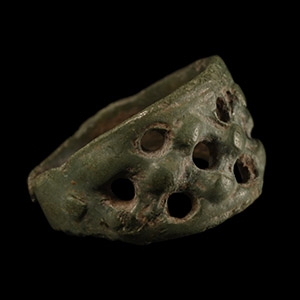
Viking Age Bronze Openwork Ring
9th-11th century A.D.Sold for (Inc. bp): £33
With overlapping hoop base, raised pellets to the bezel. 2.97 grams, 18.92 mm overall, 14.85 mm internal diameter (approximate size British F 1/2, USA 3, Europe 4.3, Japan 4)
From the collection of a North American gentleman, formed in the 1990s. -
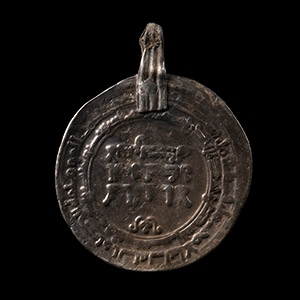
Viking Age Silver Coin Pendant
9th-11th century A.D.Sold for (Inc. bp): £169
With ribbed suspension loop; dirhem with Arabic inscription to each face. 3.2 grams, 34 mm
From the collection of a North American gentleman, formed in the 1990s. -
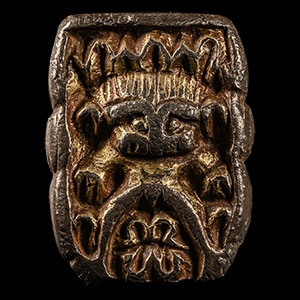
Viking Age Silver-Gilt Mount with Figure
Circa 10th century A.D.Estimate: £800 - 1,000 (+bp*)
Opening Bid: £320
Sub-rectangular with lip to the reverse; high-relief facing figure with band of straight hair, omega-shaped brow and pellet eyes, stubby body and arms, splayed legs above two omega-shaped elements forming a rosette; mounting plate absent. 15.2 grams, 32 mm
Acquired early 1990s. From an East Anglian private collection.
The identity of the facing figure is unknown. There is an earlier, probably 9th century, Anglo-Saxon strap end with a facing nude male in low-relief which might be comparable (Thomas, 2007, item 8).
