
Loading, please wait...
LOT 1212
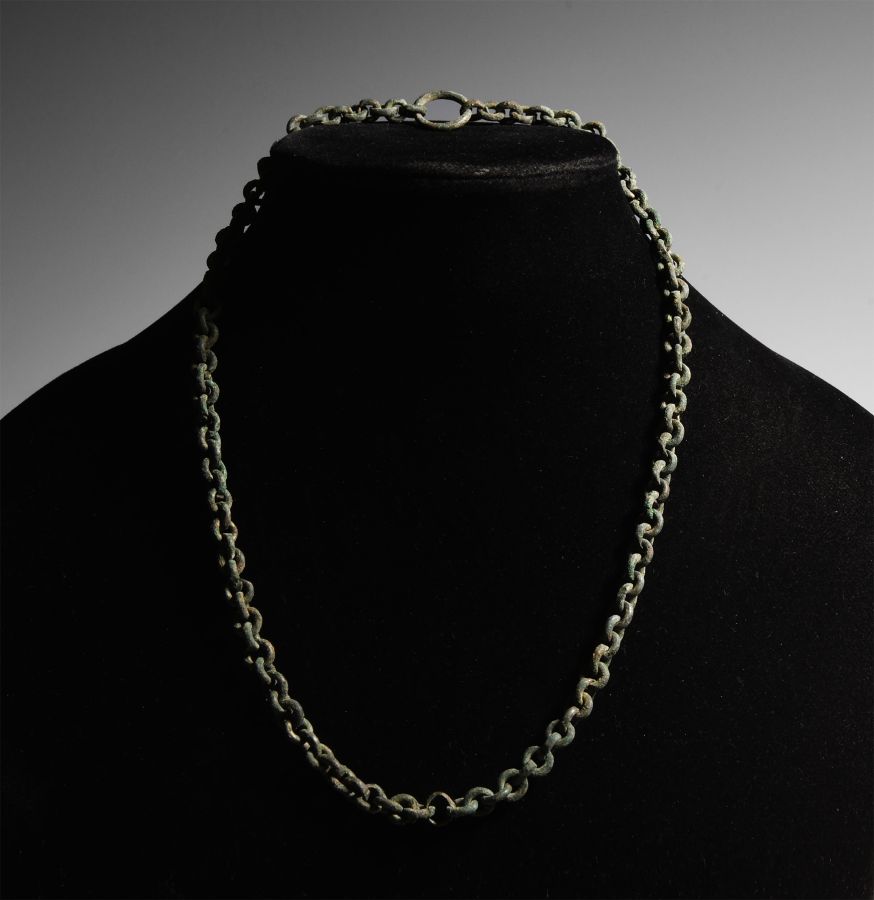
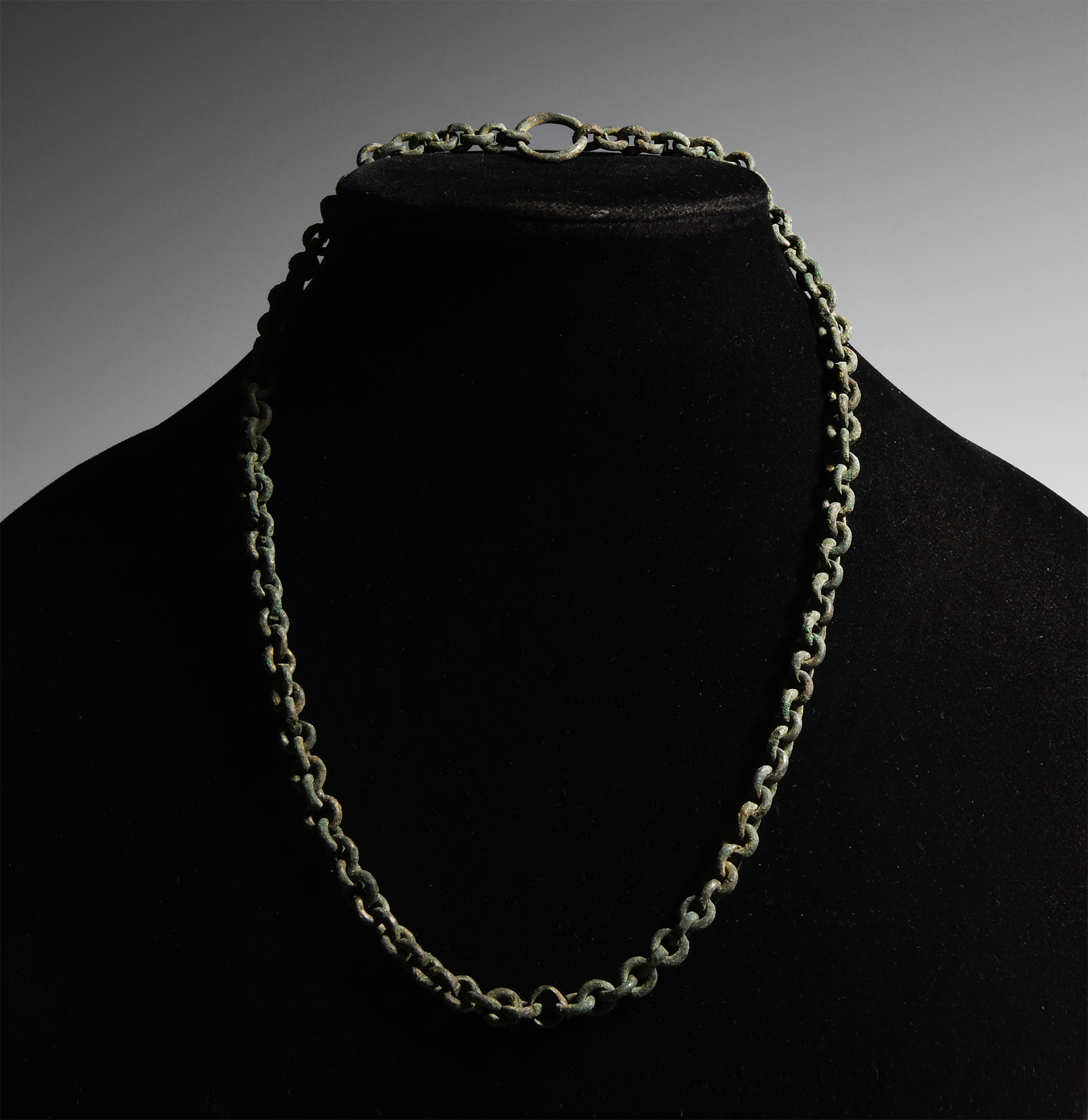
Viking Age Bronze Chain Necklace
CIRCA 8TH-10TH CENTURY A.D.
20 1/2 in. (63 grams, 52 cm long).
A bronze necklace composed of circular chain links and single larger hoop. [No Reserve]
ProvenanceEarly 1990s London collection.
Acquired on the UK art market.
From a private collection, Lancashire, UK.
TimeLine Auctions follows a vetting process to ensure the authenticity and legality of all items, reinforcing our commitment to integrity and responsible trading. Each antiquity, antique, and coin lot undergoes thorough examination by a vetting committee of at least ten external specialists, professional trade association members, scientists, and archaeologists: Our Vetting Process
AUCTIONS:
TimeLine is a leading auction house specialising in antiquities, ancient art, collectables, natural history, coins, medals, and books. Our auctions offer museums, collectors, historians, and enthusiasts the opportunity to acquire unique and historically significant pieces.
-

Viking Age Stamped Silver Pendant
Circa 8th-10th century A.D. or laterSold for (Inc. bp): £312
A discoid silver pendant decoratively stamped with blank triangles, triangles containing trefoil pellets and annulets containing pellets; ribbed tubular suspension loop; Latvian workmanship. 11.8 grams, 55 mm
Acquired in the 1990s. From a North Yorkshire private collection, UK. -

Viking Period Silver Axe Pendant Group
8th-10th century A.D.Sold for (Inc. bp): £416
A trio of silver axehead pendants of different forms, each suspended on a free-running silver ring with overlapping and coiled arms; two decorated with punched annulets to one face, a third with punched triangles populated with single pellets. 8.93 grams total, 32-34 mm
Fine condition, usage wear.
Acquired in the late 1990s-2000. Property of an East London gentleman. -
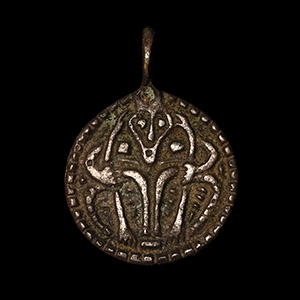
Viking Age Silver Odin Pendant with Ravens
9th-10th century A.D.Sold for (Inc. bp): £1,430
A discoid silver pendant with integral loop, beaded border enclosing a low-relief image of a male facing mask between two birds embraced at the necks. 3.03 grams, 25.8 mm
Private collection formed in Europe in the 1980s. Westminster collection, central London, UK.
