
Loading, please wait...
LOT 1209
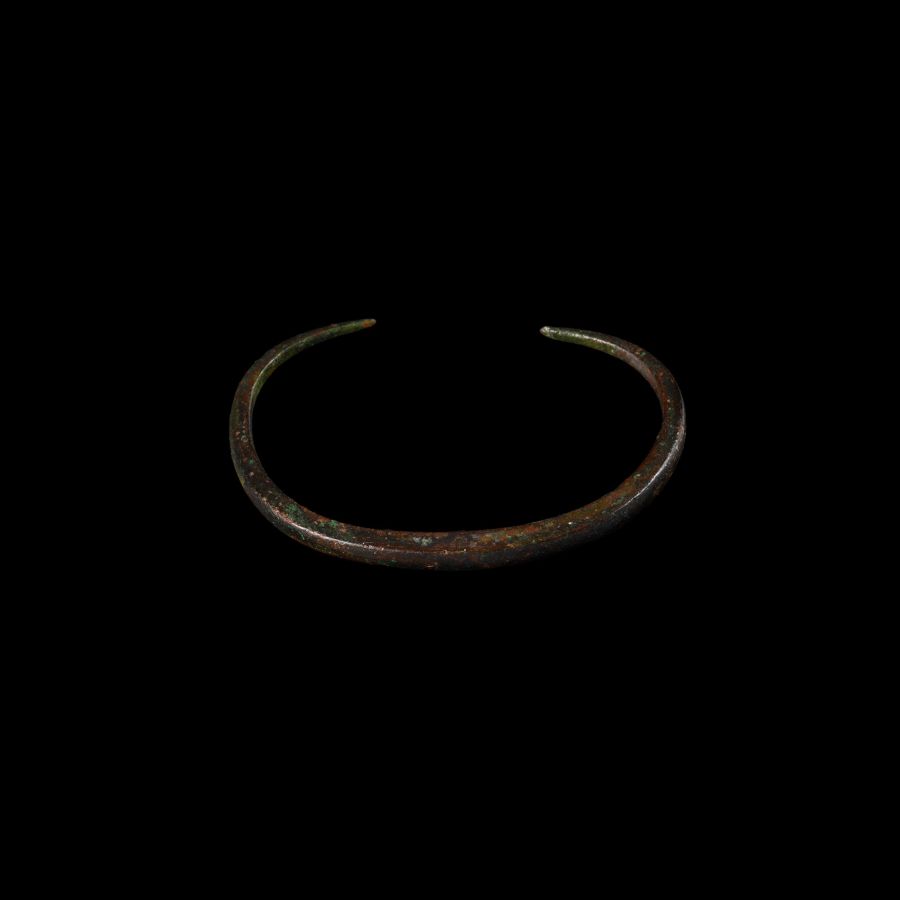
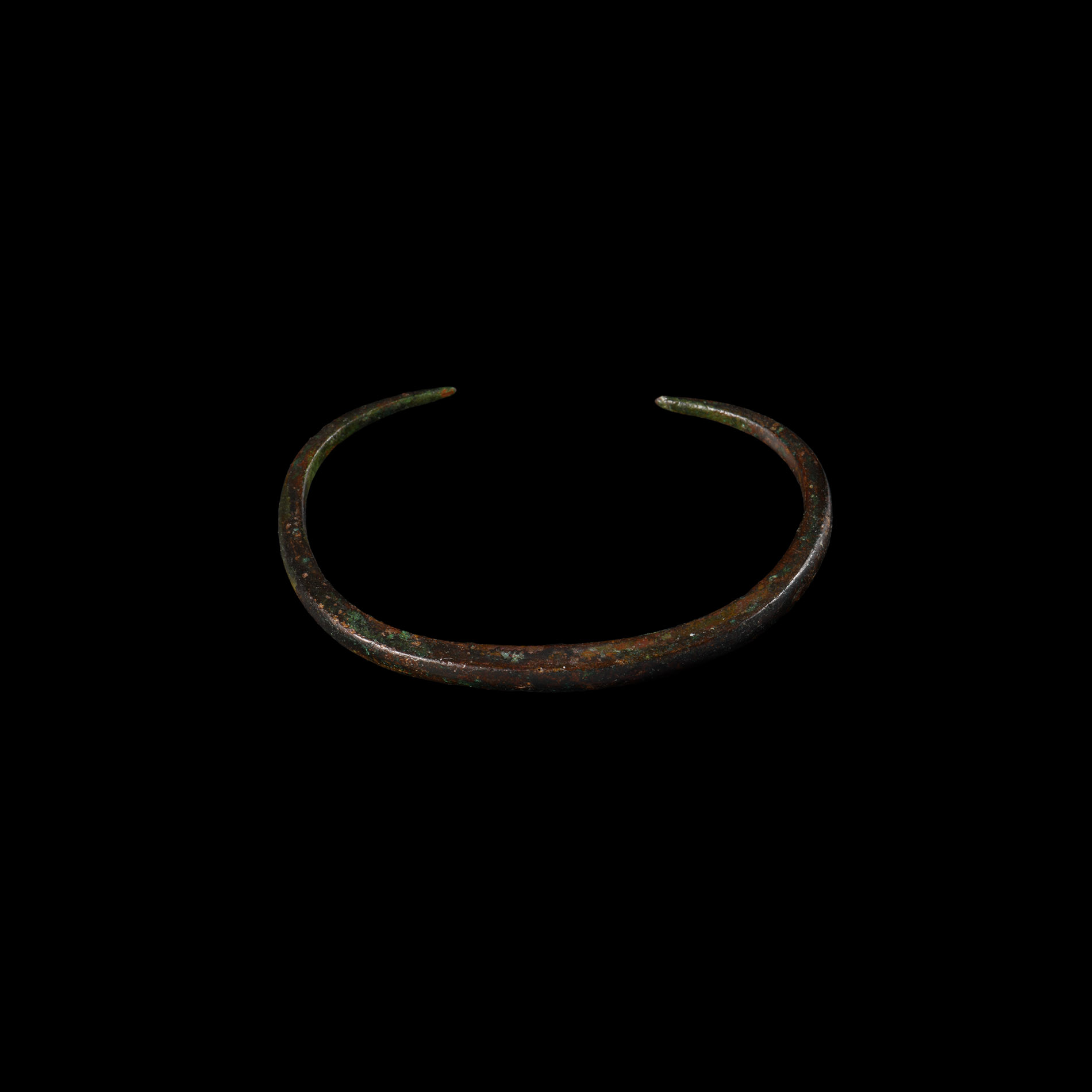
Viking Age Bronze Bracelet
9TH-11TH CENTURY A.D.
2 1/2 in. (13.2 grams, 64 mm).
Of penannular form with convex outer face and flat top and bottom faces, arms tapering to pointed terminals. [No Reserve]
ProvenanceFrom the collection of a North American gentleman, formed in the 1990s.
CONDITIONTimeLine Auctions follows a vetting process to ensure the authenticity and legality of all items, reinforcing our commitment to integrity and responsible trading. Each antiquity, antique, and coin lot undergoes thorough examination by a vetting committee of at least ten external specialists, professional trade association members, scientists, and archaeologists: Our Vetting Process
AUCTIONS:
TimeLine is a leading auction house specialising in antiquities, ancient art, collectables, natural history, coins, medals, and books. Our auctions offer museums, collectors, historians, and enthusiasts the opportunity to acquire unique and historically significant pieces.
-
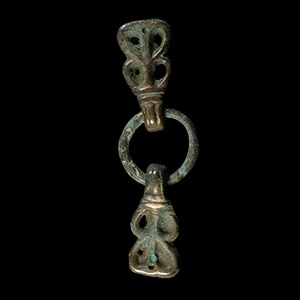
Viking Age Bronze Strap Junction
9th-11th century A.D.Sold for (Inc. bp): £33
Composed of a ring with two free-running bars with openwork designs to the front face and bars to reverse; section of fabric remaining. 35.3 grams, 57 mm
From the collection of a North American gentleman, formed in the 1990s. -
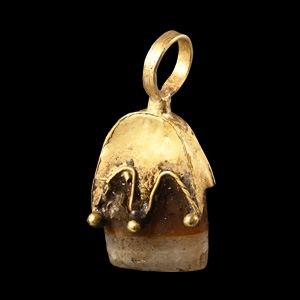
Viking Age Gold Elf Shot Pendant
9th-10th century A.D. or earlierSold for (Inc. bp): £468
Formed as a gold cap set with polished agate gem; suspension loop above. 0.93 grams, 18 mm
Acquired 1980-2015. Ex Abelita family collection.
This amulet was believed to offer protection against 'Elfshot'. The attack of elves was believed responsible for mysterious suffering in men and livestock. 'Elfshot' described sudden shooting pains localised to a particular area of the body, such as in rheumatism, arthritis or muscle stitches or cramps. Elves were thought to shoot darts or arrows where such pains had no obvious external cause. Belief in elfshot persisted into the 20th century in rural areas, and as proof country folk would sometimes find small arrowheads (the remains of Neolithic or Mesolithic flints, or naturally-occurring spear-shaped stones) that were believed to be the magical weapons that caused the afflictions. Belief in elfshot began in the Pagan Germanic period. -
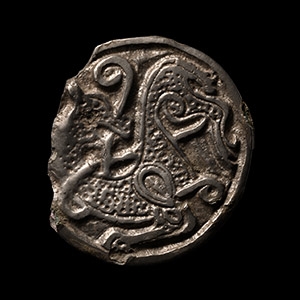
Viking Silver Mammen Style Dragon Pendant
10th-early 11th century A.D.Sold for (Inc. bp): £208
Of discoid form with central motif of a low-relief regardant beast with piriform shoulder and punced body, looped tendrils enmeshing the body. 9.1 grams, 35 mm
From the collection of a North American gentleman, formed in the 1990s.
