
Loading, please wait...
LOT 1224
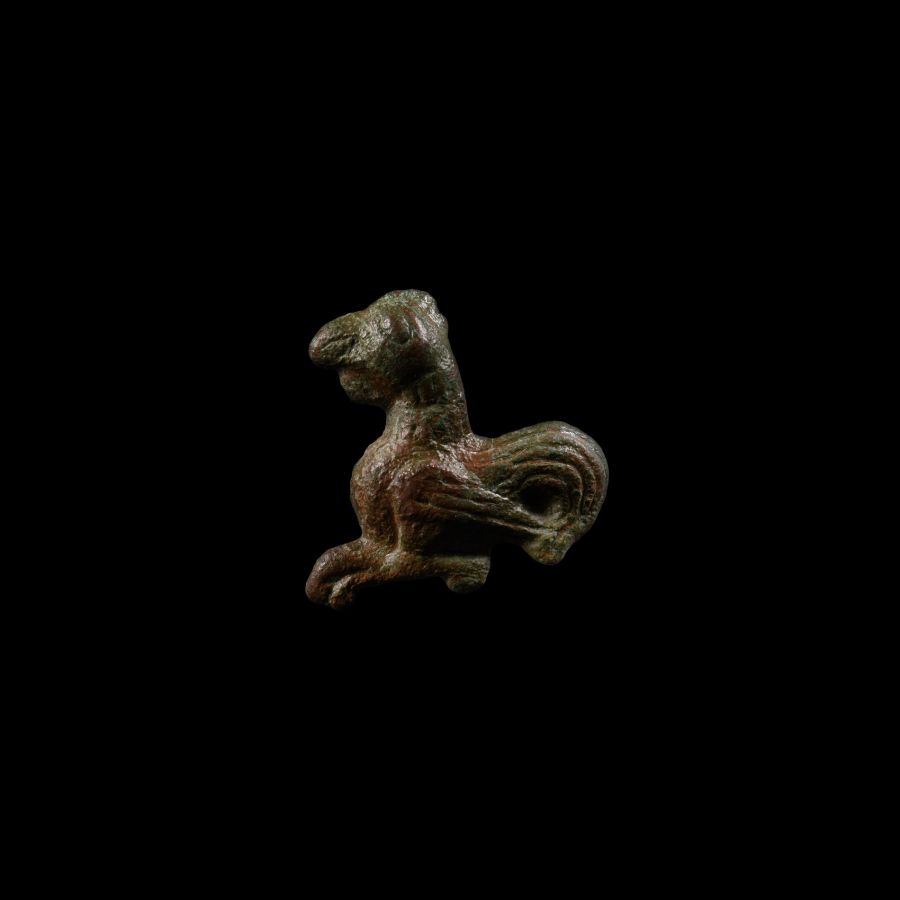
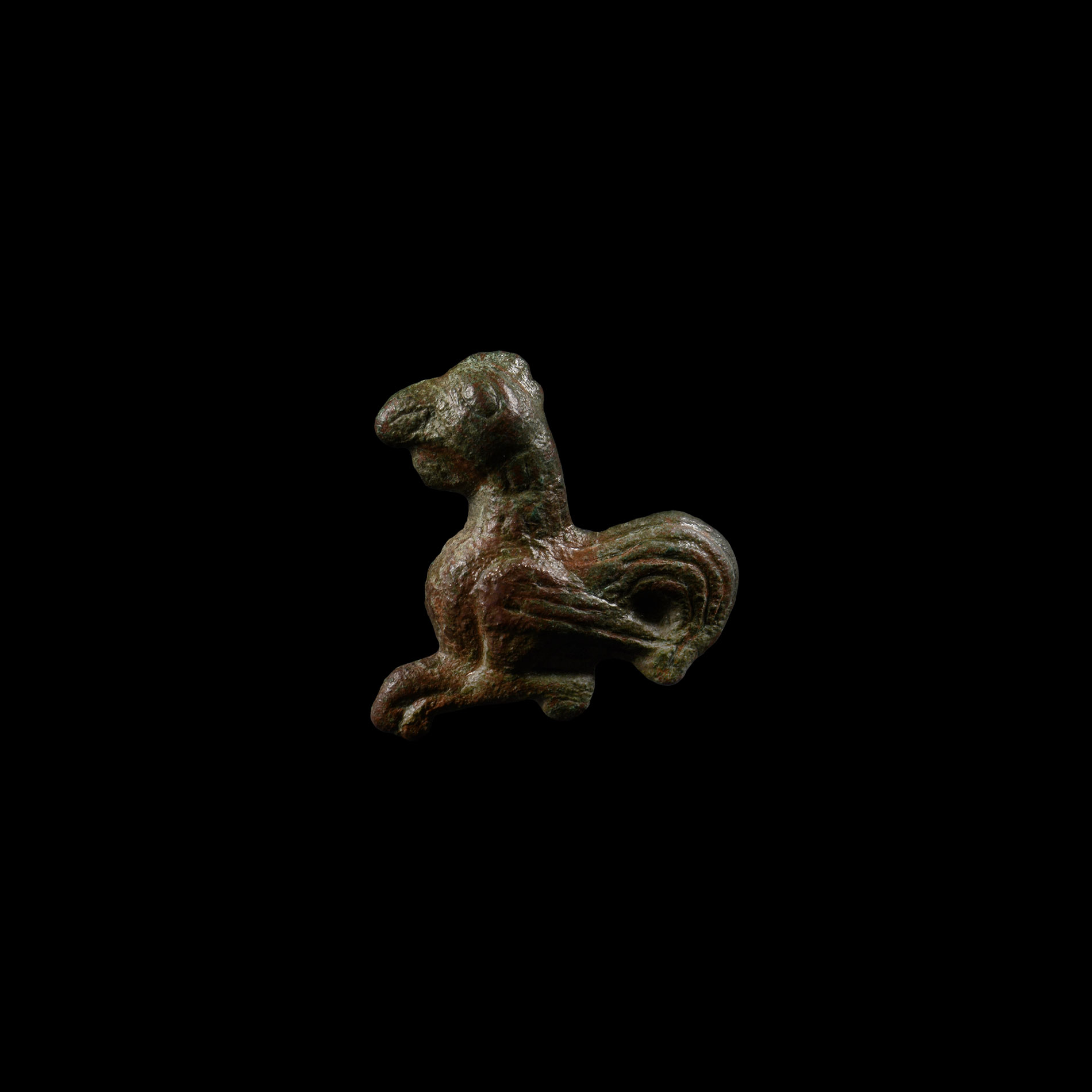
Viking Age Bronze Bird Brooch
9TH-11TH CENTURY A.D.
1 in. (6.4 grams, 26 mm).
Modelled standing left with stylised detailing; likely a cockerel; pin lug and catchplate to reverse. [No Reserve]
ProvenanceFrom the collection of a North American gentleman, formed in the 1990s.
LiteratureCf. Pedersen, A., ‘ Birds of Prey or Doves. Early Medieval bird-shaped brooches’ in Aarboger for Nordisk Oldkyndighed og Historie 1999 (2001), 2001, pp.19-66, fig.22, for similar brooch.
FootnotesSimilar brooches are known from Denmark and some examples show us a very similar form and decoration. So far England is the only area outside Scandinavia where bird brooches similar to those discovered in Denmark have been found. The archaeological finds indicate close contacts between England and Denmark in the first half of the 11th century. Anne Pedersen suggests that Byzantium art may be a source of inspiration for these specific type of brooches as is evident from the Danish coinage of the 11th century that direct or indirect influence from Constantinople played an important role, especially in connection with the presence of Danish mercenaries in the Varangian Guard of the Roman emperor.
CONDITIONTimeLine Auctions follows a vetting process to ensure the authenticity and legality of all items, reinforcing our commitment to integrity and responsible trading. Each antiquity, antique, and coin lot undergoes thorough examination by a vetting committee of at least ten external specialists, professional trade association members, scientists, and archaeologists: Our Vetting Process
AUCTIONS:
TimeLine is a leading auction house specialising in antiquities, ancient art, collectables, natural history, coins, medals, and books. Our auctions offer museums, collectors, historians, and enthusiasts the opportunity to acquire unique and historically significant pieces.
-
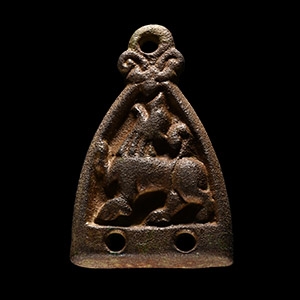
Anglo-Scandinavian Viking Bronze Howling Beast Stirrup Mount
Circa 11th century A.D.Sold for (Inc. bp): £481
Of Williams's Group 1 type 11C with raised frame, trefoil below the loop, high-relief wolf image, two holes to lower edge and ledge to the reverse. 26.2 grams, 48 mm
Acquired on the UK art market in the 1990s. Property of a Stowmarket, UK, gentleman. -
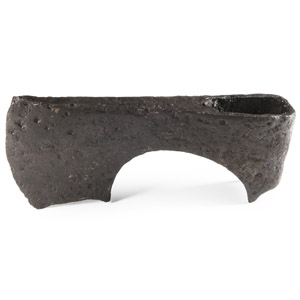
Finno-Ugrian Iron Bearded Axehead
11th-13th century A.D.Sold for (Inc. bp): £78
Triangular in plan with D-shaped socket, square butt, scooped lower profile and curved edge. 616 grams, 16.3 cm
From the private collection of a London gentleman, from his grandfather's collection formed before the early 1970s.
The more commonly used weapons of the Finno-Ugrian people were axes, commonly found in all Finnic areas, as well as spears. Iron axeheads of this typology show a sub-trapezoidal asymmetrical blade, often perforated through the centre. -
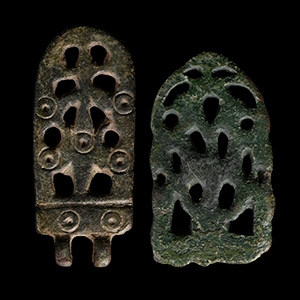
Viking Age Bronze Openwork Strap End Group
9th-11th century A.D.Sold for (Inc. bp): £46
One bifacial tongue-shaped strap end with openwork scheme and punched ring-and-dot motifs; one composed of an openwork interlaced vegetal design. 23 grams total, 39-44 mm
From the collection of a North American gentleman, formed in the 1990s.
