
Loading, please wait...
LOT 1370
Viking Age Bronze Artefact Collection
6TH-11TH CENTURY A.D.
1 - 1 3/4 in. (42.6 grams, 25-44 mm).
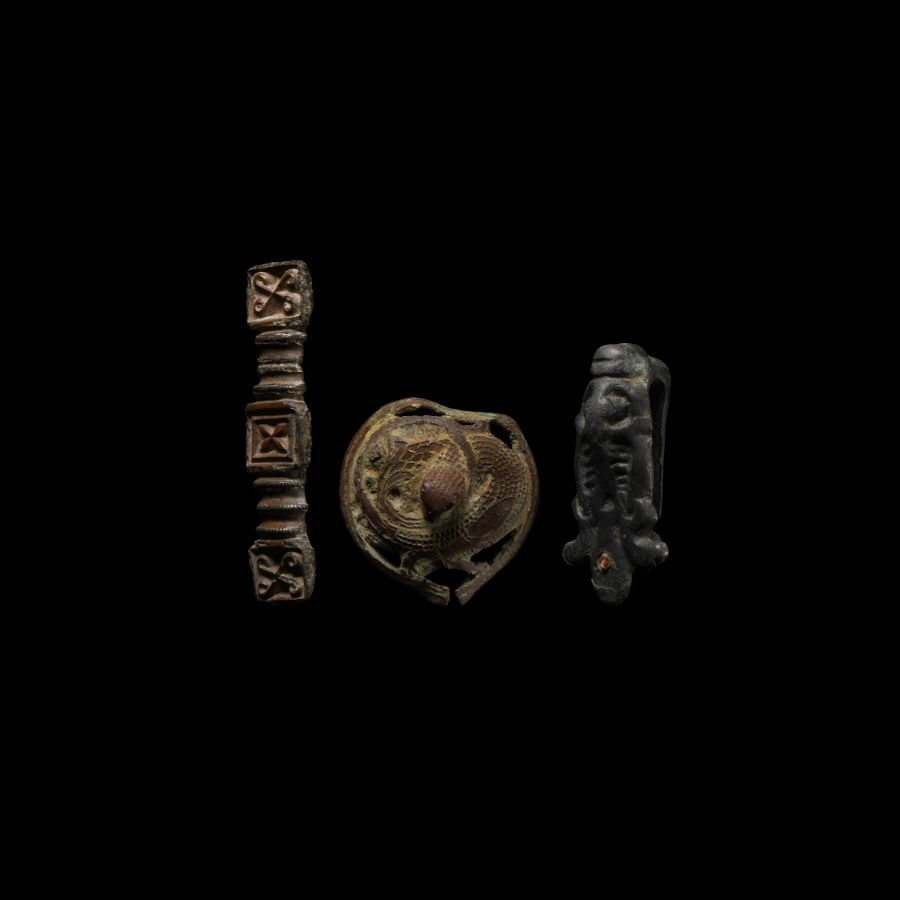
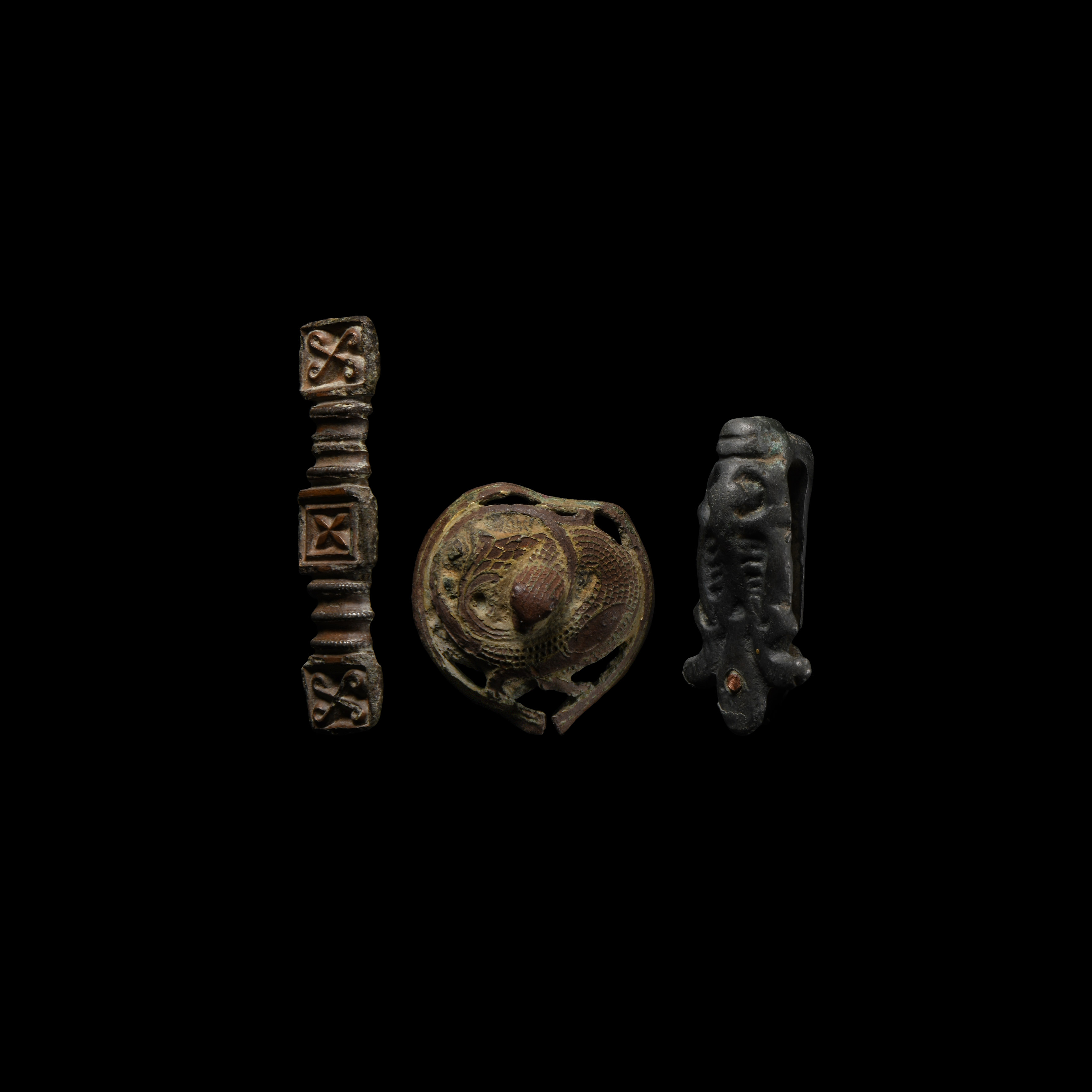
Comprising: a domed mount with a pounced fantastical sea creature in low relief, the head modelled in raised relief; equal-arm brooch with central flower head flanked by scrolled crosses, vertical ribs between, remains of pin lug and catchplate to reverse; mount with trefoil finial and possible zoomorphic scheme. [3, No Reserve]
ProvenanceFrom the collection of a North American gentleman, formed in the 1990s.
CONDITIONTimeLine Auctions follows a vetting process to ensure the authenticity and legality of all items, reinforcing our commitment to integrity and responsible trading. Each antiquity, antique, and coin lot undergoes thorough examination by a vetting committee of at least ten external specialists, professional trade association members, scientists, and archaeologists: Our Vetting Process
AUCTIONS:
TimeLine is a leading auction house specialising in antiquities, ancient art, collectables, natural history, coins, medals, and books. Our auctions offer museums, collectors, historians, and enthusiasts the opportunity to acquire unique and historically significant pieces.
-
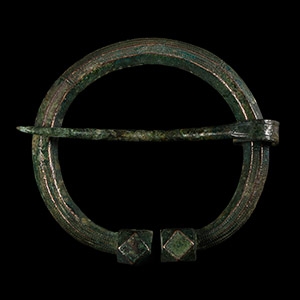
Large Viking Age Heavy Bronze Penannular Brooch
9th-11th century A.D.Sold for (Inc. bp): £208
With facetted terminals displaying decorative pecking to the perimeters, facetted hexagonal brooch body with shallow dimpled ornament, free-running pin with coiled head and shallow plain-line borders. 94.5 grams, 87 mm
From the collection of a North American gentleman, formed in the 1990s. -
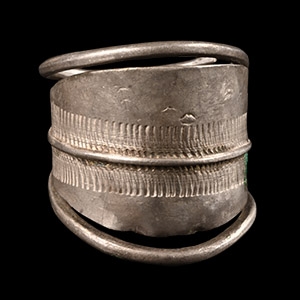
Viking Age Decorated Silver Coiled Ring
9th-11th century A.D.Sold for (Inc. bp): £124
With raised medial rib to the expanded bezel, zigzags above and below, tapering coiled arms. 6.55 grams, 22.65 mm overall, 17.67 mm internal diameter (approximate size British O 1/2, USA 7 1/4, Europe 15.61, Japan 15)
From the collection of a North American gentleman, formed in the 1990s. -
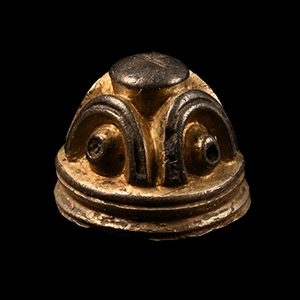
Pre-Viking Silver-Gilt Scabbard Mount
Circa 4th-5th century A.D.Sold for (Inc. bp): £585
Domed and with a ribbed basal rim, the sidewall with four small circular bosses each framed by a bilinear arch; surmounted by a slightly convex disc bearing an incised cross; transverse bar to the underside; Mortimer's type 4iii. 4.2 grams, 14 mm
Acquired early 1990s. From an East Anglian private collection.
The mount is an extremely early example of the so-called 'sword pyramid' mount which was used in the Vendel period as part of the sword-suspension system. It has a parallel in the find from Sandby Borg, Oland, Sweden where Style I masks also appear.
