
Loading, please wait...
LOT 1515
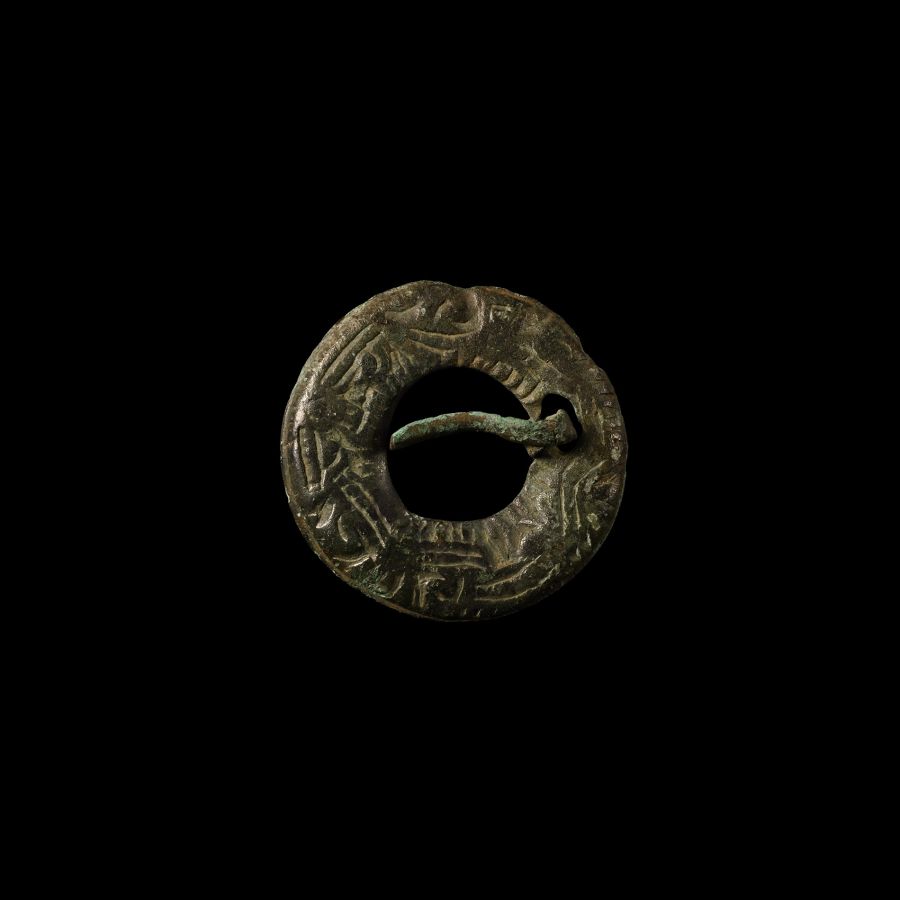
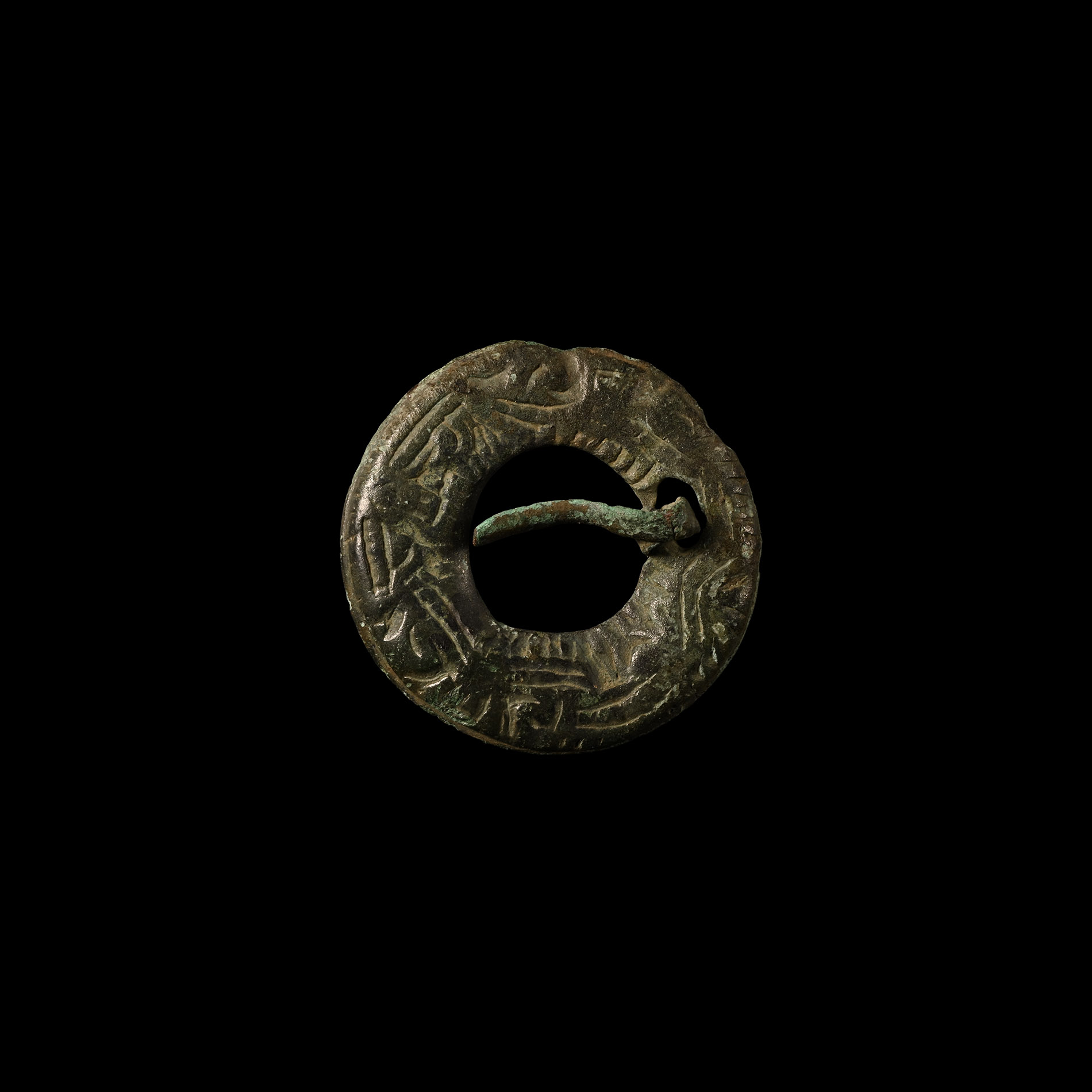
Viking Age Bronze Annular Brooch
10TH CENTURY A.D.
1 3/8 in. (8.6 grams, 34 mm).
Formed as a slightly domed upper face decorated with Jellinge Style zoomorphic ornament in low relief, pierced to accept a slender bronze pin. [No Reserve]
ProvenanceFrom the collection of a North American gentleman, formed in the 1990s.
LiteratureCf. Sedov, B.B., Finno-Ugri i Balti v Epokhi Srednevekovija, Moscow, 1987, pl.IX, 9, for type.
CONDITIONTimeLine Auctions follows a vetting process to ensure the authenticity and legality of all items, reinforcing our commitment to integrity and responsible trading. Each antiquity, antique, and coin lot undergoes thorough examination by a vetting committee of at least ten external specialists, professional trade association members, scientists, and archaeologists: Our Vetting Process
AUCTIONS:
TimeLine is a leading auction house specialising in antiquities, ancient art, collectables, natural history, coins, medals, and books. Our auctions offer museums, collectors, historians, and enthusiasts the opportunity to acquire unique and historically significant pieces.
-
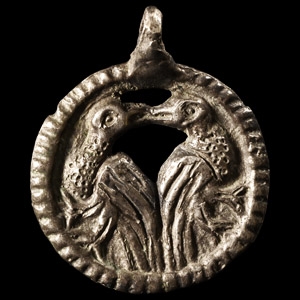
Viking Age Silver Pendant with Huginn and Muninn
Circa 10th-11th century A.D.Sold for (Inc. bp): £1,430
Composed of an openwork discoid body displaying the two mythical ravens Huginn and Muninn positioned back-to-back, heads turned to face each other, simple detailing to their feathers and raised notched border; suspension loop to apex. 6.01 grams, 30 mm high
From the private collection of a London gentleman, from his grandfather's collection formed before the early 1970s.
In Norse mythology, these two ravens were sent on daily flights around the world by the god Odin. Believed to have been granted the power of speech by Odin, the birds would perch on the god's shoulders to relay news gathered on their travels. -
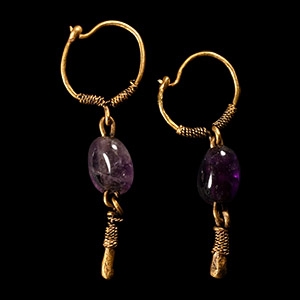
Viking Age Gold Earrings with Amethyst Gemstones
9th-11th century A.D.Sold for (Inc. bp): £1,040
Matched pair, filigree bands and amethyst olive drops with dangles. 9.65 grams total, 48-54 mm
Private collection formed in Europe in the 1980s. Westminster collection, central London, UK. -
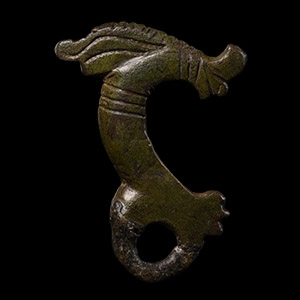
Viking Age Bronze Bridle Cheek-Piece
10th-11th century A.D.Sold for (Inc. bp): £65
With suspension loop and curved bar with Ringerike Style beast-head terminal, incised linear detailing. 15.8 grams, 47 mm
Found Saxmundham, Suffolk, UK, in 2004.
