
Loading, please wait...
LOT 1160
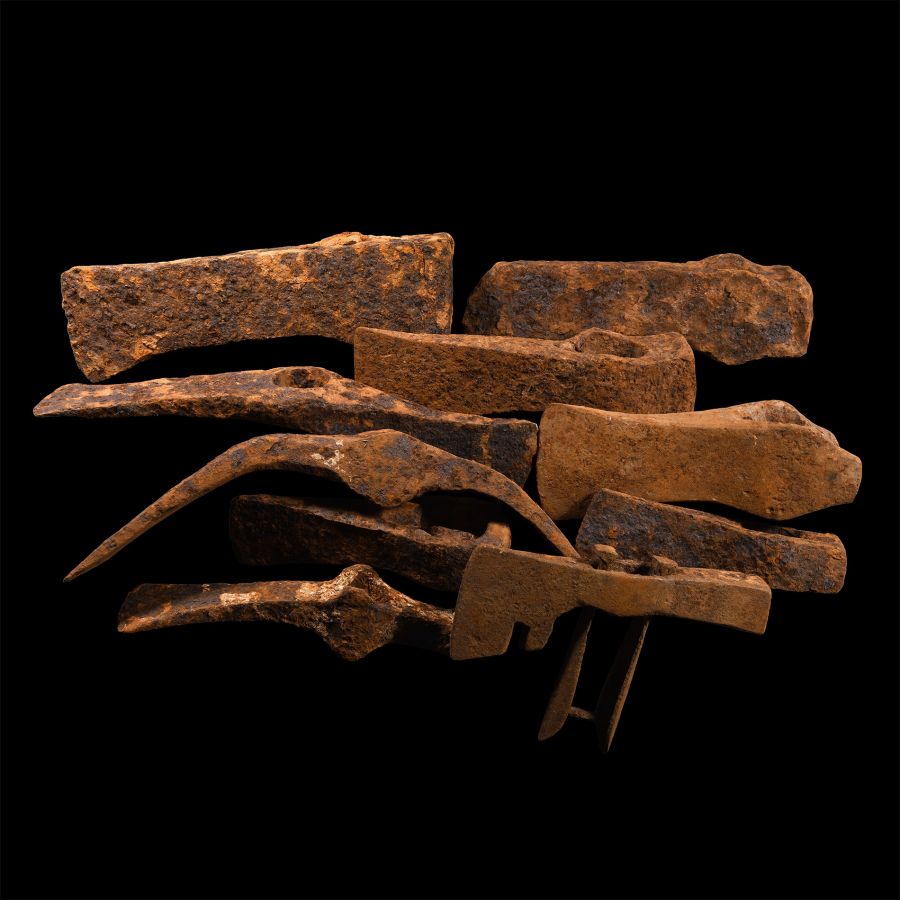
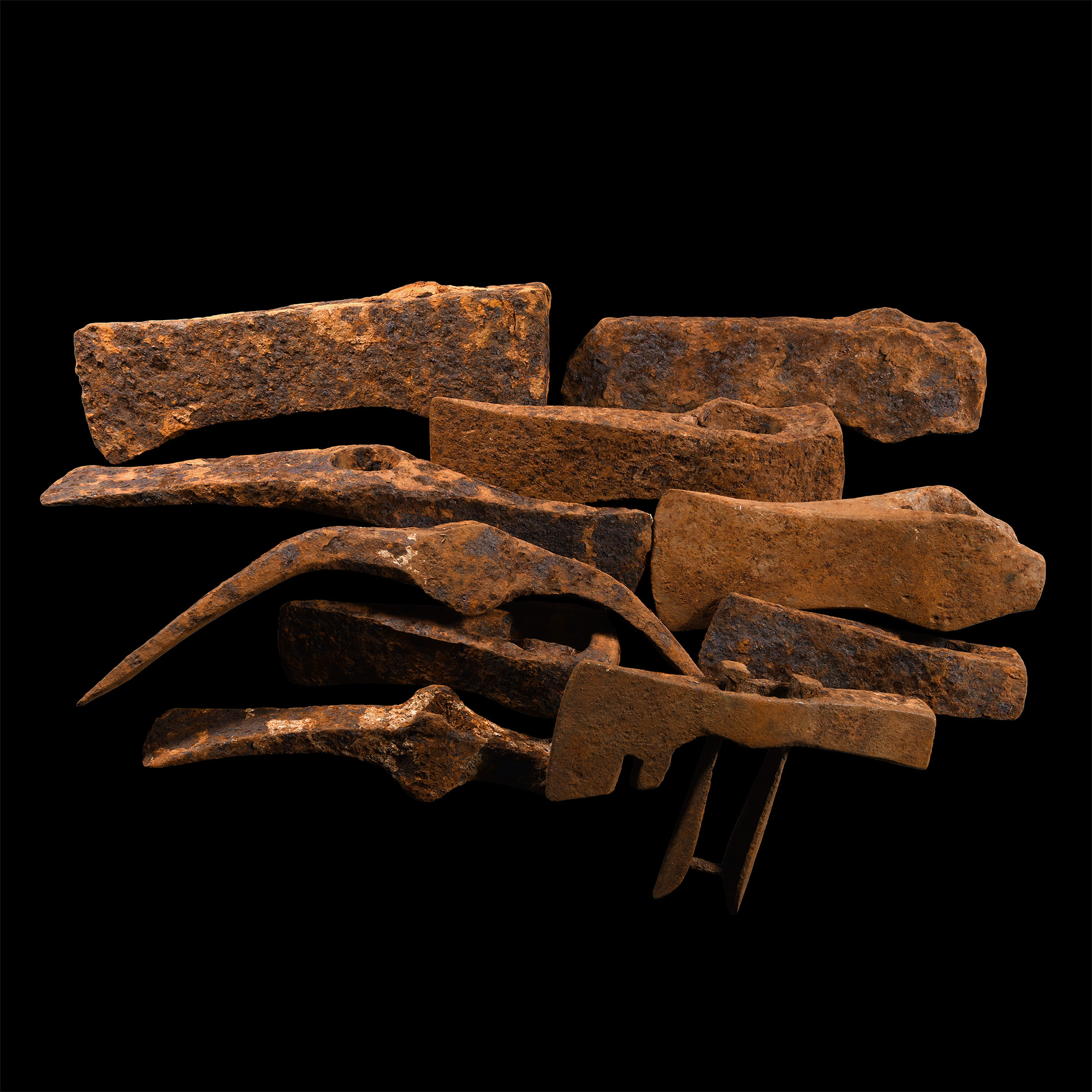
Viking Age and Later Iron Axehead Group
10TH-18TH CENTURY A.D.
5 3/4 - 11 1/8 in. (9.5 kg total, 14.5-28.5 cm).
Mainly comprising socketted axeheads and adzes, together with other items; including at least one stamped with maker's marks. [10]
ProvenanceAcquired 1990s-early 2000s.
East Anglian private collection.
TimeLine Auctions follows a vetting process to ensure the authenticity and legality of all items, reinforcing our commitment to integrity and responsible trading. Each antiquity, antique, and coin lot undergoes thorough examination by a vetting committee of at least ten external specialists, professional trade association members, scientists, and archaeologists: Our Vetting Process
AUCTIONS:
TimeLine is a leading auction house specialising in antiquities, ancient art, collectables, natural history, coins, medals, and books. Our auctions offer museums, collectors, historians, and enthusiasts the opportunity to acquire unique and historically significant pieces.
LOT 1160
Viking Age and Later Iron Axehead Group
Estimate £200 - 300€230 - 350 (for guidance only)$270 - 410 (for guidance only)
-
.jpg)
Viking Iron Danish Type Broad Axehead
9th-10th century A.D.Sold for (Inc. bp): £2,211
Featuring flanges to the socket, a rectangular butt and cheeks with shorter upper and longer lower edges. 334 grams, 15.5 cm
From the private collection of a London gentleman, from his grandfather's collection formed before the early 1970s. -
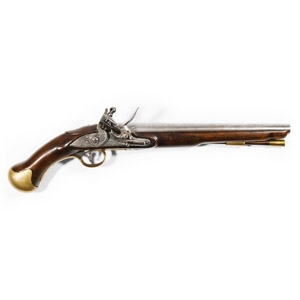
Tower Long Sea Service Flintlock Pistol
1800 A.D.Estimate: £2,000 - 3,000 (+bp*)
Opening Bid: £1,111
Napoleonic era with 30cm (12") round smooth bore barrel of .56" bore with London proof marks, the lock with 'TOWER', 'crown-over-GR' and 'crown-over-broad-arrow' marks fitted with brass-tipped wood ramrod and wood full stock and butt with brass butt cap, trigger guard, side plate and ferrule with steel belt hook; action working to half and full cock. 1.40 kg, 49 cm
Acquired from Andrew Bottomley, UK. The Kusmirek Collection, UK. Accompanied by a copy of the Bottomley listing. This lot has been checked against the Interpol Database of stolen works of art and is accompanied by search certificate no.204079.
Sold as an exempt item under Section 58 (2) of the Firearms Act, 1968, to be held as a curiosity or ornament. No license required but buyer must be over 18 years of age. Overseas bidders should note that, due to UK regulations governing export of all firearms, overseas buyers will need to make arrangements for shipping this lot out of the UK directly, by air freight, with a specialist company or agent. -
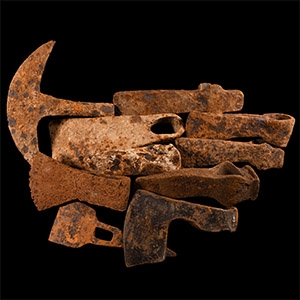
Viking Age and Later Iron Axehead Group
12th-18th century A.D.Sold for (Inc. bp): £260
Mainly comprising socketted axeheads and hammer-butt adzes, together with other weapons. 9.5 kg total, 16-23.5 cm
Acquired 1990s-early 2000s. East Anglian private collection.
On type of axehead here presented, with similar specimens found in the territories of the Teutonic Order, was by far the most popular form of axe which remains unchangeable and continues to be used in the Baltic to this day. It appears in East European territories as early as the mid 13th century A.D.
