
Loading, please wait...
LOT 1565
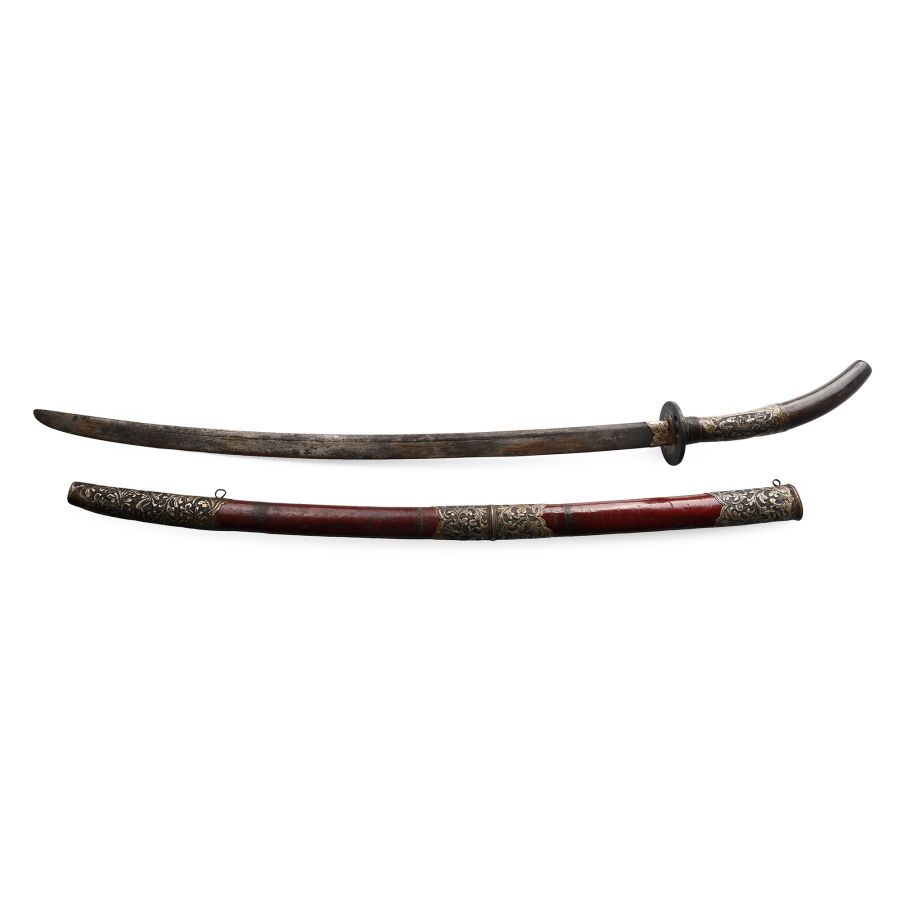
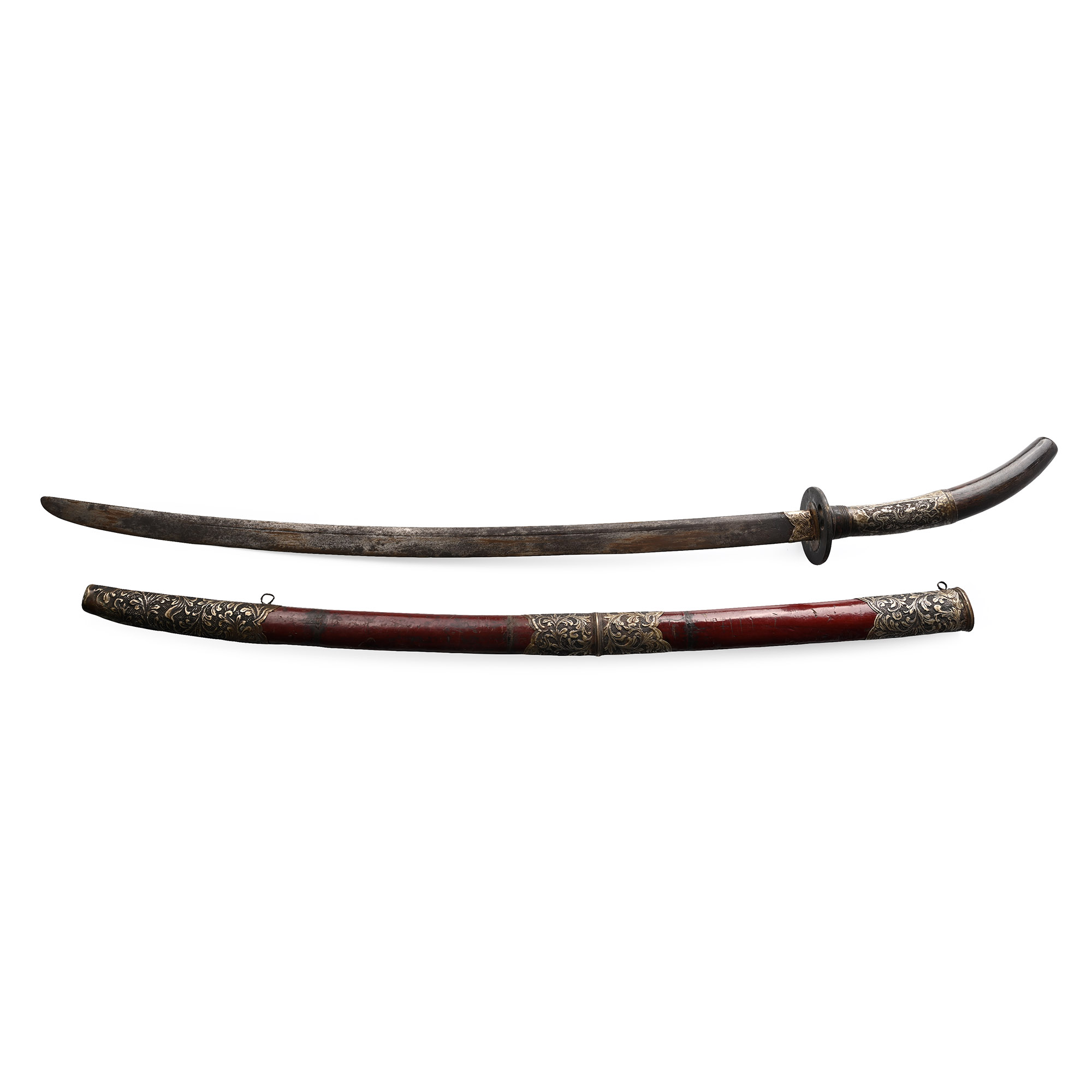
Vietnamese Officer's Iron Sword with Scabbard
COLONIAL PERIOD, LATE 19TH-EARLY 20TH CENTURY A.D.
36 5/8 in. (967 grams total, 93 cm including scabbard).
The curved blade with corrugation below the spine, narrowing tip, applied collar at the ricasso; pierced discoid guard, curved grip with decorated sleeve; lacquered scabbard with silver fittings; Vietnamese name lightly inscribed on hilt. [No Reserve]
ProvenanceAcquired in 2008.
Property of a Kent, UK, private collector.
TimeLine Auctions follows a vetting process to ensure the authenticity and legality of all items, reinforcing our commitment to integrity and responsible trading. Each antiquity, antique, and coin lot undergoes thorough examination by a vetting committee of at least ten external specialists, professional trade association members, scientists, and archaeologists: Our Vetting Process
AUCTIONS:
TimeLine is a leading auction house specialising in antiquities, ancient art, collectables, natural history, coins, medals, and books. Our auctions offer museums, collectors, historians, and enthusiasts the opportunity to acquire unique and historically significant pieces.
-
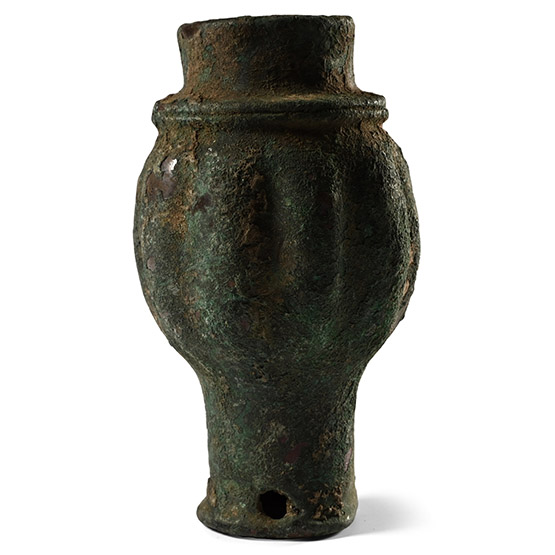
Luristan Bronze Macehead
13th-7th century B.C.Sold for (Inc. bp): £65
Comprising a cylindrical shaft with flared mouth, rounded flanges around the swollen head, horizontal stepped bands; Sara Gorz type. 416 grams, 98 mm
Acquired 1980-2015. Ex Abelita family collection. -
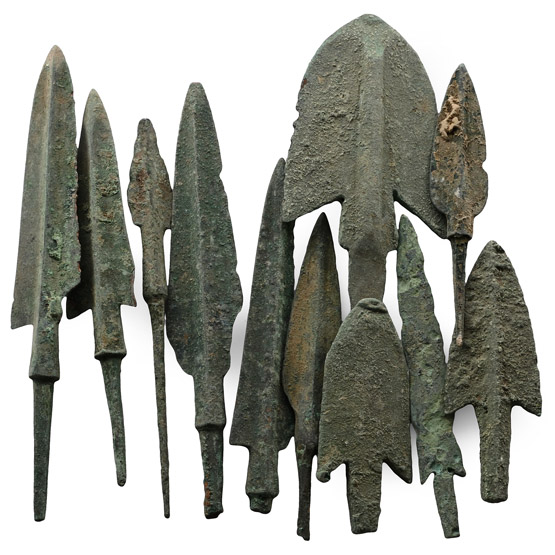
Western Asiatic Bronze Arrowhead Collection
1st millennium B.C.Sold for (Inc. bp): £117
Including barbed-and-tanged, leaf-shaped, spade-shaped and other types. 339 grams total, 7.9-14 cm
Ex London, UK, collection, 1990s. -
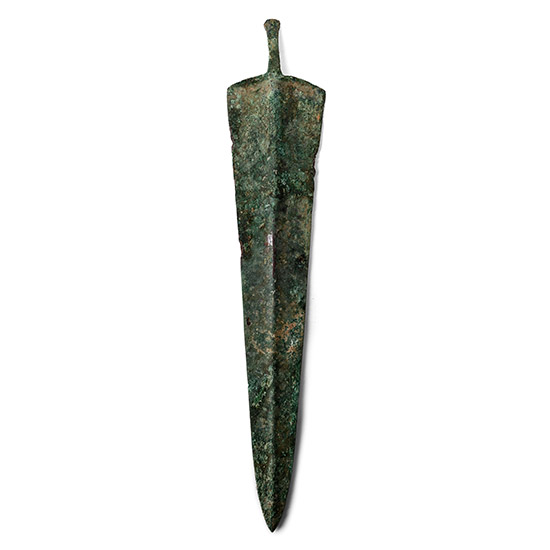
North Western Persian Bronze Blade
Early 1st millennium B.C.Sold for (Inc. bp): £169
With a long tapering blade, rounded shoulders, broad flattened mid-rib, and a tapering square-section tang. 311 grams, 37.7 cm
Ex Abelita family collection, 1980s-2000s.
Edged weapons with tangs are among the simplest forms of weapons from this culture. This basic type was hardly altered in the period when bronze was the most important material in weapon production. The retention of this basic type with so few alterations makes precise dating challenging. Bronze daggers, dirks and swords exist today only as bronze blades, having lost their perishable handles over the course of time.
