
Loading, please wait...
LOT 2105
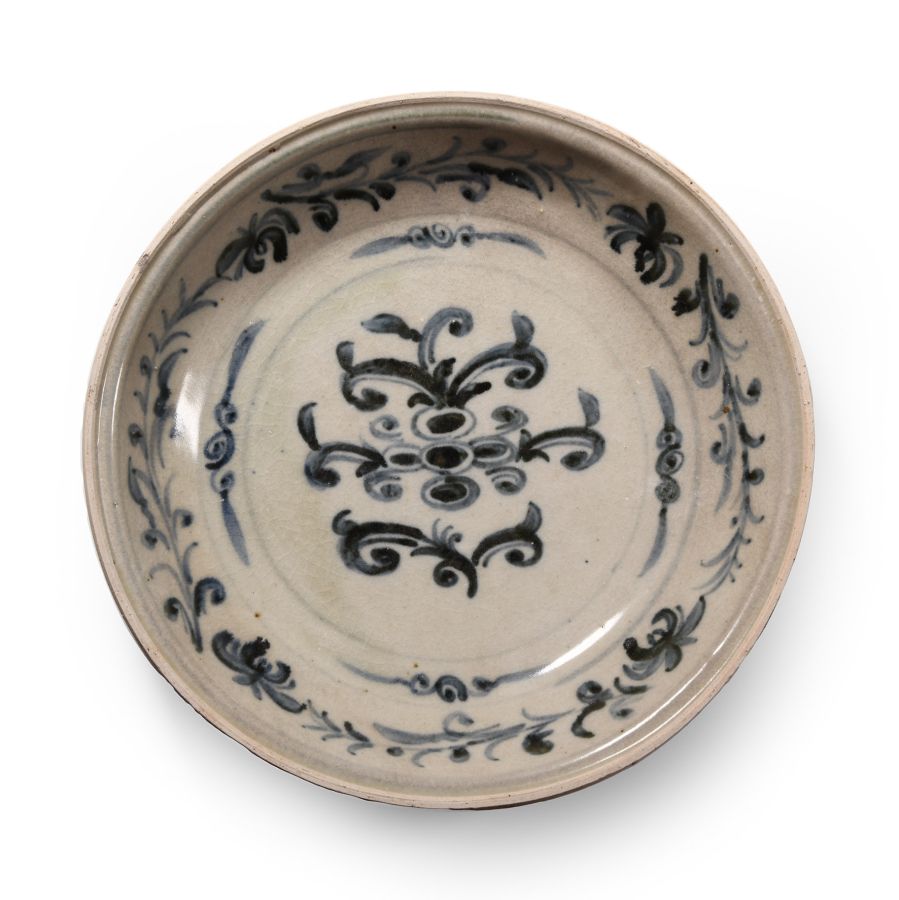
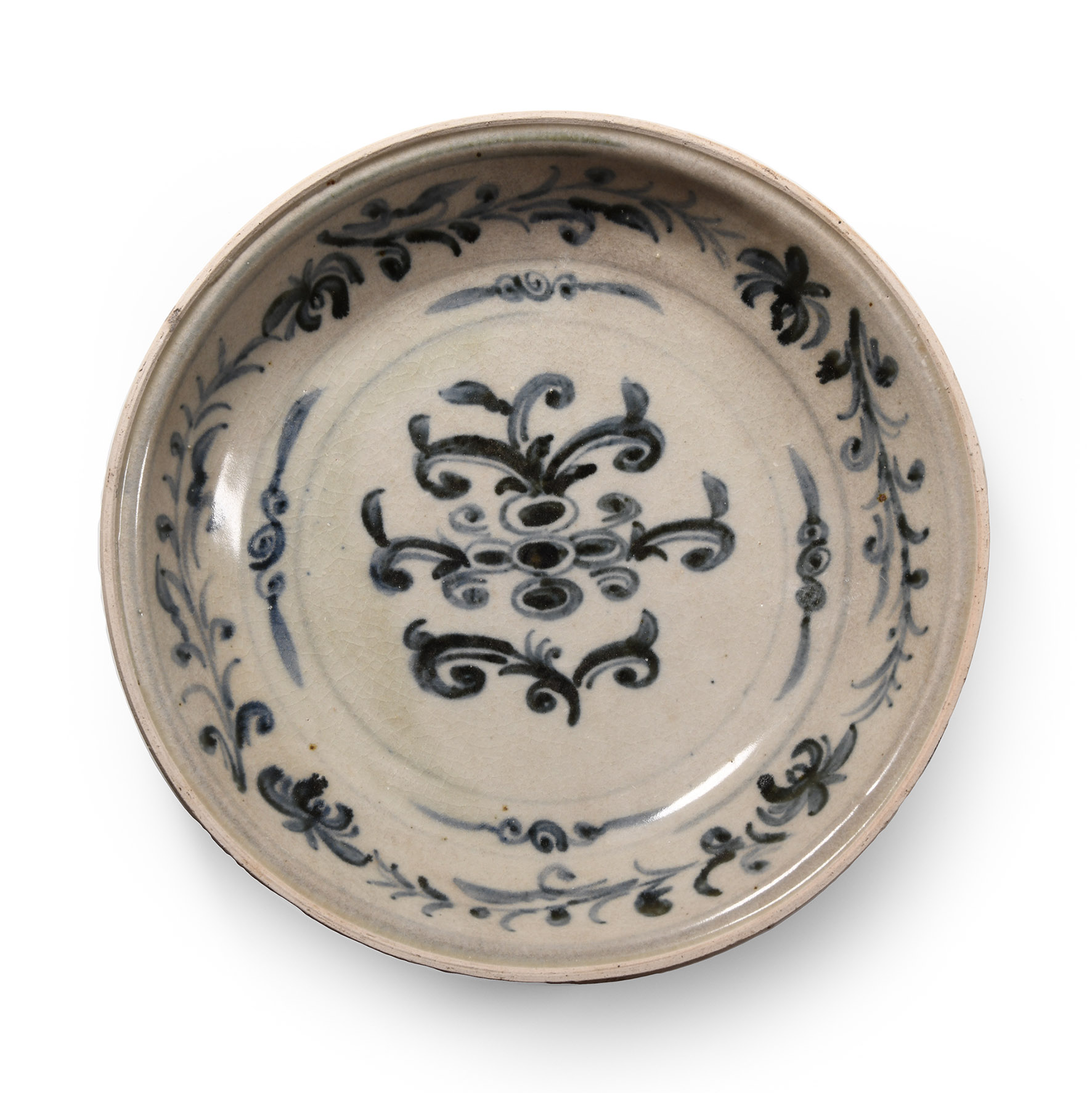
Vietnamese 'Hoi An' Shipwreck Bowl
14TH-15TH CENTURY A.D.
9 1/2 in. (850 grams, 24 cm wide).
With tin-glazed surface and basal ring, applied blue-black pattern of fronds and tendrils to the inner face, gadroons to the outer.
ProvenanceEx Butterfield Auctions, San Francisco, USA.
LiteratureIn the mid 15th century a freighting junk loaded with fine Vietnamese pottery sank in an area of the South China Sea called the 'Dragon’s Embrace.' This vessel is part of the shipwreck cargo recovered off the coast of Vietnam at Hoi An. The ceramics themselves were probably made in the area of Chu Dau.
CONDITIONTimeLine Auctions follows a vetting process to ensure the authenticity and legality of all items, reinforcing our commitment to integrity and responsible trading. Each antiquity, antique, and coin lot undergoes thorough examination by a vetting committee of at least ten external specialists, professional trade association members, scientists, and archaeologists: Our Vetting Process
AUCTIONS:
TimeLine is a leading auction house specialising in antiquities, ancient art, collectables, natural history, coins, medals, and books. Our auctions offer museums, collectors, historians, and enthusiasts the opportunity to acquire unique and historically significant pieces.
-
.jpg)
Chinese Amethyst Bead Necklace with Jadeite Pendant
20th century A.D.Sold for (Inc. bp): £260
Composed of graduated amethyst beads of various types, interspersed with spacer beads and featuring a lentoid pendant bead with notched edges and engraved with geometric 'clouds' on both faces; hook-and-eye clasp. 189 grams, 53 cm long
London collection since the 1980s. Property of a Canadian family. -
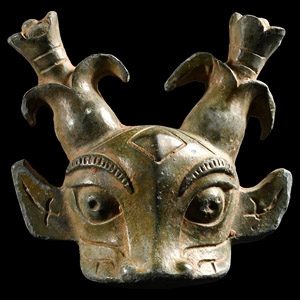
Chinese Han Style Bronze Bovine Mask
20th century A.D.Estimate: £120 - 170 (+bp*)
Opening Bid: £60
Formed as the upper half of the head of a horned animal; tapering mounting lug to reverse. 101 grams, 59 mm high
From a Cotswold, UK, collection, 1980-1990s. -
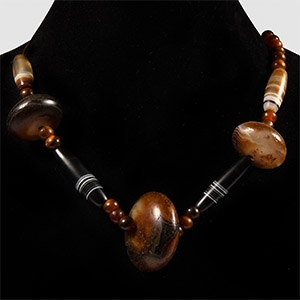
Tibetan Banded Agate Bead Necklace String
20th century A.D.Sold for (Inc. bp): £143
Designer necklace composed of large irregular round agate beads and fusiform banded agate beads. 127 grams, 54 cm long
Acquired 1970s onwards. Private collection of Michael O'Hara, Cambridgeshire, UK. Ex private collection of Benjamin Hyde-Smith, Hertfordshire, UK.
