
Loading, please wait...
LOT 2048
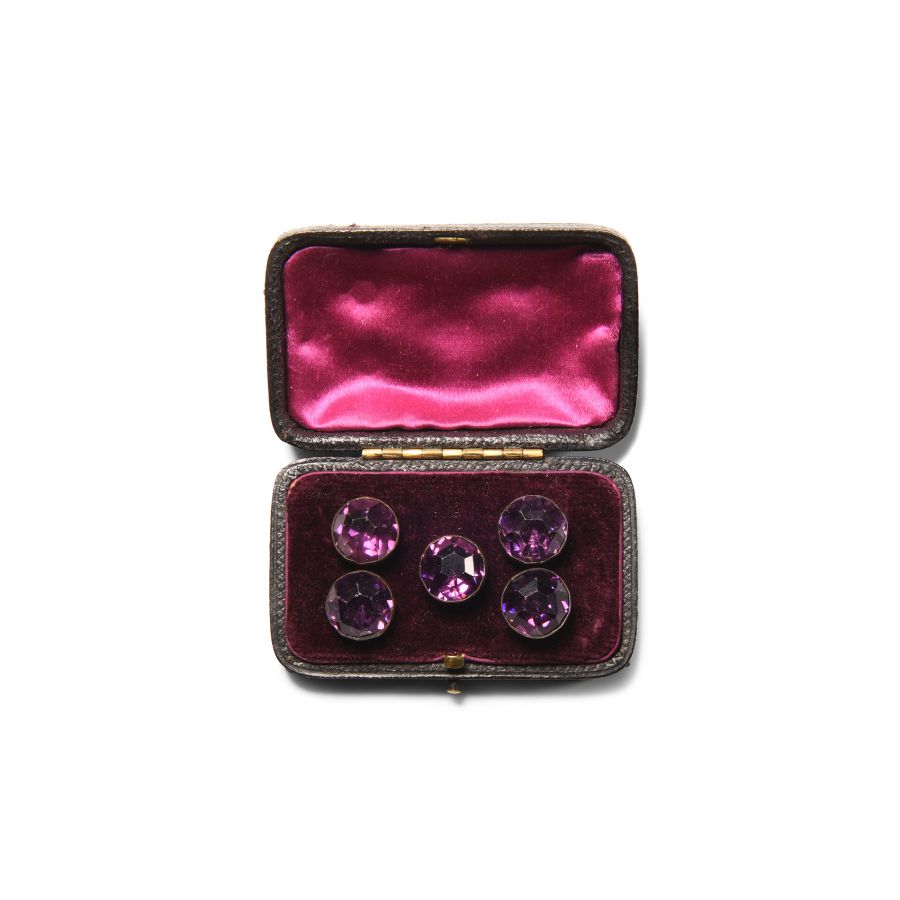
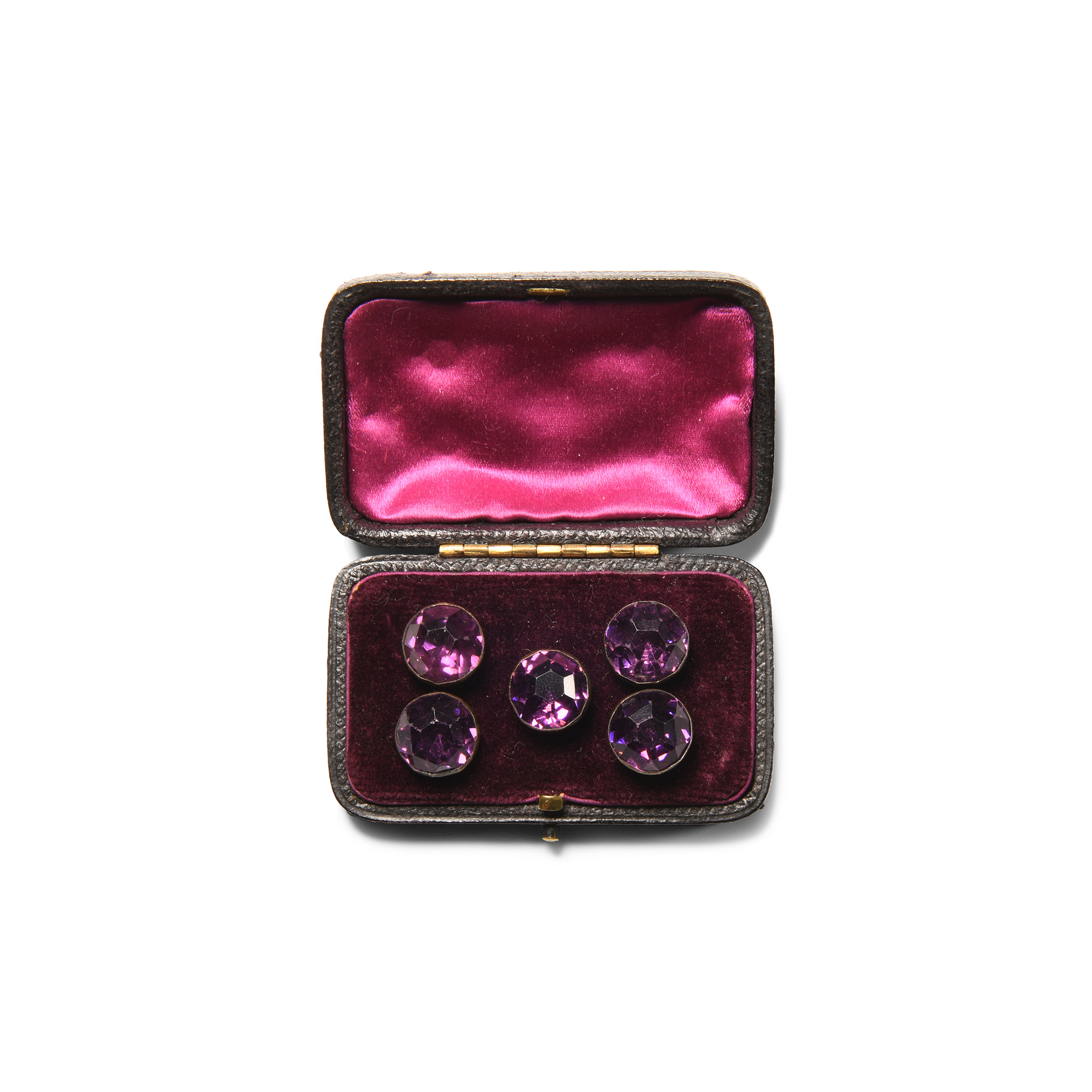
Victorian Silver Button Set with Cut Gems
19TH CENTURY A.D.
5/8 in. (10.73 grams total, 12 mm wide each).
Comprising a set of five matching buttons with facetted faux amethyst gems set in silver dome-backed settings with loops for attachment; held in the original leatherette, silk and velvet lined hinged case. [No Reserve]
ProvenanceFrom an old English collection formed before 2000.
Acquired on the UK art market.
TimeLine Auctions follows a vetting process to ensure the authenticity and legality of all items, reinforcing our commitment to integrity and responsible trading. Each antiquity, antique, and coin lot undergoes thorough examination by a vetting committee of at least ten external specialists, professional trade association members, scientists, and archaeologists: Our Vetting Process
AUCTIONS:
TimeLine is a leading auction house specialising in antiquities, ancient art, collectables, natural history, coins, medals, and books. Our auctions offer museums, collectors, historians, and enthusiasts the opportunity to acquire unique and historically significant pieces.
-

Post Medieval 'Thames' Iron Scissors and Shears Group
17th-18th century A.D.Sold for (Inc. bp): £39
The scissors articulate with decorative moulding and columns of pricked dots on both sides of the lower body; shears with tapering blades with chamfered lower edges. 45 grams total, 11.2-13 cm
Found Billingsgate spoil from the Thames foreshore, London, UK. -
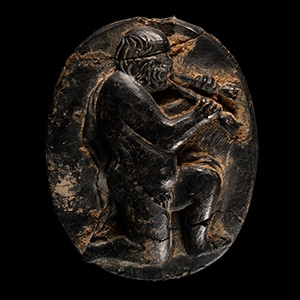
Roman Style Bone Cameo of Silenus
20th century A.D.Sold for (Inc. bp): £169
Of oval form, a mature Silenus shown nude in high-relief kneeling right on one leg, cloak thrown over one shoulder, playing two pipes, suspension loop to top edge. 19.8 grams, 56 mm high
London art market, 1990. -

Post Medieval Biblical Ceramic Tile Group
16th-17th century A.D.Sold for (Inc. bp): £33
Showing biblical scenes in relief; remains of coloured glaze. 1.67 kg total, 12 x 8.5 - 13 x 9 cm
Acquired 1990s-early 2000s. East Anglian private collection.
The scenes could be interpreted as a representation of the slaughter of the innocents, the sacrifice of a bull, the Baptism of Christ, and a naval battle. The latter, if concerning the history of the Jewish people, could depict the battle of the Sea of Galilee of 68 A.D. The tiles were probably part of a bigger complex related to the history of the Jewish and Christian people.
