
Loading, please wait...
LOT 2043
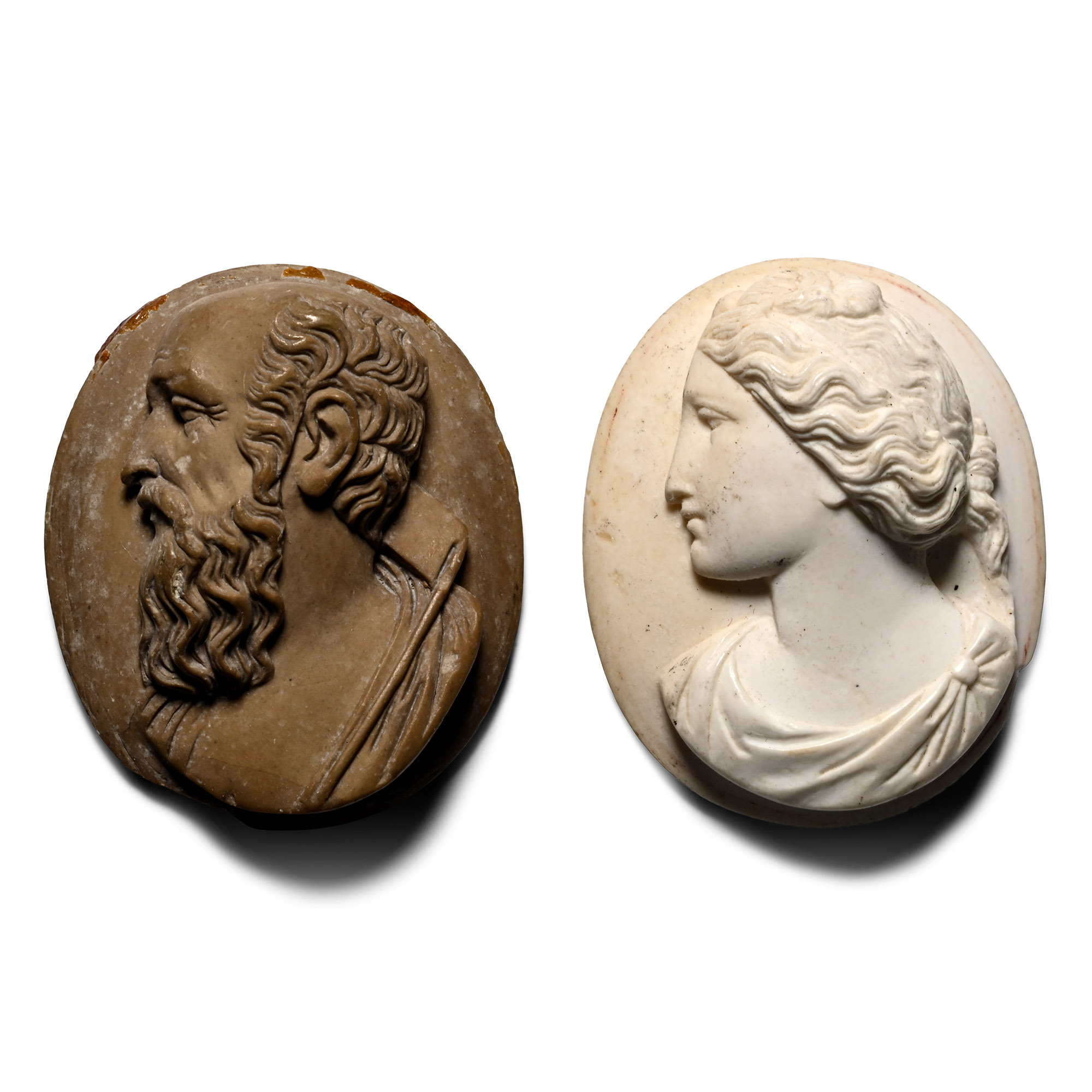
Victorian Lava Cameo Collection
19TH CENTURY A.D.
1 1/8 in. (14.3 grams total, 29 mm each).
Comprising: a profile bust of a mature bearded man, possibly depicting a philosopher; a profile bust of a youthful woman with dressed hair. [2, No Reserve]
ProvenanceAcquired on the European art market.
CONDITIONTimeLine Auctions follows a vetting process to ensure the authenticity and legality of all items, reinforcing our commitment to integrity and responsible trading. Each antiquity, antique, and coin lot undergoes thorough examination by a vetting committee of at least ten external specialists, professional trade association members, scientists, and archaeologists: Our Vetting Process
AUCTIONS:
TimeLine is a leading auction house specialising in antiquities, ancient art, collectables, natural history, coins, medals, and books. Our auctions offer museums, collectors, historians, and enthusiasts the opportunity to acquire unique and historically significant pieces.
-
.jpg)
Spanish Rock Crystal and Enamelled Gold Crucifixion Pendant
Early 17th century A.D.Sold for (Inc. bp): £5,460
Devotional pendant with a finely chased and adorned frame with black enamel, encased within a double-sided polychrome enamelled gold Calvary scene, depicting Christ upon the cross with St. John the Evangelist and the Virgin Mary standing on either side; each side with domed pieces of rock crystal, which open to expose both crucifixion scenes. 12.58 grams, 34 mm
Acquired on the European art market. This lot has been checked against the Interpol Database of stolen works of art and is accompanied by search certificate number no.13400-257999. -
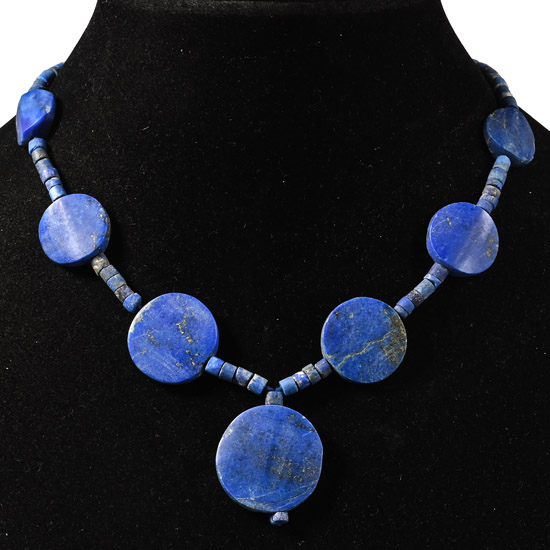
Bactrian Style Lapis Lazuli Bead Necklace String
20th century A.D.Sold for (Inc. bp): £33
Composed of tubular and coin-shaped beads, restrung. 38 grams, 29 cm
Acquired in the 1990s-early 2000s. Ex London, UK, collection. -
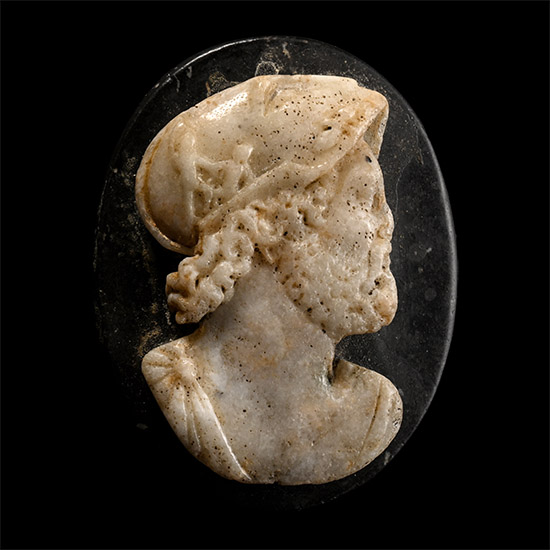
Grand Tour Stone Cameo with Bust of Ajax
18th century A.D.Sold for (Inc. bp): £338
Large oval cameo with profile bust of the Greek hero Ajax, shown bearded and with his helmet pushed up exposing his face. 27.3 grams, 48 mm
UK private collection, acquired on the French art market in the 2000s.
Ajax is recorded in The Iliad as ‘the best man among the Thracians, being both brave and of great stature’. He was one of the strongest warriors for the Achaeans, second only to his cousin Achilles. His epic duel with Hector is detailed in the seventh book of the famed poem by Homer.
