
Loading, please wait...
LOT 1168
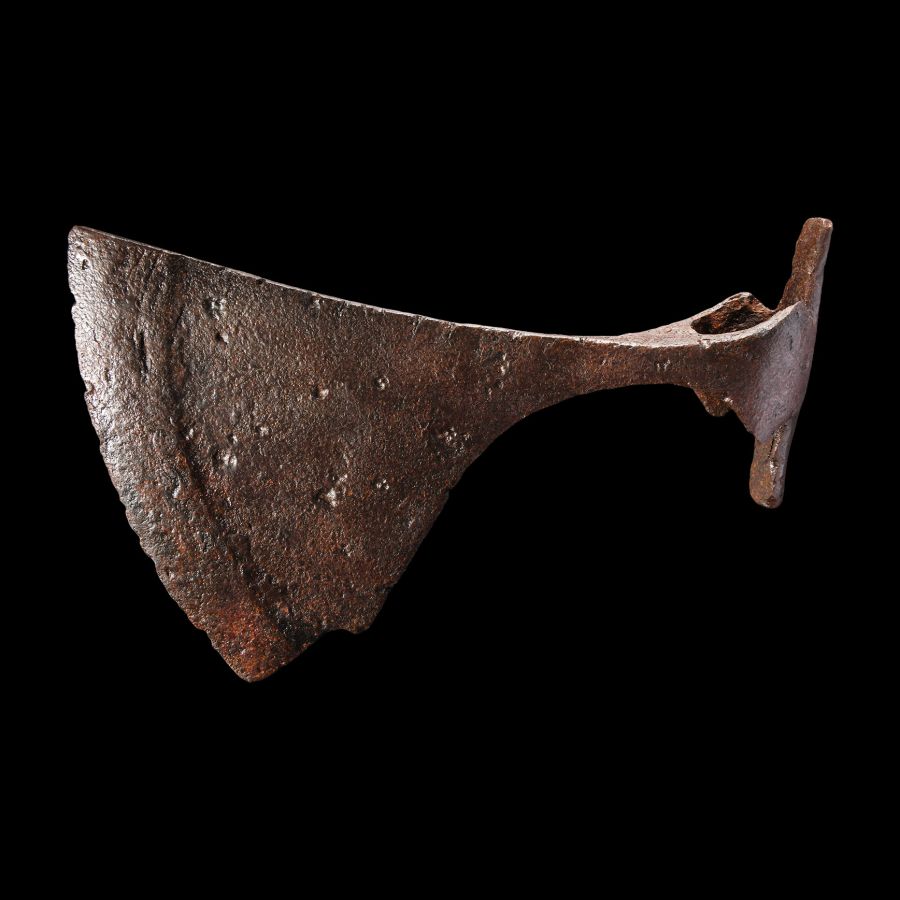
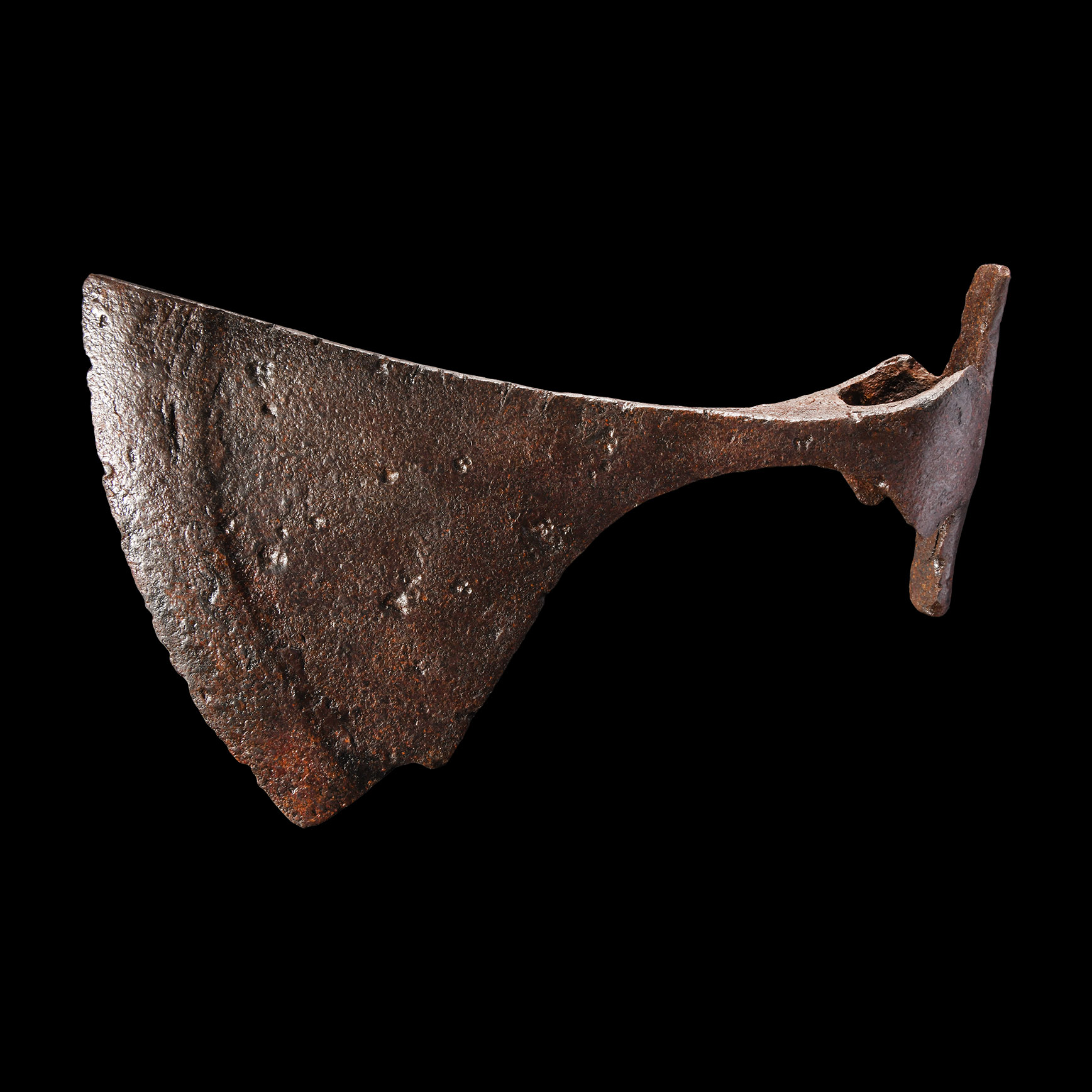
Very Large Viking Iron Battle Notched Axehead
10TH-11TH CENTURY A.D.
11 in. (1.36 kg, 28 cm).
Featuring an elongated triangular butt, flanged cylindrical socket, slender neck with broad, flaring cheeks; the blade, upper and lower edges notched.
ProvenanceFrom the private collection of a London gentleman, from his grandfather's collection formed before the early 1970s.
CONDITIONTimeLine Auctions follows a vetting process to ensure the authenticity and legality of all items, reinforcing our commitment to integrity and responsible trading. Each antiquity, antique, and coin lot undergoes thorough examination by a vetting committee of at least ten external specialists, professional trade association members, scientists, and archaeologists: Our Vetting Process
AUCTIONS:
TimeLine is a leading auction house specialising in antiquities, ancient art, collectables, natural history, coins, medals, and books. Our auctions offer museums, collectors, historians, and enthusiasts the opportunity to acquire unique and historically significant pieces.
-
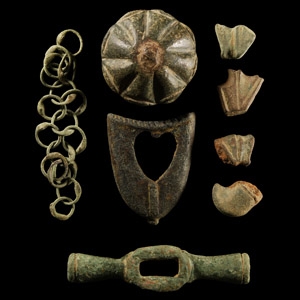
Medieval Bronze Artefact Group
14th-16th century A.D.Sold for (Inc. bp): £52
Comprising: a dagger quillon guard dated 15th-16th century A.D. with X-motifs and accompanied by a Portable Antiquities Scheme record; a partial chape with openwork heart motif; lobed and domed pommel; section of chainmail; four pommels for knives or other utensils, including examples with simple ornamentation. 135 grams total, 12-60 mm
Found Berkshire, UK. Accompanied by a copy of the British Museum's Portable Antiquities Scheme (PAS) report no.BERK-A95853 for the 15th century quillon guard. -
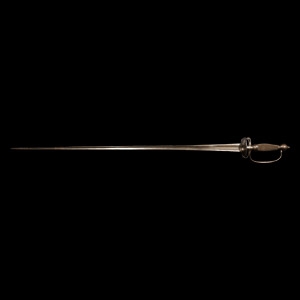
Georgian Steel Rapier Sword
Late 18th-early 19th century A.D.Sold for (Inc. bp): £208
With long triangular-section blade and narrow acute tip, shell-guard hilt with two rings to the reverse and knuckle-guard, wire-bound grip, poppyhead pommel with knop finial. 497 grams, 102.5 cm
Acquired UK market. Property of a Kent collector. -
.jpg)
Viking Iron Axehead with Silver Inlaid Interlaced Dragons
7th-9th century A.D.Sold for (Inc. bp): £6,240
To both lateral faces, the upper face of the blade and the rear of the socket decorated with an interlaced design; slender body with bearded lower edge and curved blade, lateral spurs and rectangular panel to the butt. 282 grams, 14 cm
Private collection formed in Europe in the 1980s. Westminster collection, central London, UK. Accompanied by a copy of a four page report written by Saxon and Viking specialist Stephen Pollington. This lot has been checked against the Interpol Database of stolen works of art and is accompanied by search certificate number no.11878-206842.
The style of the design inlaid to the axe is interesting since it evidently owes a great deal to the kinds of Insular Style ornament found in manuscripts of the 8th century in the British Isles. The elegant curves of the narrow tendrils are strongly reminiscent of the zoomorphic elements found in the Lindisfarne Gospels, St Gall Codex and the Book of Kells (Salin, 1935, pp.342-3; Moss, 2018) and the inlaid designs show the characteristic parallel curves found for example on some of the initials in those documents. The tight knot serpentine bodies recalls the similar dense knot found in the Kells manuscript (Salin's figure 731). However, the details of the layout and execution show that the piece is unlikely to have originated in the British Isles.
