
Loading, please wait...
LOT 2116
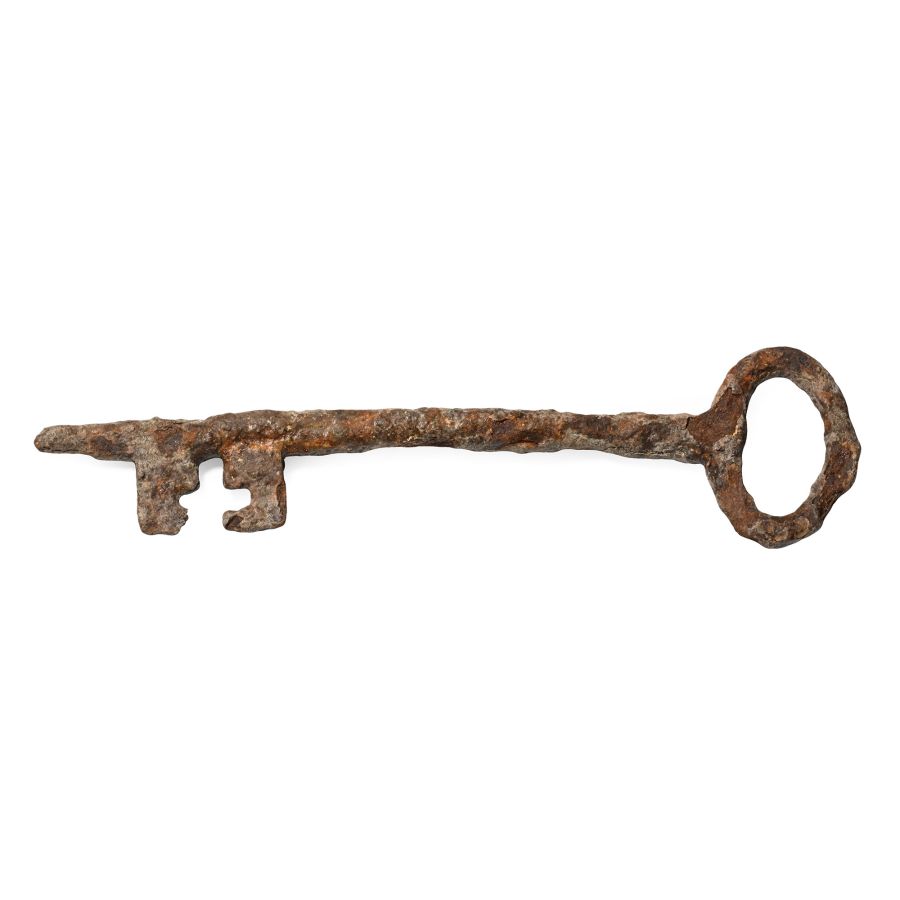
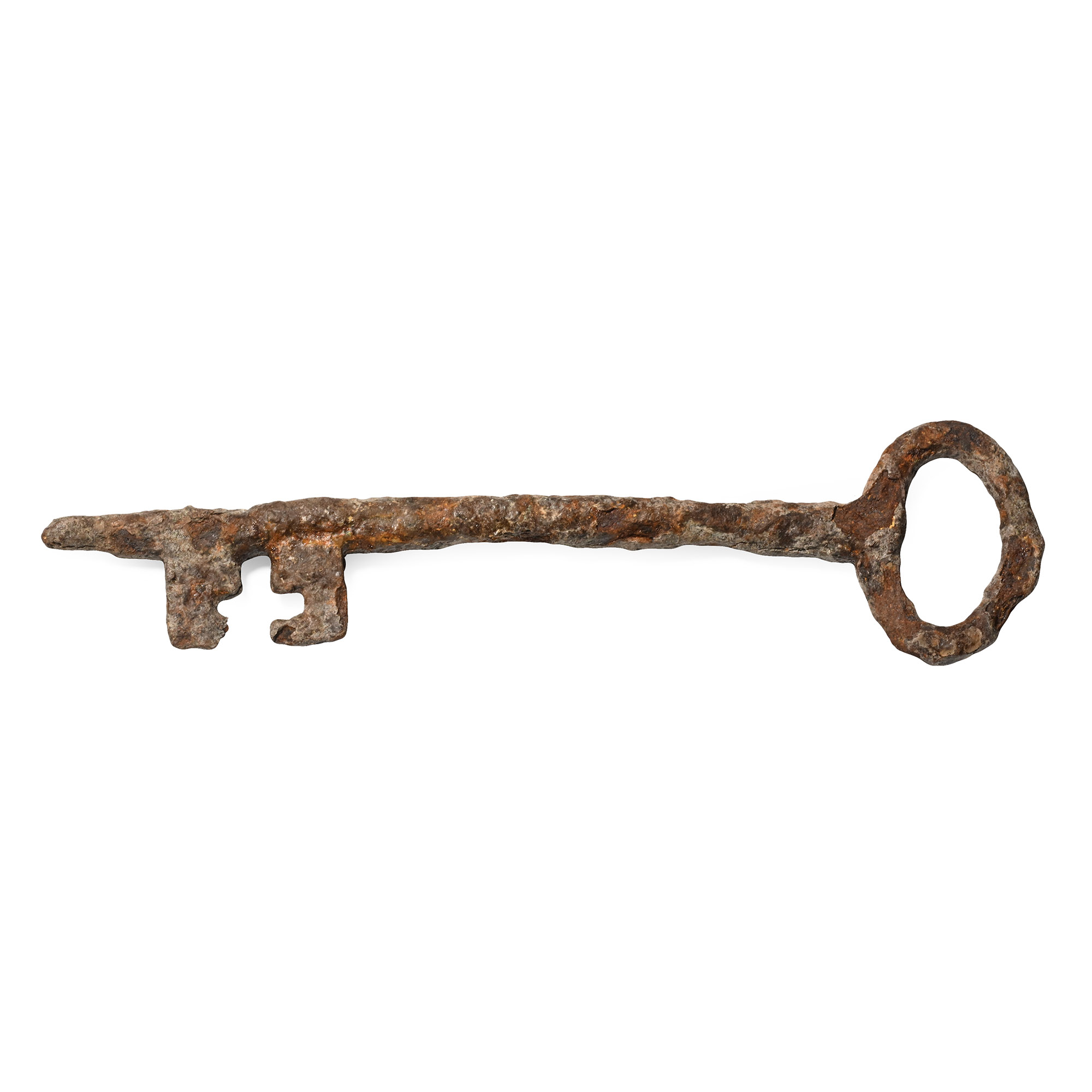
Very Large Post Medieval Iron Key
CIRCA 18TH CENTURY A.D.
7 7/8 in. (116 grams, 20 cm).
With slender shank, loop bow, bit with cruciform ward; possibly from a church or other large door. [No Reserve]
ProvenanceFrom the collection of a Buckinghamshire, UK, collection established from the earlier 1960s.
CONDITIONTimeLine Auctions follows a vetting process to ensure the authenticity and legality of all items, reinforcing our commitment to integrity and responsible trading. Each antiquity, antique, and coin lot undergoes thorough examination by a vetting committee of at least ten external specialists, professional trade association members, scientists, and archaeologists: Our Vetting Process
AUCTIONS:
TimeLine is a leading auction house specialising in antiquities, ancient art, collectables, natural history, coins, medals, and books. Our auctions offer museums, collectors, historians, and enthusiasts the opportunity to acquire unique and historically significant pieces.
-
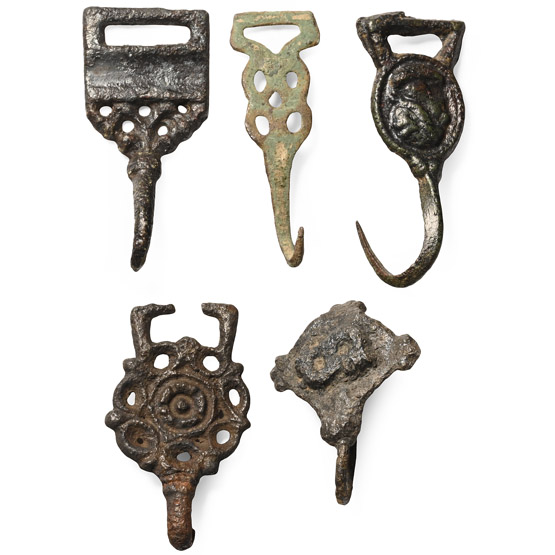
Tudor Bronze Clothes Hook Fastener Collection
16th century A.D.Sold for (Inc. bp): £13
A mixed group of hooked fasteners, including an oval with a low-relief female profile, an openwork rosette, rectangular with a low-relief of double-headed serpent, an openwork interlaced design, and some with suspension lug. 13.4 grams total, 28-37 mm
From the private collection of the late Graham Slater (1927-2024), Cambridge, UK, acquired 1980s-1990s. -
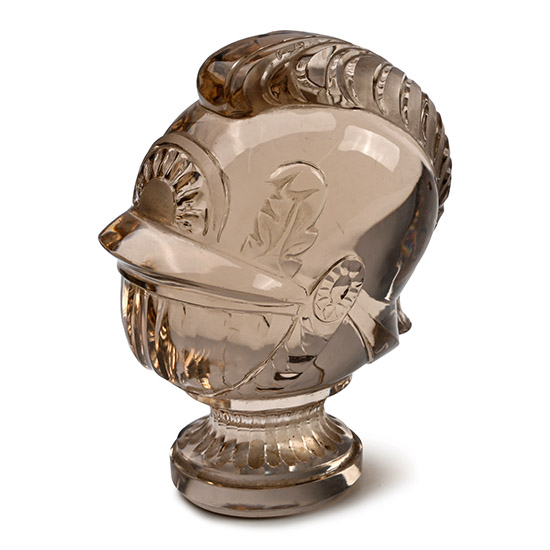
Smoky Quartz Desk Seal in the form of a Plumed Helmet
French, 19th century A.D.Sold for (Inc. bp): £715
Modelled in the round as a plumed helmet with a barred visor and a chin strap, resting on a low pedestal. 182 grams, 71 mm
Private collection, Europe. Acquired on the English art market. -
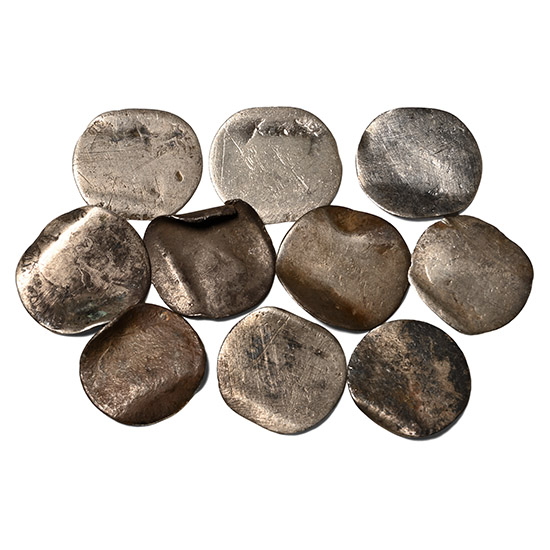
Post Medieval Silver Love Token Collection
18th-19th century A.D.Sold for (Inc. bp): £78
Each coin worn flat and bent into a double-curved 's' profile, for use as a token of love. 17.55 grams total, 18-20 mm
Found Tyne and Wear, UK. This lot is for UK buyers only, not for export.
The custom of giving a bent coin as a love-token is known from the 17th century in England. The coins were usually smoothed to obliterate the monarch’s head and then bent twice; sometimes they were engraved with initials or symbols such as hearts or knots. If the sweetheart accepted the youth's advances, she kept the token; if not, she disposed of it. The tradition is referred to in the children's rhyme 'There was a crooked man, and he walked a crooked mile, and found a crooked sixpence upon a crooked stile.'
