
Loading, please wait...
LOT 0233
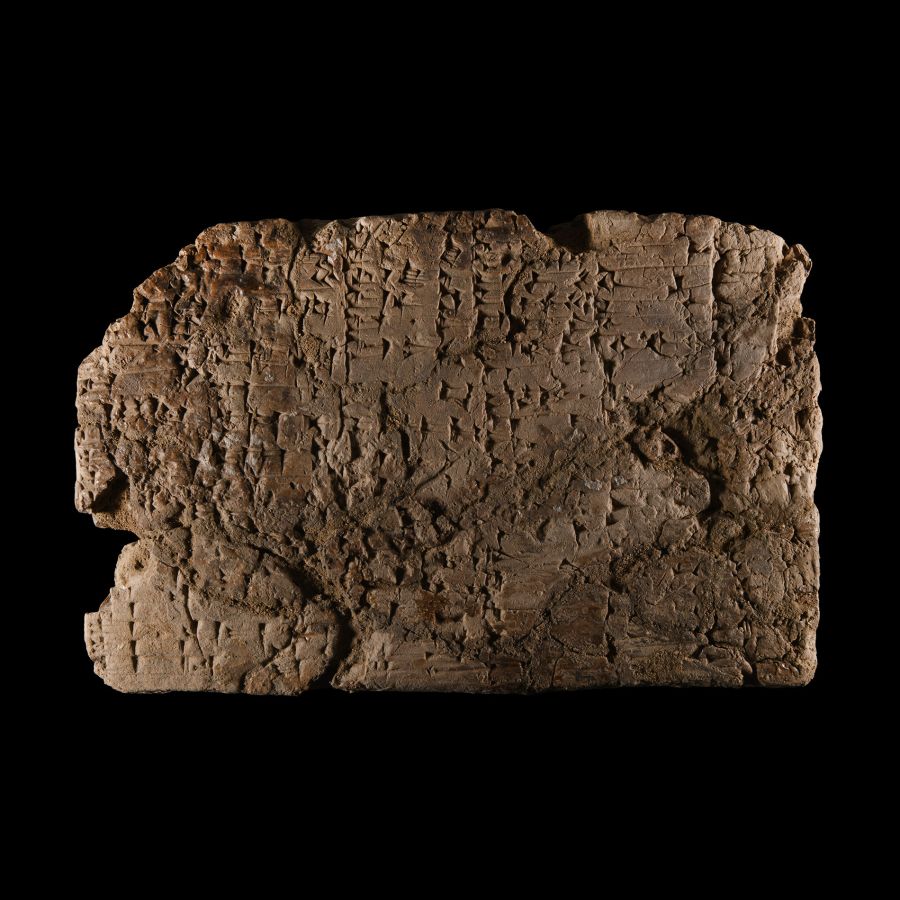
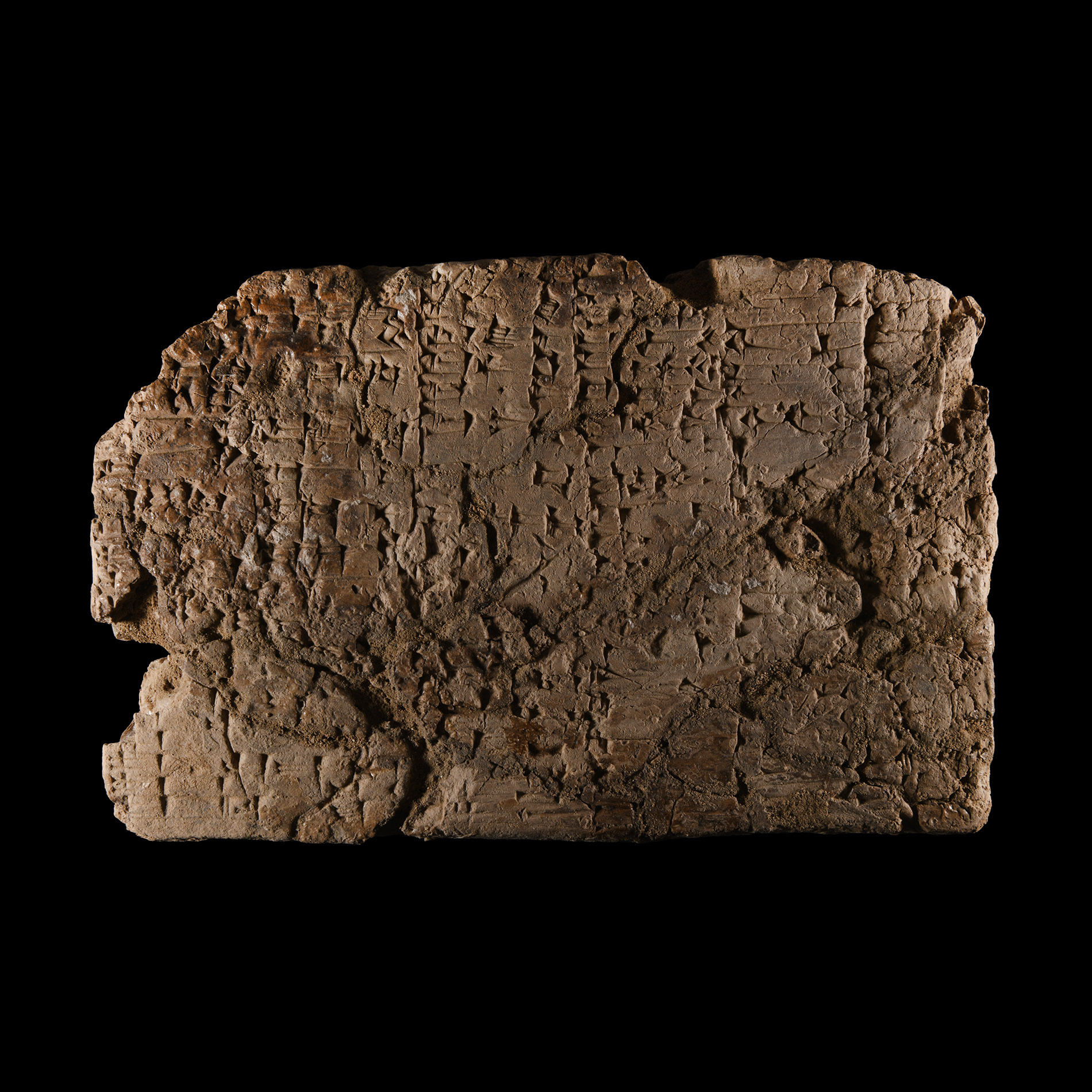
Very Large Old Babylonian Lexical Cuneiform Tablet
CIRCA 19TH-17TH CENTURY B.C.
9 7/8 in. (2.27 kg, 25 cm).
With cuneiform text to one broad face; old collector's label 'A1' affixed at the time of Professor Lambert's inspection.
ProvenanceSpecialised collection of cuneiform texts, the property of a London gentleman and housed in London before 1992.
Thence by descent to family members.
Examined by Professor Wilfrid George Lambert FBA (1926-2011), historian, archaeologist, and specialist in Assyriology and Near Eastern archaeology, in the late 1980s and early 1990s.
The collection is exceptional for the variety of types, including some very rare and well preserved examples.
TimeLine Auctions follows a vetting process to ensure the authenticity and legality of all items, reinforcing our commitment to integrity and responsible trading. Each antiquity, antique, and coin lot undergoes thorough examination by a vetting committee of at least ten external specialists, professional trade association members, scientists, and archaeologists: Our Vetting Process
AUCTIONS:
TimeLine is a leading auction house specialising in antiquities, ancient art, collectables, natural history, coins, medals, and books. Our auctions offer museums, collectors, historians, and enthusiasts the opportunity to acquire unique and historically significant pieces.
-
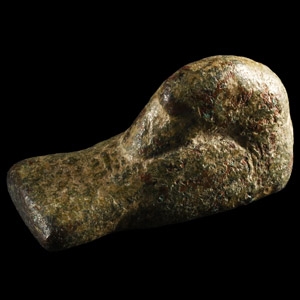
Babylonian Bronze Duck Weight
1st millennium B.C.Sold for (Inc. bp): £85
With flat base; old collector's ticket with legend 'MB34/7 / 1 ½ shekels / 12.6 g- / Bronze'. 12.5 grams, 24 mm
Ex Simmons Gallery, London E11, UK, in the 1990s. From a North London collection. -
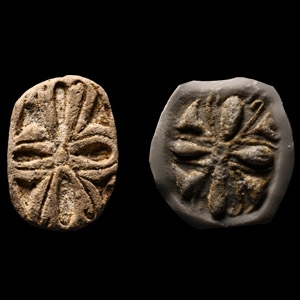
Sumerian Seal with Lotus Flower
Circa 3rd millennium B.C.Sold for (Inc. bp): £124
White glazed composition seal with integral loop to the domed reverse, cruciform design of concentric lotus petals. 3.2 grams, 30 mm
From the private collection of P. Morris, 1996. Ex Den of Antiquity, Cambridgeshire, UK. Private collection of Mr T.H., Norfolk, UK. Accompanied by an old certificate of authenticity. -
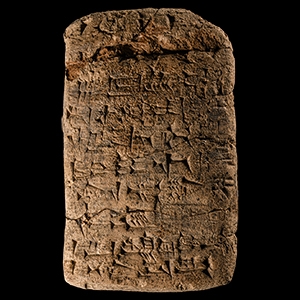
Babylonian Cuneiform Clay Tablet
Circa 2000 B.C.Sold for (Inc. bp): £624
With impressed text to both principal faces, reading: 1) 70 sar of land (1 quarter hectare) 2) [...], 3) (for the price of) 6 shekels of silver, 4-7) Aradmu bought from Huwawa son of Suda and Sugunu son of Itiya. 8-12) Ur-Enlil son of Lu-Nanna, Beli-damiq, Lani priest-oint, Šu-Iškur are the witnesses. 13-14) In the day of the 28th of the month Dukuga, 15-17) the year the governor of Anšan married the king's daughter ; repaired. 116 grams, 83 mm
Acquired before 1990s/early 2000s. From the family collection of Jack Lyttle (1944-2023), Kilmacolm, Scotland; thence by descent to his granddaughter. Property of an East Sussex, UK, gentleman.
