
Loading, please wait...
LOT 0320
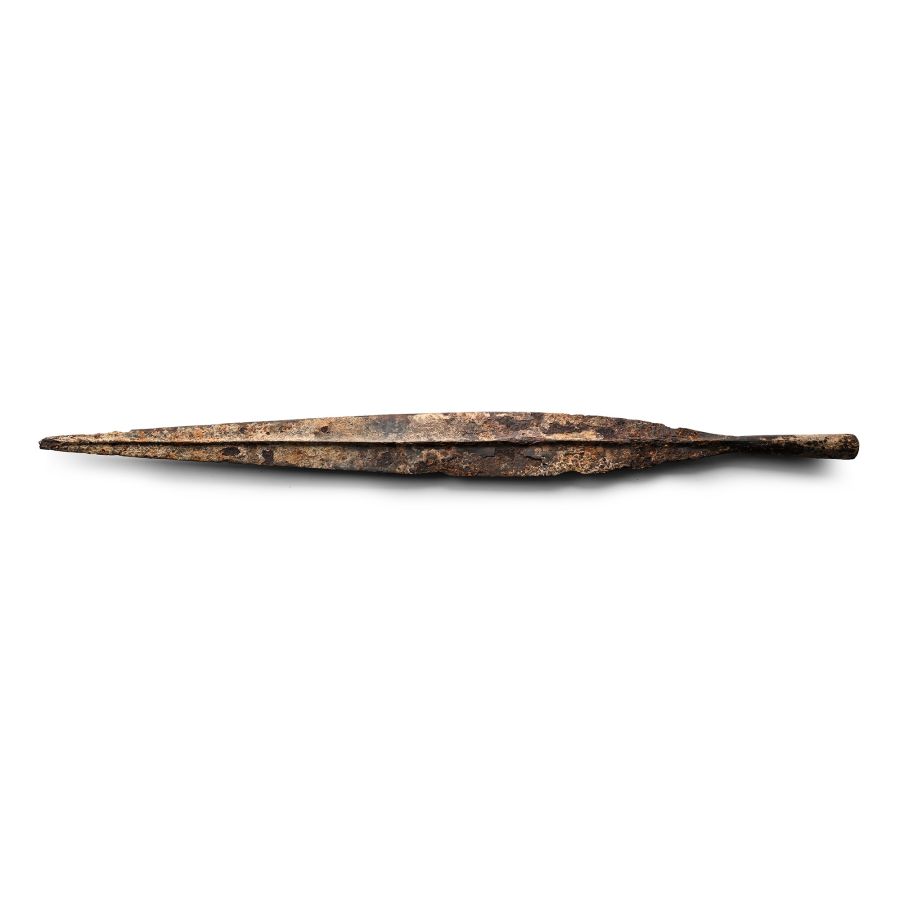
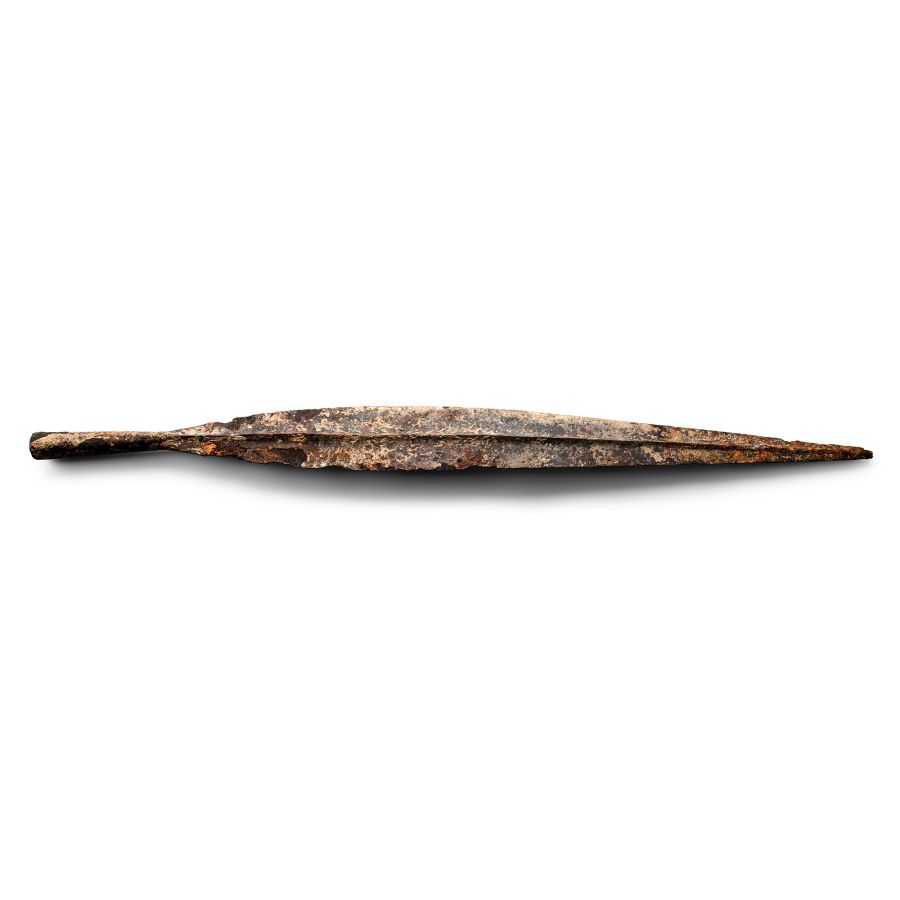
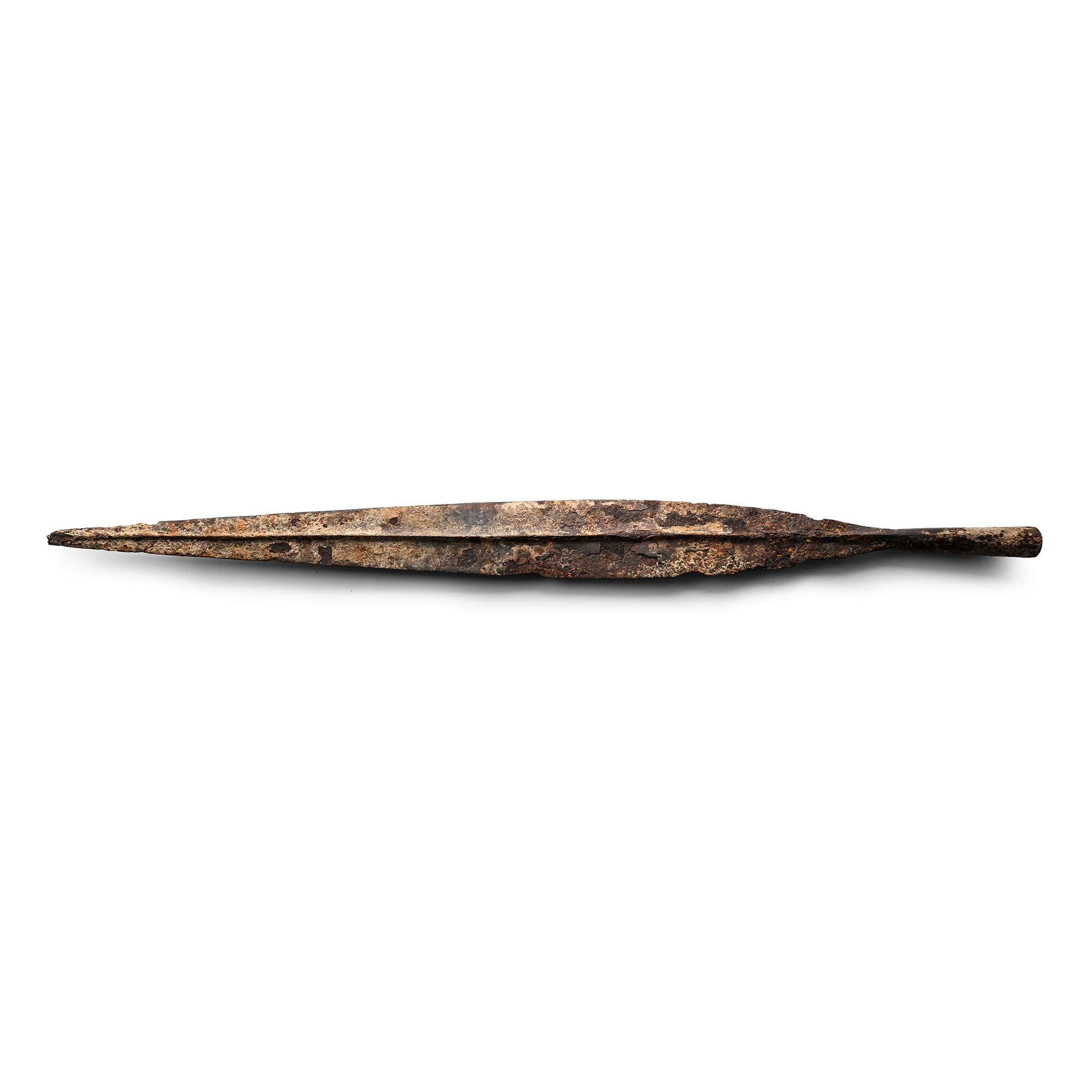
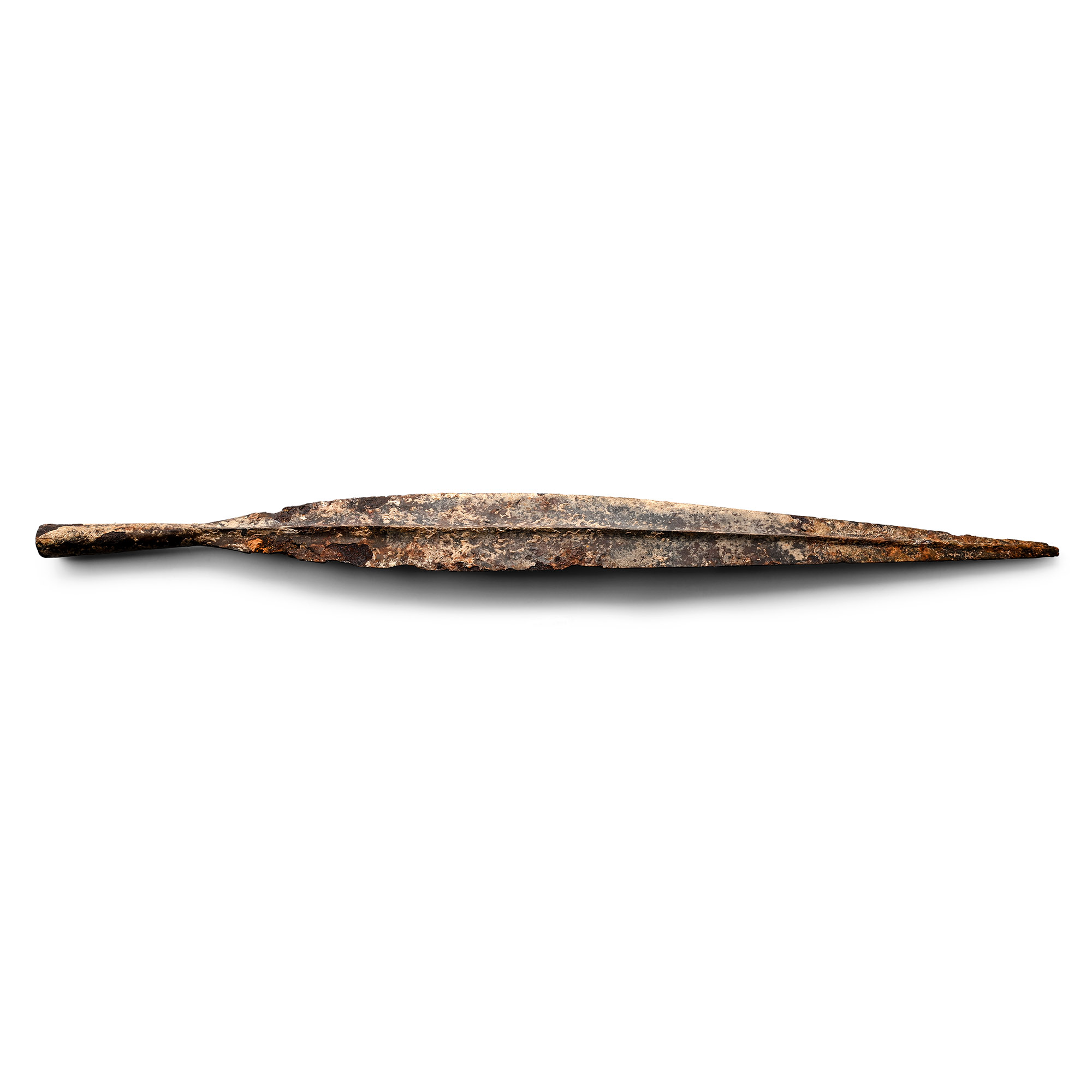
Very Large Iron Age Celtic Iron La Tene Socketted Spearhead
1ST CENTURY B.C.-1ST CENTURY A.D.
28 3/4 in. (819 grams, 73 cm).
Extremely long, slender leaf-shaped blade with a median rib, rounded tip, short shoulder, and a socket with lateral holes to accept a fixing peg.
ProvenanceEx German art market, 2000s.
Acquired from an EU collector living in London.
From the collection of a Surrey, UK, gentleman.
Cf. Stead, I. et al., Iron Age and Roman Burials in Champagne, Oxford, 2006, fig.56(15), for type.
CONDITIONTimeLine Auctions follows a vetting process to ensure the authenticity and legality of all items, reinforcing our commitment to integrity and responsible trading. Each antiquity, antique, and coin lot undergoes thorough examination by a vetting committee of at least ten external specialists, professional trade association members, scientists, and archaeologists: Our Vetting Process
AUCTIONS:
TimeLine is a leading auction house specialising in antiquities, ancient art, collectables, natural history, coins, medals, and books. Our auctions offer museums, collectors, historians, and enthusiasts the opportunity to acquire unique and historically significant pieces.
LOT 0320
Very Large Iron Age Celtic Iron La Tene Socketted Spearhead
Estimate £1,000 - 1,400€1,160 - 1,620 (for guidance only)$1,350 - 1,890 (for guidance only)
-
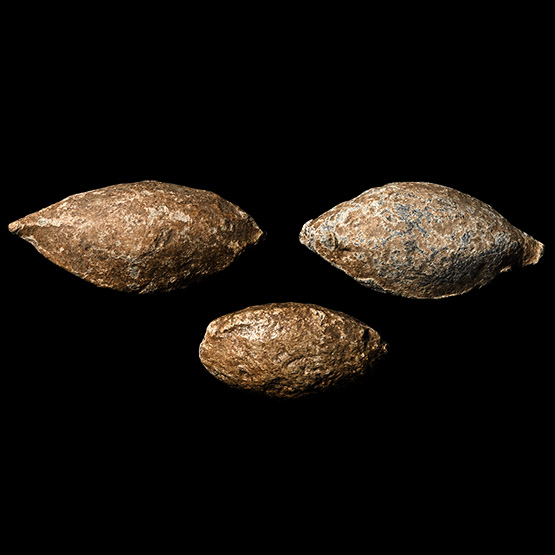
Greek Lead Slingshot Group
4th-3rd century B.C.Sold for (Inc. bp): £78
Comprising three lentoid-section bullets. 87 grams total, 27-37 mm
Ex German art market, 2000s. Acquired from an EU collector living in London. From the collection of a Surrey, UK, gentleman. -
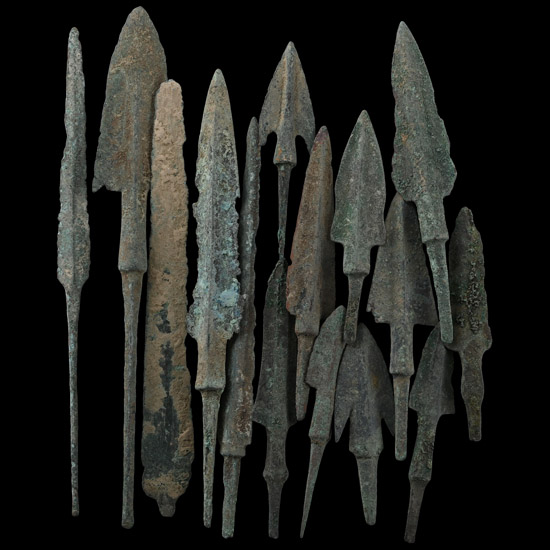
Western Asiatic Bronze Arrowhead Collection
1000-700 B.C.Sold for (Inc. bp): £286
Comprising fifteen tanged arrowheads, four with elongated triangular blades and raised midrib, two of squared type with flat tang, three with barbed shoulders and short cylindrical stem with handle for the shaft; two with squared shoulders and rectangular stem with handle for the shaft, one with leafed elongated blade, one with wide triangular head and long handle for the shaft, and other two long and spiked with raised midrib. 240 grams total, 7.1-16.5 cm
London, UK, collection, 1990s.
Some of the arrowheads belong to type V of the Khorasani classification: subtype D (triangular arrowheads with rounded or angular midrib) and subtype C, arrowheads with elongated, triangular shape with barbed shoulders and convex sides, and a raised midrib with a sharp central line. -
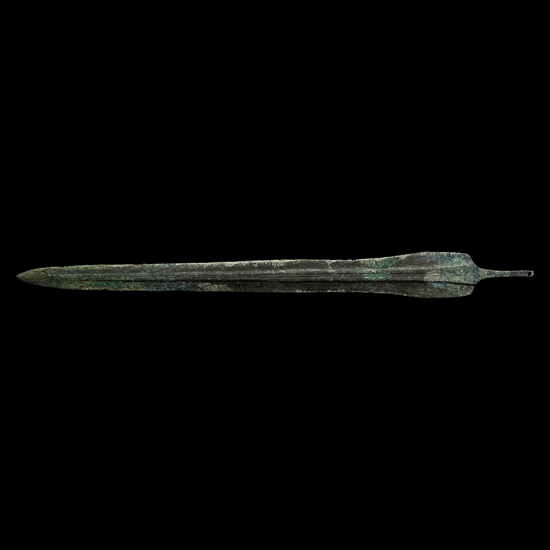
Luristan Bronze Tanged Dirk
Early 1st millennium B.C.Sold for (Inc. bp): £208
Comprising a slender blade with a raised midrib with grooves, a short rectangular-section tang pierced at the end. 200 grams, 41.5 cm
Ex Abelita family collection, 1980s-2000s.
The Luri people produced a quantity of fine metalwork, which, according to Dr Khorasani, could be due to a settled period arising as a result of the defeat of the Elamites by the Babylonians, leaving the Luristani people in relative peace for a period of time after 1200 BC. According to Khorasani, 'A culture of innovation and experimentation flourished, and the repertoire of the Luristan smiths expanded in the period between 1150-1050 B.C.'
