
Loading, please wait...



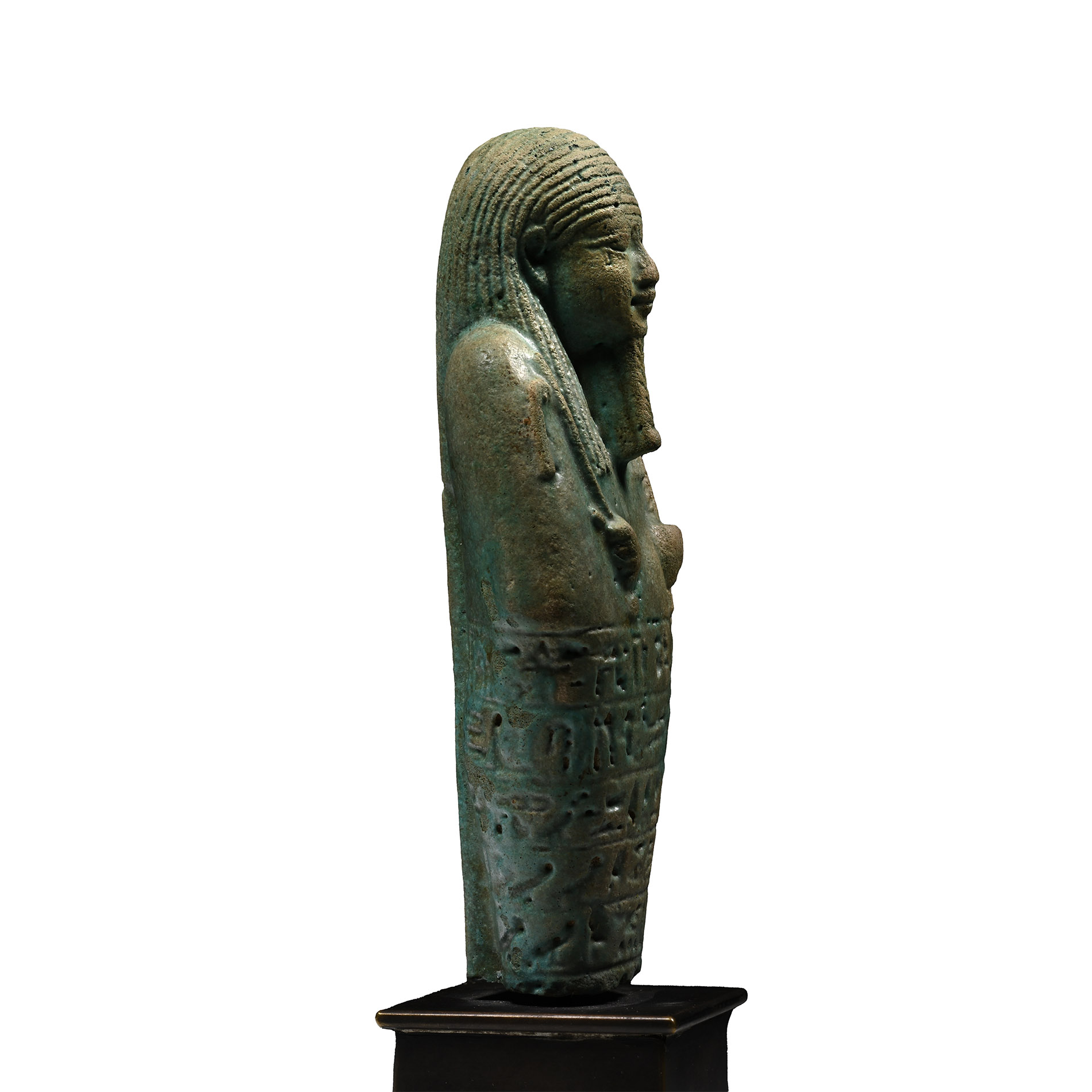
LOT 0038
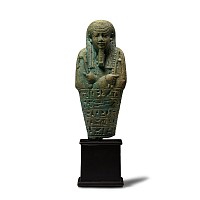
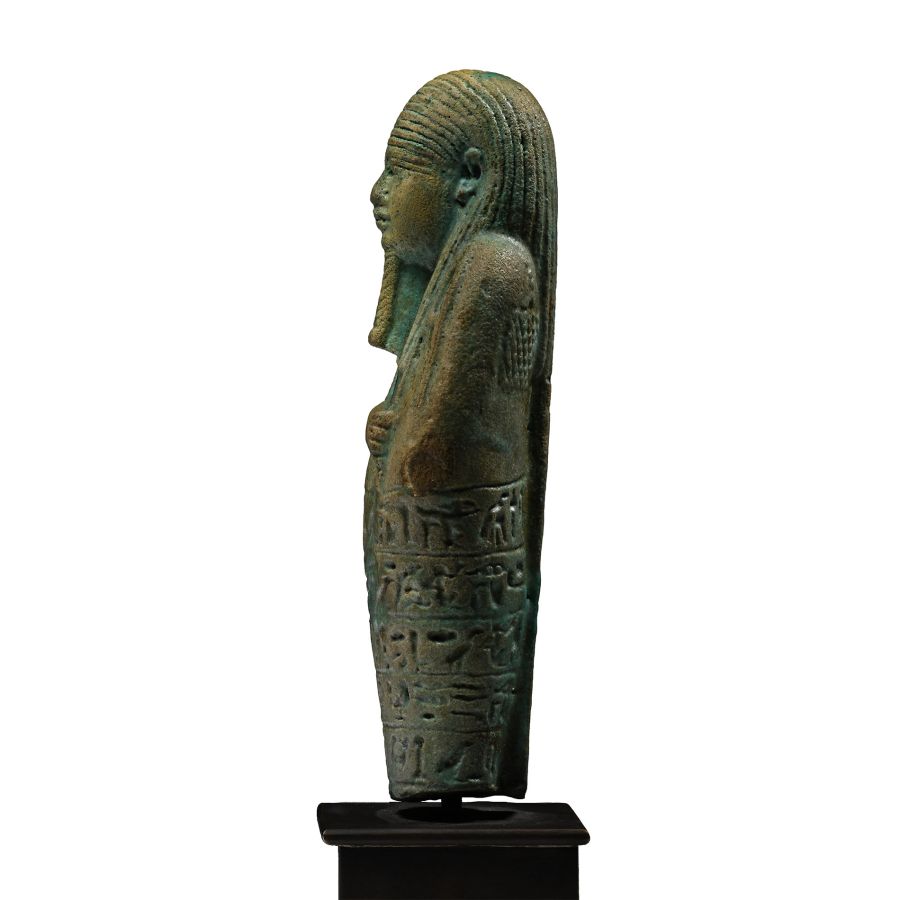
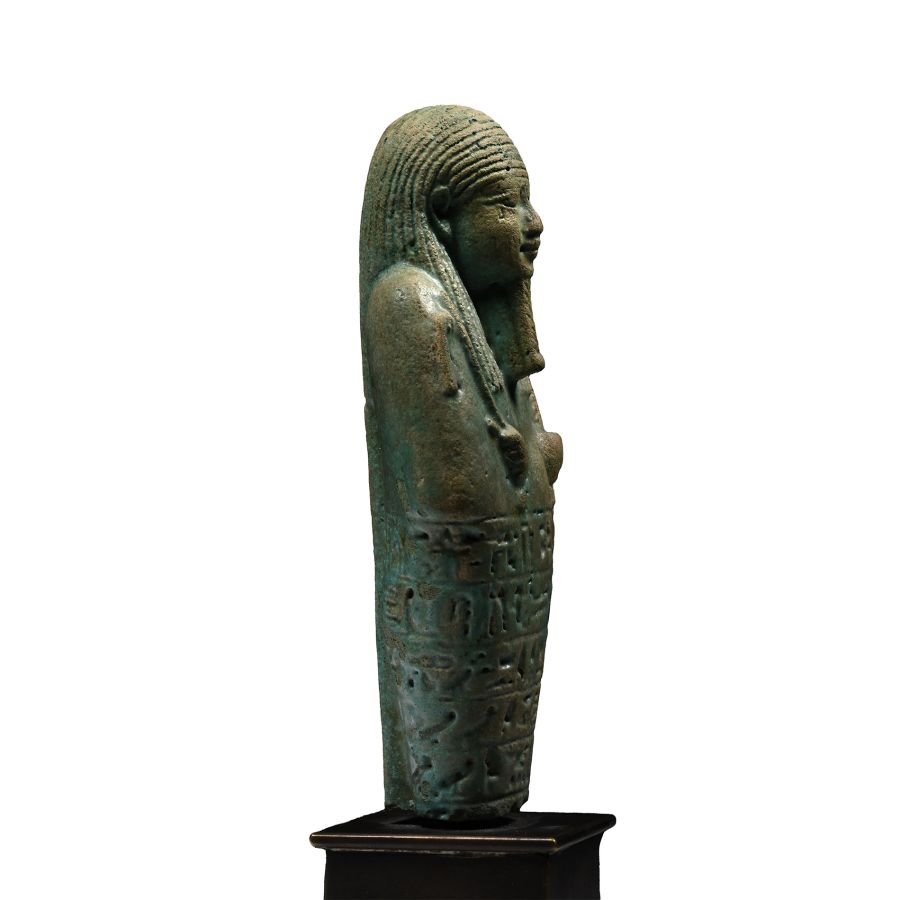
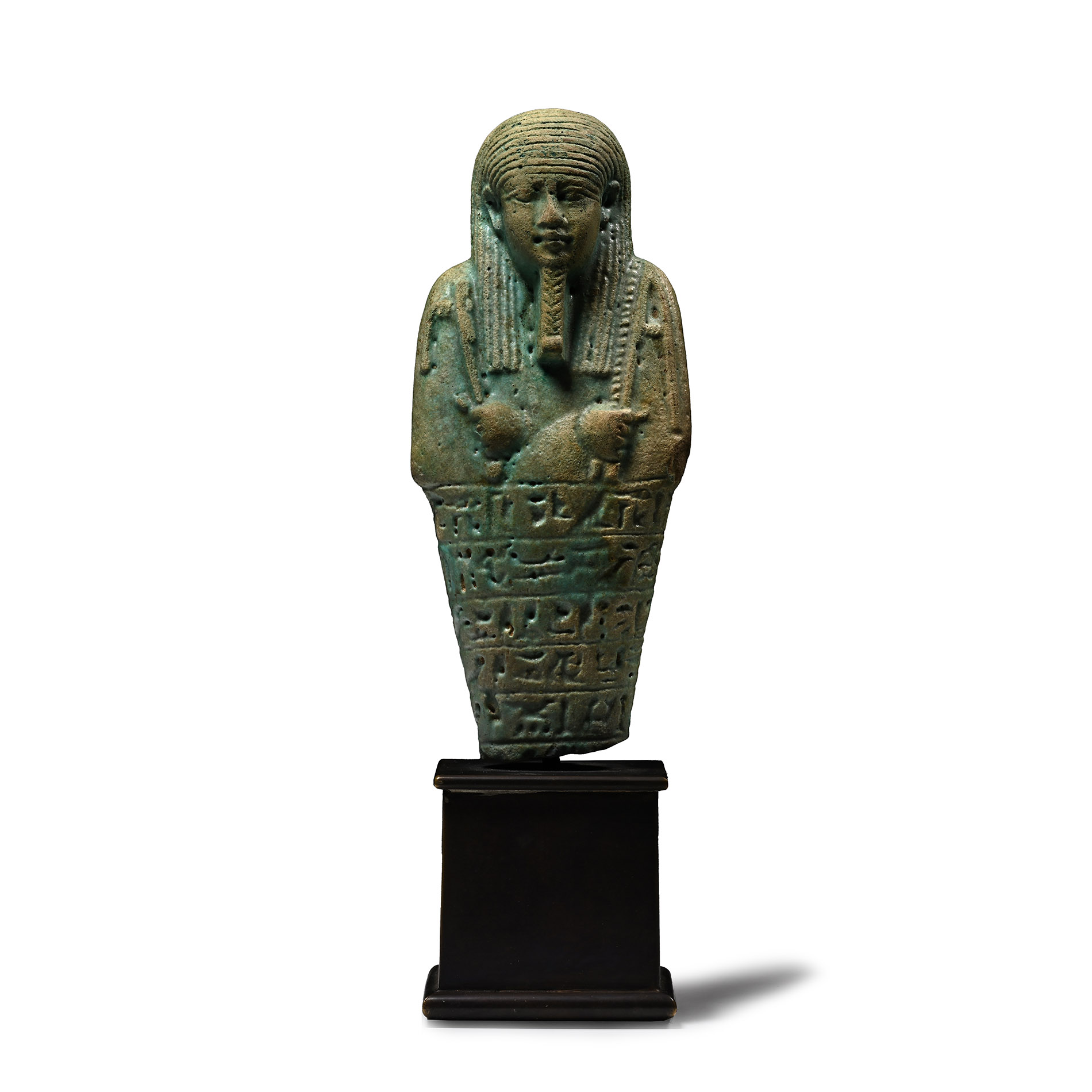
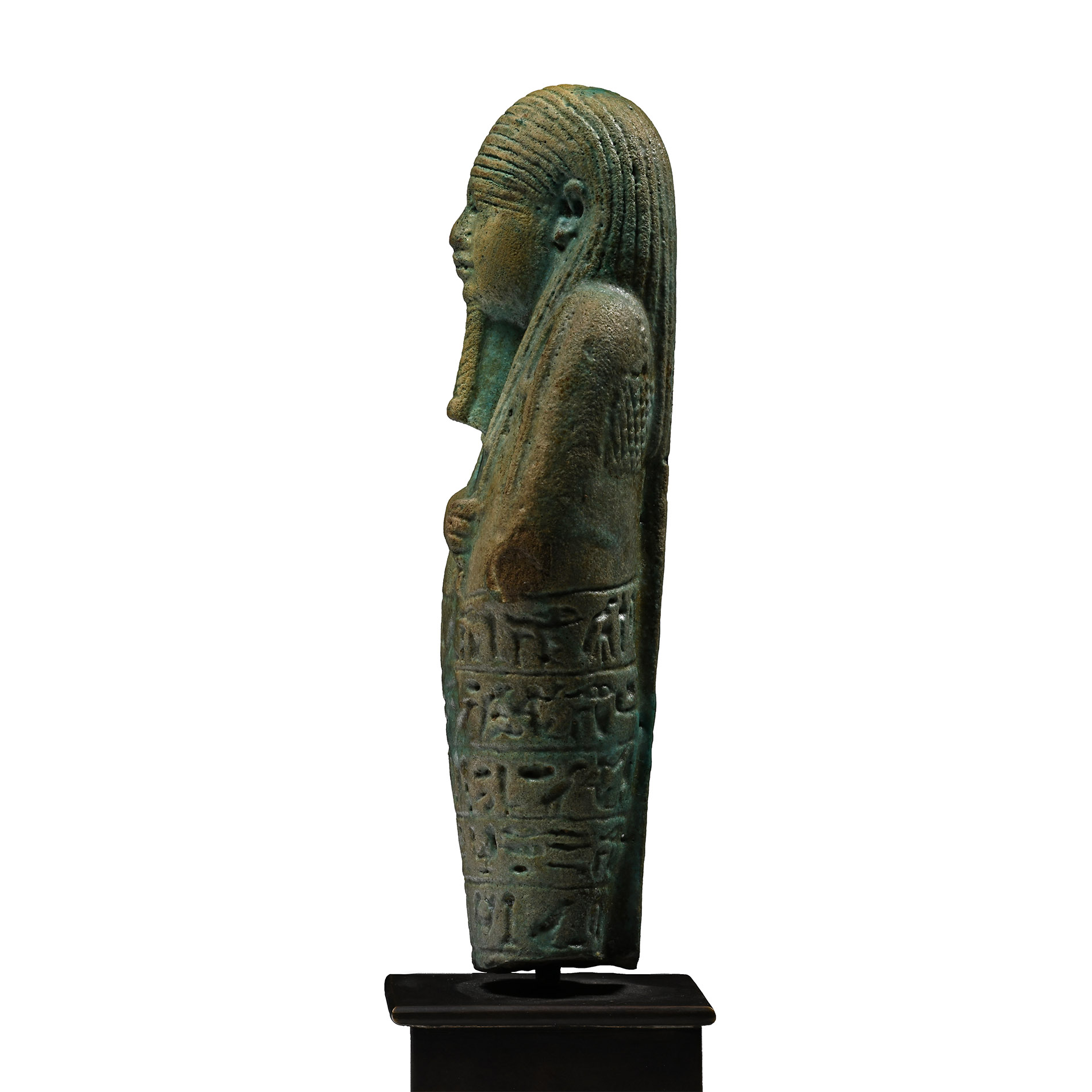
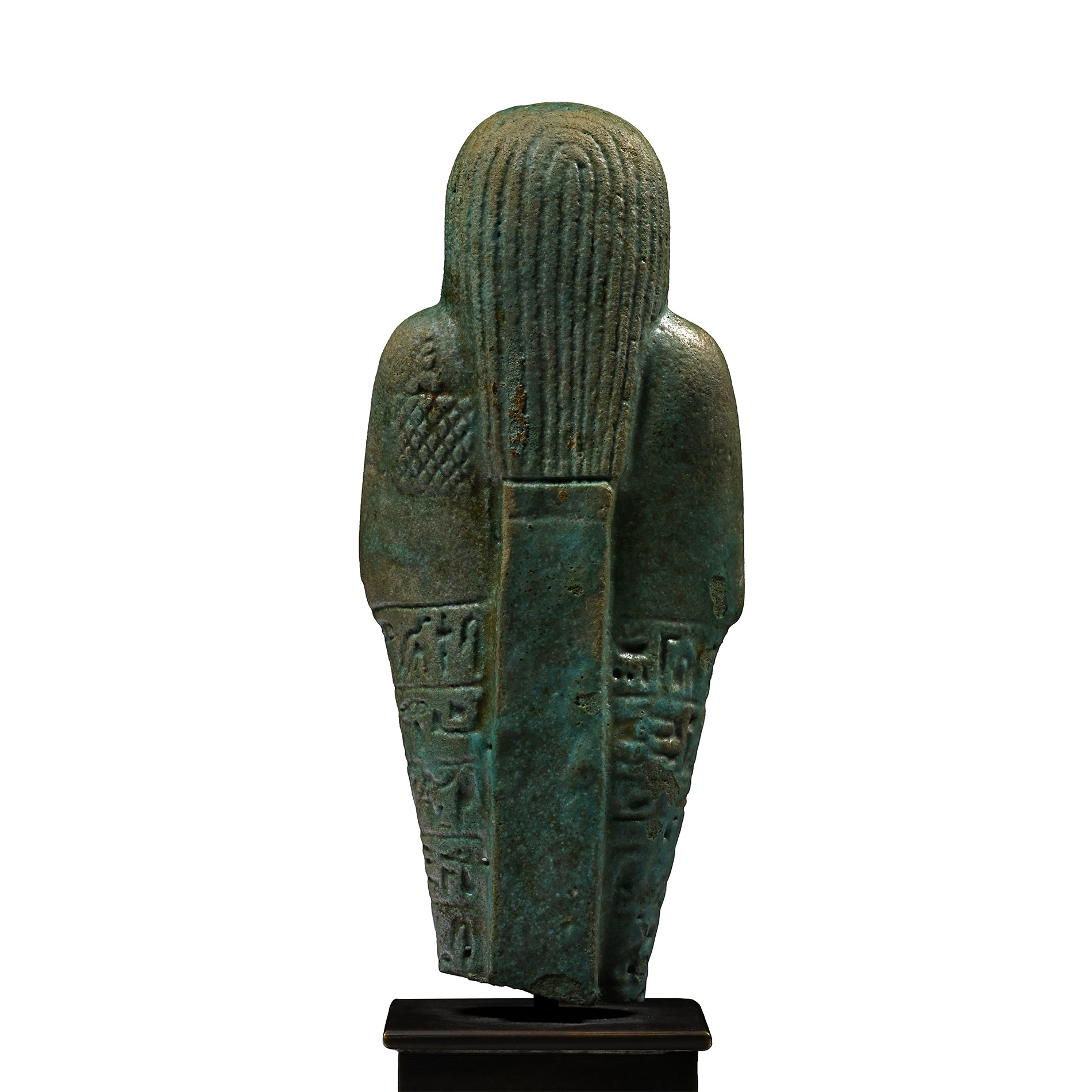
Very Large Egyptian Faience Shabti for Hor-Aset
LATE PERIOD, 664-322 B.C.
7 7/8 in. (509 grams total, 20 cm including stand).
The upper part of a large mummiform shabti wearing a striated tripartite wig and long plaited divine beard, holding a pick in the left hand, the right hand holding a hoe and the cord of a seed bag hanging over his left shoulder; the face expertly modelled with carefully rendered cosmetic lines around the eyes, slightly smiling lips giving it a serene expression; plain back pillar terminating at the base of the wig; five horizontal rows of hieroglyphic inscription giving the dedication sḥḏ wsı͗r ḥr (-pn-n-) Ꜣst, ‘The illuminated one, the Osiris Hor (pen-en) Aset’ followed by a version of Chapter 6 from the Book of the Dead; mounted on a custom-made display stand.
ProvenanceEx Y.F. collection.
Acquired in the US, 2011.
with Medusa Ancient Art, Quebec.
Private collection, Europe.
This lot has been checked against the Interpol Database of stolen works of art and is accompanied by a search certificate number no.12374-226922.
Cf. National Museums Liverpool, accession number M13871, for a similar shabti with different dedication; Janes, G., The Shabti Collections 6: A Selection from the World Museum, Liverpool, Lymm, 2016, pp.494-495, no. 258, for a similar example.
CONDITIONTimeLine Auctions follows a vetting process to ensure the authenticity and legality of all items, reinforcing our commitment to integrity and responsible trading. Each antiquity, antique, and coin lot undergoes thorough examination by a vetting committee of at least ten external specialists, professional trade association members, scientists, and archaeologists: Our Vetting Process
AUCTIONS:
TimeLine is a leading auction house specialising in antiquities, ancient art, collectables, natural history, coins, medals, and books. Our auctions offer museums, collectors, historians, and enthusiasts the opportunity to acquire unique and historically significant pieces.
-
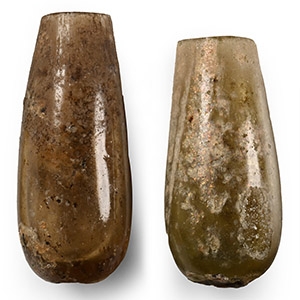
Egyptian Glass Phial Group
1st millennium B.C.Sold for (Inc. bp): £59
Each is a tapering bulb shape with a flat-cut mouth. 13.8 grams total, 35-37 mm
From the collection of Mr S.M., London, UK, formed from 1979-1999. -
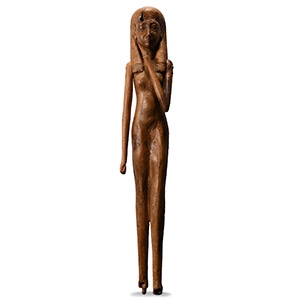
Large Egyptian Wooden Striding Female Figure
Circa 700 B.C. or earlierSold for (Inc. bp): £2,860
Modelled in the round, standing nude with left leg extended, wearing a tripartite wig with beads to the lower edges, the arms modelled separately and attached, left arm bent round to the chest, right arm straight to the side; mounting peg to the right leg, feet absent. 210 grams, 40 cm
Acquired on the German art market, 1989-1995. with The Museum Gallery, 19 Bury Place, London, WC1, UK, 1998-2003. Property of a London based academic, 2003-present. This lot has been checked against the Interpol Database of stolen works of art and is accompanied by a search certificate number no.12377-226045. -
.jpg)
Egyptian Silver Isis and Horus Amulet
Late Period, 664-332 B.C.Sold for (Inc. bp): £234
Isis enthroned wearing a cow's horn headdress with a solar disc, suckling the infant Horus on her lap; loop to rear of crown; mounted on a custom-made stand. 6.2 grams, 39 mm (20.7 grams total, 62 mm including stand)
Ex Mythes & Legend. Ex Cohen collection 2011. Property of a French collector.
In ancient Egyptian mythology, Isis was the sister-wife of Osiris and the mother of the sky god Horus. She is associated with aspects of fertility and motherhood and is often depicted in various artworks seated in a nursing pose with her son Horus on her lap, as here.
