
Loading, please wait...
LOT 0049
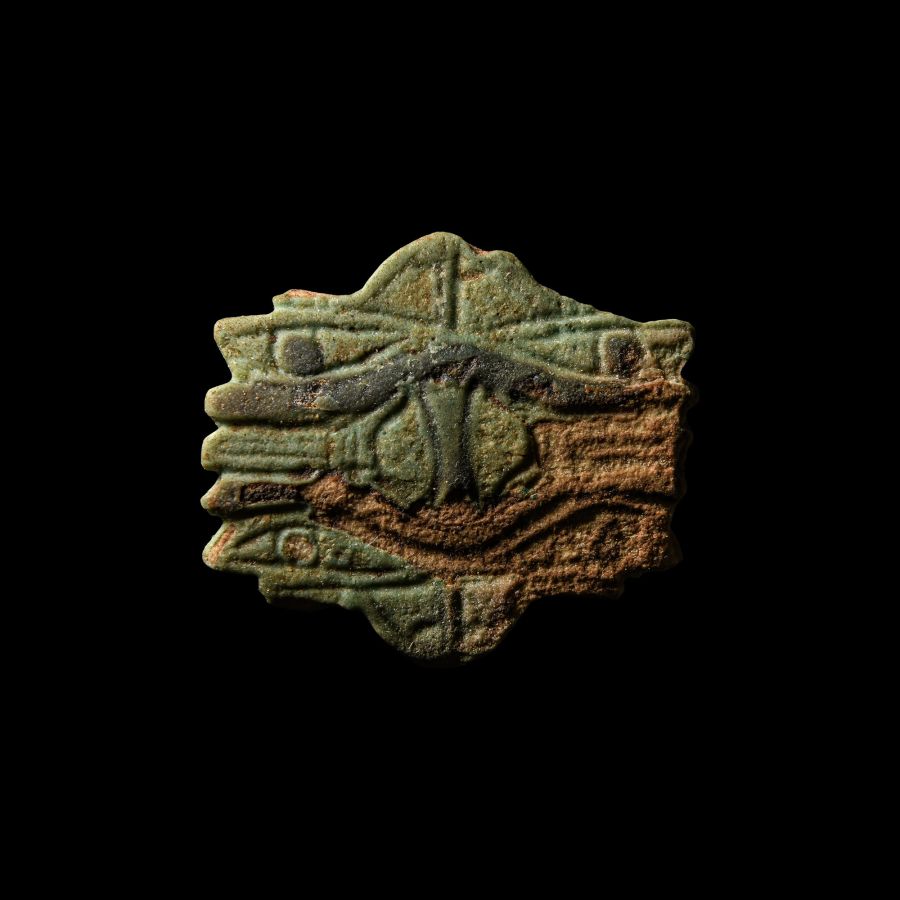
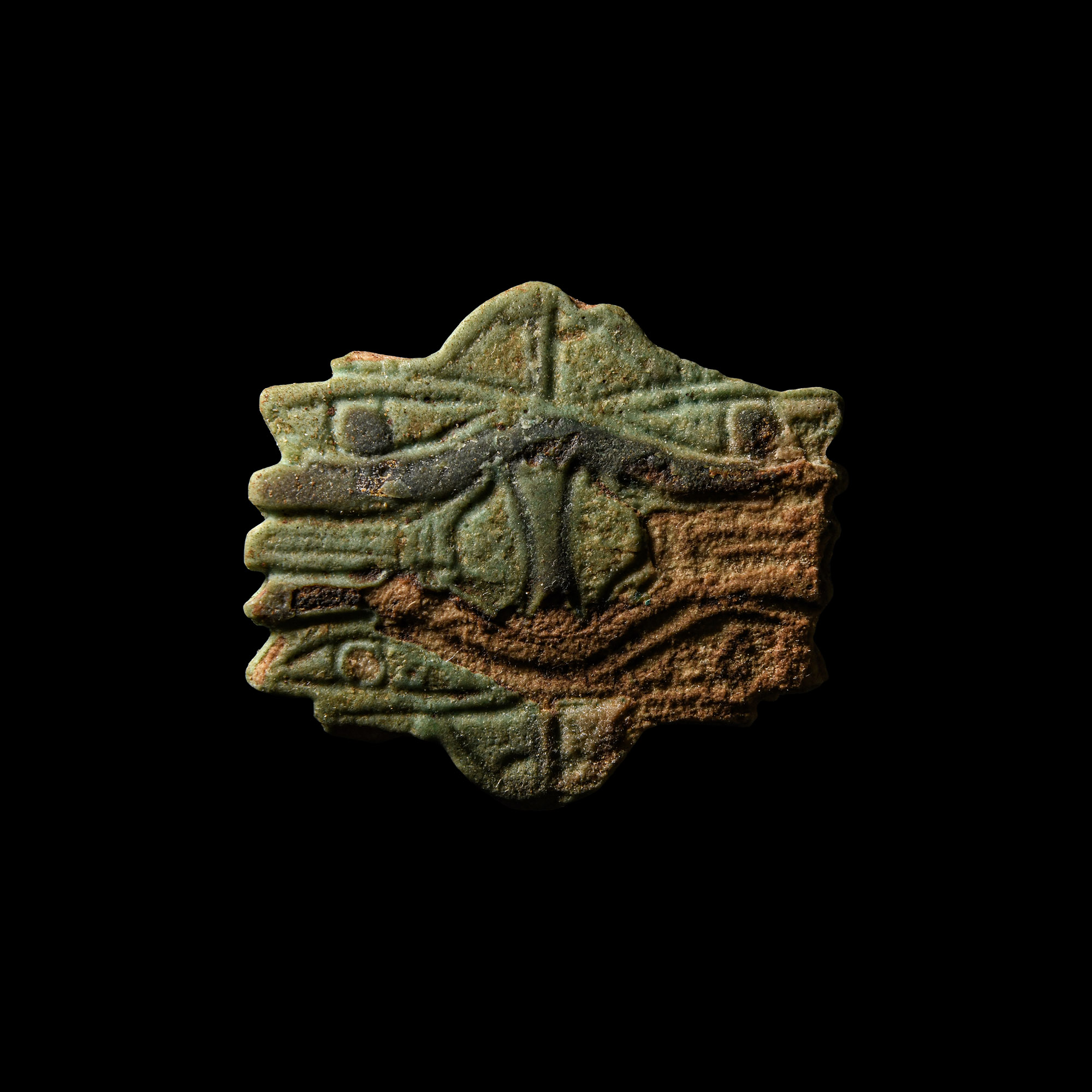
Very Large Egyptian Faience Quadruple Eye of Horus Amulet
LATE PERIOD, 664-332 B.C.
2 1/2 in. (32.3 grams, 64 mm).
Olive-green glazed composition plaque with transverse piercing comprising four addorsed wedjat motifs with black detailing.
ProvenanceFrom the private collection of Julian Bird, London, UK.
Ex Den of Antiquity, Cambridgeshire, UK.
Private collection of Mr T.H., Norfolk, UK.
Accompanied by a previous dealer's certificate of authenticity.
Cf. Andrews, C., Amulets of Ancient Egypt, London, 1994, item 46(d).
CONDITIONTimeLine Auctions follows a vetting process to ensure the authenticity and legality of all items, reinforcing our commitment to integrity and responsible trading. Each antiquity, antique, and coin lot undergoes thorough examination by a vetting committee of at least ten external specialists, professional trade association members, scientists, and archaeologists: Our Vetting Process
AUCTIONS:
TimeLine is a leading auction house specialising in antiquities, ancient art, collectables, natural history, coins, medals, and books. Our auctions offer museums, collectors, historians, and enthusiasts the opportunity to acquire unique and historically significant pieces.
LOT 0049
Very Large Egyptian Faience Quadruple Eye of Horus Amulet
Sold for (Inc. bp): £182
-
Phoenician Glass Bead Collection
Circa 6th-4th century B.C. and laterSold for (Inc. bp): £260
Comprising mainly black glass beads with dragged trails in contrasting colours; a pale blue bead with eye motifs; a hemispherical green glass bead or weight; and a triangular pendant with red, yellow, blue and white banding. 58 grams total, 9-32 mm
UK private collection formed 1970s-1990s. Property of an East Sussex, UK, gentleman. -
.jpg)
Egyptian Bronze Kneeling Priest Statuette
Late Period, circa 664–332 B.C.Estimate: £1,500 - 2,000 (‡+bp*)
Opening Bid: £750
The male figure of a kneeling supplicant with back pillar inscribed with hieroglyphic text: 'Neith gives life [to] ...'. 54 grams total, 76 mm including stand
Private collection S., Freiburg im Breisgau, Germany, acquired in the first half of the 20th century. Accompanied by a copy of an Art Loss Register certificate number S00140657, dated 23 October 2018.
This figure was likely attached to a separately cast base and positioned kneeling before a larger figure of the goddess Neith. Such objects were donated to temples to secure the god or goddess's protection for the donor, represented by the kneeling figure. -
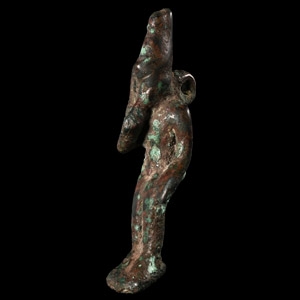
Egyptian Bronze Seated Harpocrates Figure
Late Period, 664-332 B.C.Sold for (Inc. bp): £130
Modelled in the round with suspension loop to the reverse, with double crown and sidelock of youth. 40.2 grams, 71 mm
Acquired from a private UK collection in the late 1990s. Private collection of Mr T.H., Norfolk, UK.
Harpocrates is the Greek rendering of the Egyptian Hor-pa-khered, which translates as 'Horus the Child' and refers to Horus as the divine infant of Isis and Osiris. Wearing the amulet of Harpocrates could provide the wearer with the same protection that Isis gave to her beloved son.
