
Loading, please wait...
LOT 0468
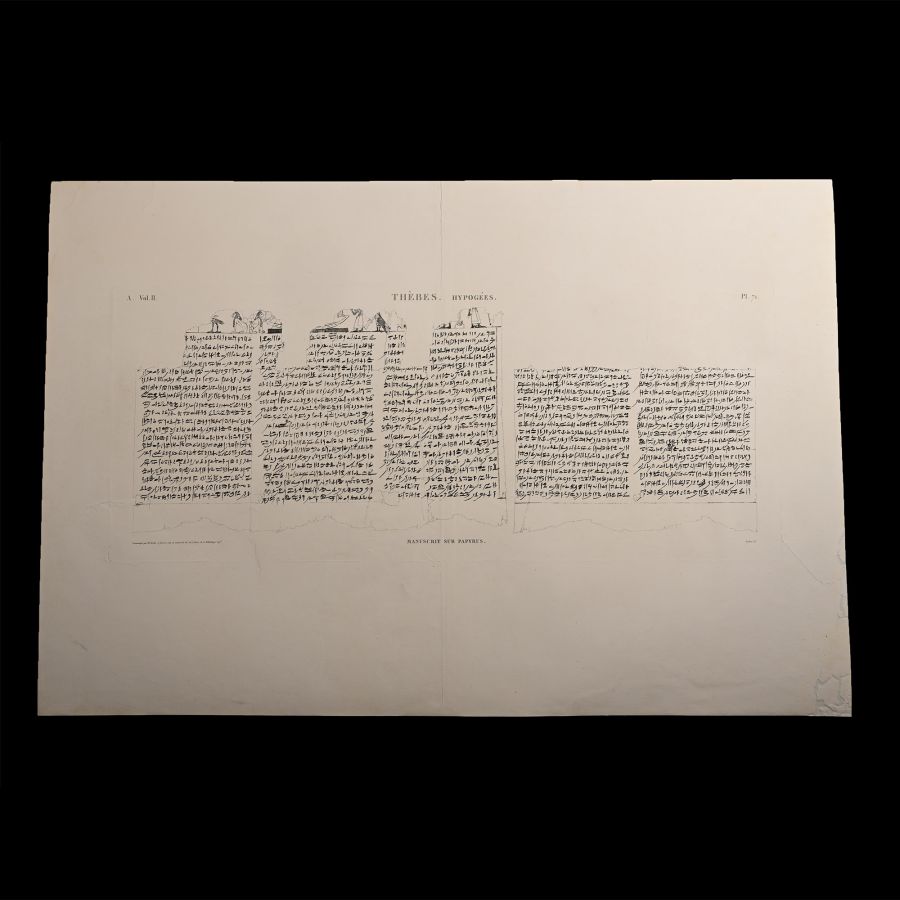
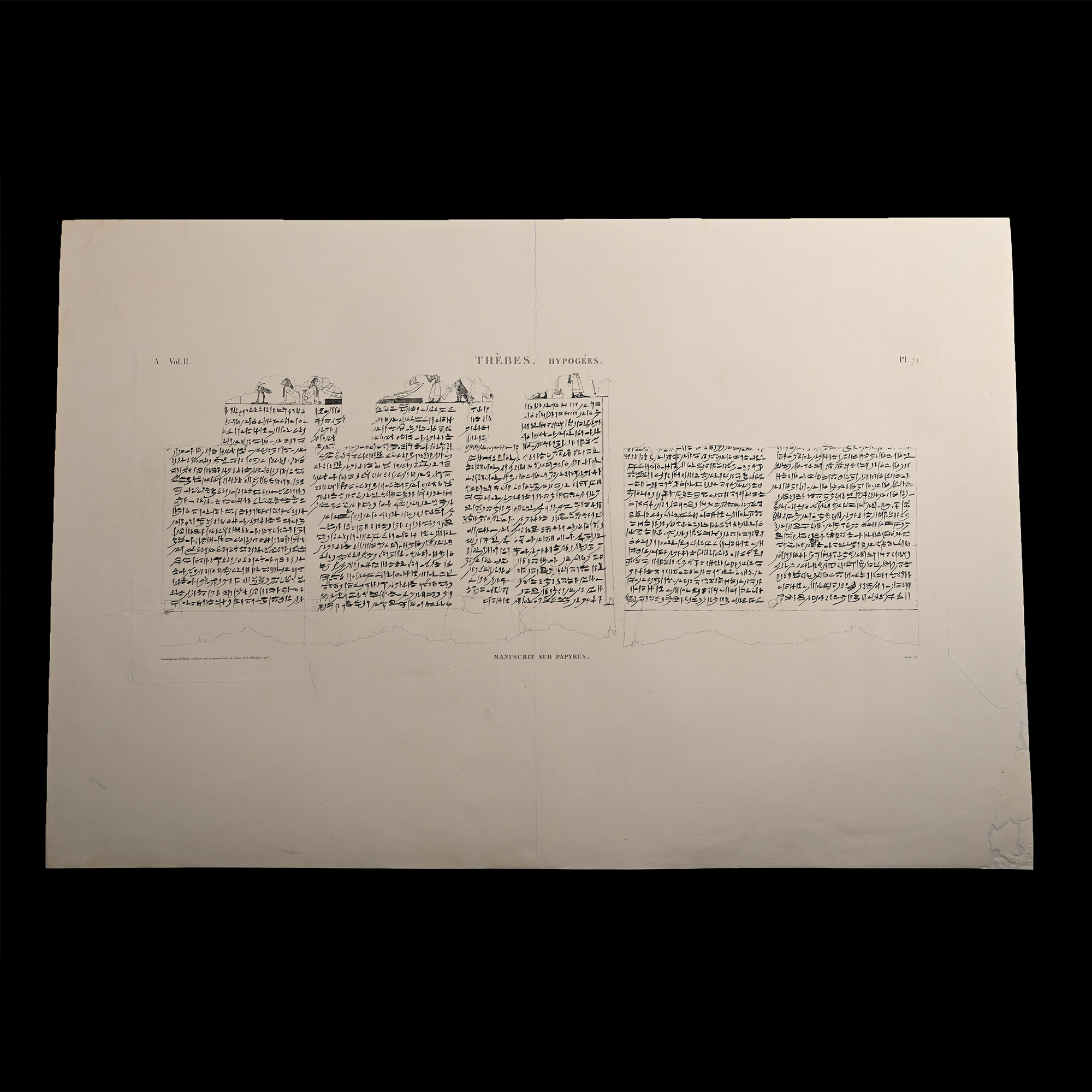
Very Large Egyptian Expedition Lithograph of the Hypogees Papyrus Manuscript from Thebes
EARLY 19TH CENTURY A.D.
40 1/8 x 27 1/8 in. (264 grams, 102 x 69 cm).
Proof etching on laid paper of plate 71 from Vol .II of Description de l'Égypte : ou, Recueil des observations et des recherches qui ont été faites en Égypte pendant l'expédition de l'armée française entitled Thèbes. Hypogées. Manuscrit sur papyrus.
ProvenanceFrom the collection of a North American priest.
Acquired between 1981-1996.
Property of a North American collector.
Cf. reprint of the whole work in Various, Recueil des observations et des recherches qui ont été faites en Égypte pendant l’expédition de l’Armée française, publié par les ordres de Sa Majesté l’Empereur Napoléon le Grand, Köln, 1989, pp.248-249.
FootnotesProduced between February 1802 and 1830 on the orders of Napoleon Bonaparte; published between 1809 and 1828. Just 1,000 copies were distributed to various institutions, printed on laid paper with an 'Égypte ancienne et moderne' watermark. The book is subtitled Recueil des observations et des recherches qui ont été faites en Égypte pendant l’expédition de l’Armée française, publié par les ordres de Sa Majesté l’Empereur Napoléon le Grand (Gathering of observations and discoveries which were made in Egypt during the expedition of the French army, published on the orders of His Majesty the Emperor Napoleon the Great). It was the world's first encyclopedia devoted exclusively to the remains of ancient Egypt. The plates of this book are the first to present the archaeological sites of Thebes (Luxor). The papyrus manuscript was recovered from an underground tomb chamber (hypogeum).
CONDITIONTimeLine Auctions follows a vetting process to ensure the authenticity and legality of all items, reinforcing our commitment to integrity and responsible trading. Each antiquity, antique, and coin lot undergoes thorough examination by a vetting committee of at least ten external specialists, professional trade association members, scientists, and archaeologists: Our Vetting Process
AUCTIONS:
TimeLine is a leading auction house specialising in antiquities, ancient art, collectables, natural history, coins, medals, and books. Our auctions offer museums, collectors, historians, and enthusiasts the opportunity to acquire unique and historically significant pieces.
LOT 0468
Very Large Egyptian Expedition Lithograph of the Hypogees Papyrus Manuscript from Thebes
Estimate £80 - 100€93 - 116 (for guidance only)$108 - 135 (for guidance only)
-
Very Large Egyptian Expedition Lithograph of the Hypogees Papyrus Manuscript from Thebes
Early 19th century A.D.Sold for (Inc. bp): £124
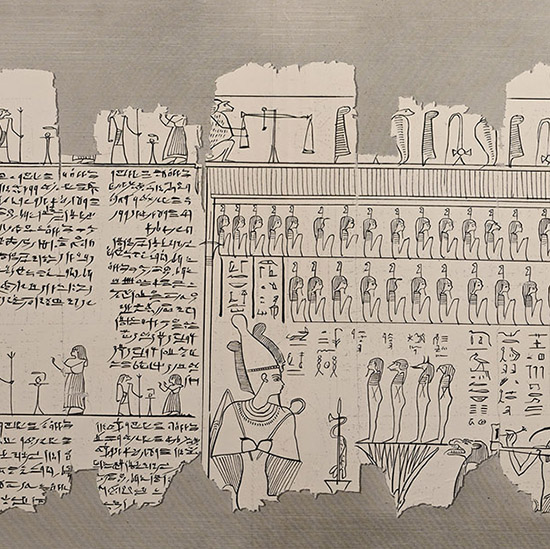
Proof etching on laid paper of plate 64 from Vol.II of Description de l'Égypte : ou, Recueil des observations et des recherches qui ont été faites en Égypte pendant l'expédition de l'armée française. entitled Thèbes. Hypogées. Manuscrit sur papyrus. 4eme partie. 235 grams, 105 x 69.5 cm
From the collection of a North American priest. Acquired between 1981-1996. Property of a North American collector.
Produced between February 1802 and 1830 on the orders of Napoleon Bonaparte; published between 1809 and 1828. Just 1,000 copies were distributed to various institutions, printed on laid paper with an 'Égypte ancienne et moderne' watermark. The book is subtitled Recueil des observations et des recherches qui ont été faites en Égypte pendant l’expédition de l’Armée française, publié par les ordres de Sa Majesté l’Empereur Napoléon le Grand (Gathering of observations and discoveries which were made in Egypt during the expedition of the French army, published on the orders of His Majesty the Emperor Napoleon the Great). It was the world's first encyclopedia devoted exclusively to the remains of ancient Egypt. The plates of this book are the first to present the archaeological sites of Thebes (Luxor). The papyrus manuscript was recovered from an underground tomb chamber (hypogeum). This includes a scene (bottom right) depicting the weighing of the deceased's heart before Osiris's divine tribunal. The heart is balanced against the feather of Maat, and the ibis-headed Thoth records the verdict. If the heart fails to balance, it is devoured by a fearsome creature called Ammut, and the deceased would cease to exist. -
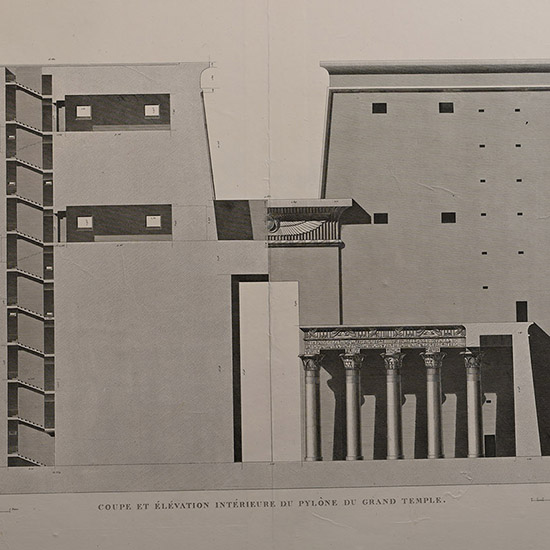
Very Large Egyptian Expedition Lithograph of the Temple of Edfou
Early 19th century A.D.Sold for (Inc. bp): £94
Proof etching on laid paper of plate 52 from Vol.I of Description de l'Égypte : ou, Recueil des observations et des recherches qui ont été faites en Égypte pendant l'expédition de l'armée française, titled Edfou (Apollinopolis Magna) Coupe et élévation intérieure du pylône du grand temple. 230 grams, 105.5 x 69 cm
From the collection of a North American priest. Acquired between 1981-1996. Property of a North American collector.
Produced between February 1802 and 1830 on the orders of Napoleon Bonaparte; published between 1809 and 1828. Just 1,000 copies were distributed to various institutions, printed on laid paper with an 'Égypte ancienne et moderne' watermark. The book is subtitled Recueil des observations et des recherches qui ont été faites en Égypte pendant l’expédition de l’Armée française, publié par les ordres de Sa Majesté l’Empereur Napoléon le Grand (Gathering of observations and discoveries which were made in Egypt during the expedition of the French army, published on the orders of His Majesty the Emperor Napoleon the Great). It was the world's first encyclopedia devoted exclusively to the remains of ancient Egypt. The plates of this book are the first to present the archaeological sites of Thebes (Luxor). The temple at Edfu in Upper Egypt is dedicated to Horus and was built during the Ptolemaic Period. It remains one of the best-preserved temples in Egypt. -
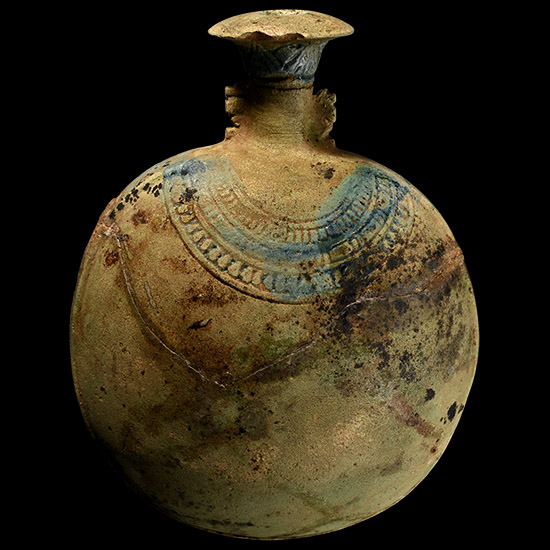
Egyptian Glazed Faience New Year Flask with Baboons
Late Period, 664-332 B.C.Estimate: £2,000 - 3,000 (+bp*)
Opening Bid: £1,000
Lentoid body with segmented collars and blue detailing around the shoulders, neck with papyrus stalk detailing and a domed rim; addorsed stylised baboons flanking the neck. 263 grams, 16 cm
Acquired on the UK art market, 1990s. Private collection, New York, USA. This lot has been checked against the Interpol Database of stolen works of art and is accompanied by search certificate number no.13350-255452.
The concept of renewal is expressed through the form, decoration, and inscriptions of this type of flask. Their rounded bodies evoke the sun disc, symbolising daily rebirth, while the squatting baboons flanking the mouth allude to those that greeted the rising sun each morning. The blue collar decoration, including floral motifs, as seen here, symbolises the renewal of the agricultural cycle through the annual Nile inundation. The papyrus-capital spout reinforces this theme of regeneration. Although traditionally dated exclusively to the 26th Dynasty, examples recovered from Late Period and early Ptolemaic contexts indicate that their popularity actually endured for several centuries.
