
Loading, please wait...
LOT 0580
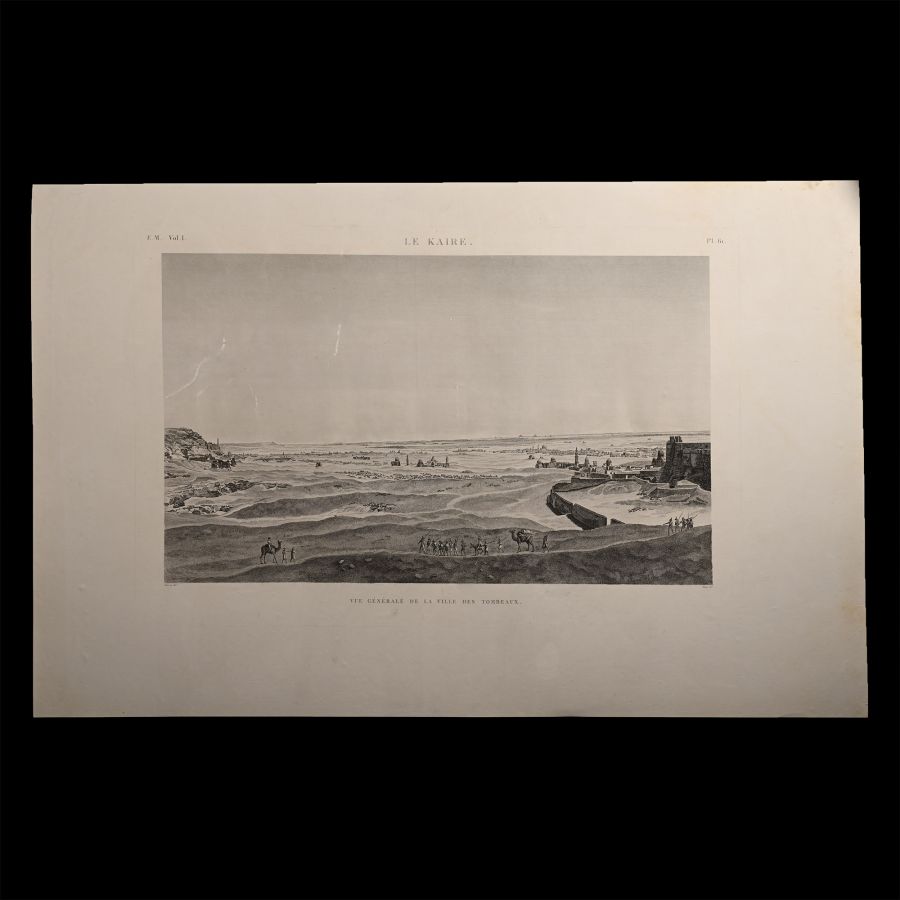
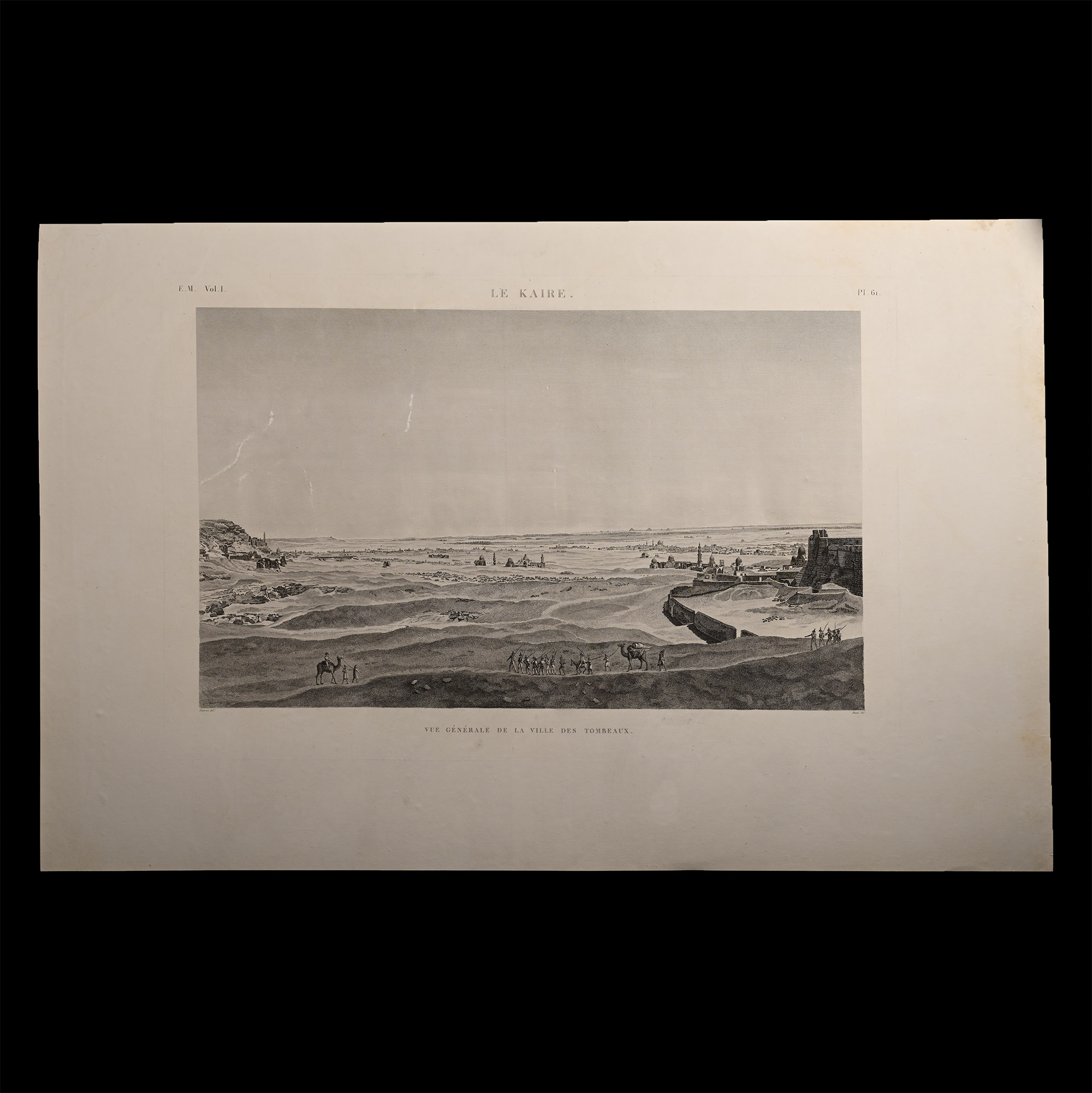
Very Large Egyptian Expedition Lithograph of Kaire
EARLY 19TH CENTURY A.D.
40 7/8 x 26 3/8 in. (259 grams, 104 x 67 cm).
Proof etching on laid paper of plate 61 from Vol .I of Description de l'Égypte : ou, Recueil des observations et des recherches qui ont été faites en Égypte pendant l'expédition de l'armée française. entitled Le Kaire. Vue générale de la ville des tombeaux.
ProvenanceFrom the collection of a North American priest.
Acquired between 1981-1996.
Property of a North American collector.
Produced between February 1802 and 1830 on the orders of Napoleon Bonaparte; published between 1809 and 1828. Just 1,000 copies were distributed to various institutions, printed on laid paper with an 'Égypte ancienne et moderne' watermark. The book is subtitled Recueil des observations et des recherches qui ont été faites en Égypte pendant l’expédition de l’Armée française, publié par les ordres de Sa Majesté l’Empereur Napoléon le Grand (Gathering of observations and discoveries which were made in Egypt during the expedition of the French army, published on the orders of His Majesty the Emperor Napoleon the Great). It was the world's first encyclopedia devoted exclusively to the remains of ancient Egypt. The plates of this book are the first to present the archaeological sites of Thebes (Luxor).
CONDITIONTimeLine Auctions follows a vetting process to ensure the authenticity and legality of all items, reinforcing our commitment to integrity and responsible trading. Each antiquity, antique, and coin lot undergoes thorough examination by a vetting committee of at least ten external specialists, professional trade association members, scientists, and archaeologists: Our Vetting Process
AUCTIONS:
TimeLine is a leading auction house specialising in antiquities, ancient art, collectables, natural history, coins, medals, and books. Our auctions offer museums, collectors, historians, and enthusiasts the opportunity to acquire unique and historically significant pieces.
LOT 0580
Very Large Egyptian Expedition Lithograph of Kaire
Estimate £80 - 100€93 - 116 (for guidance only)$108 - 135 (for guidance only)
Opening Bid
£40 (EUR 46; USD 54) +BP*
-
Egyptian Terracotta Funerary Cone of Montuemhat
Late Period, 25th-26th Dynasty, circa 700-650 B.C.Estimate: £500 - 700 (+bp*)
Bids: 13 | Current Bid: £370
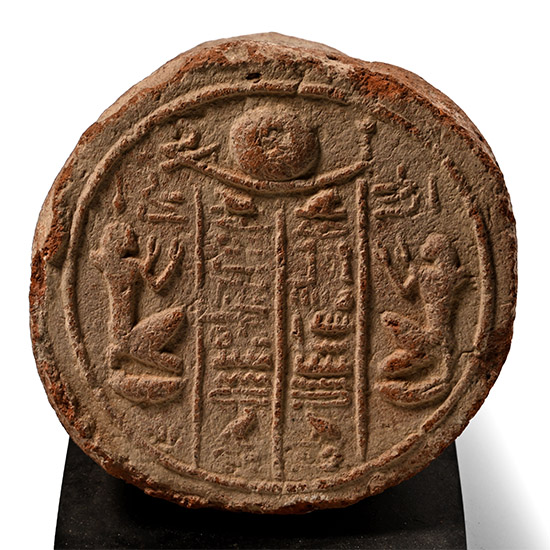
Front portion of a tapering funerary cone for the high official, Montuemhat, the circular front impressed with the depiction of a solar barque surmounting four columns of hieroglyphs; the two left-hand columns: 'The Osiris, overseer of the southern city, Montuemhat, true of voice'; the two right-hand columns: 'The Osiris, fourth god’s servant, Montuemhat, true of voice.' 626 grams total, 12.2 cm wide including stand
Acquired from Abdoul Rassoul on the West Bank at Luxor, 1974-1980 when a guest lecturer. From the private collection of Peter Clayton, FCILIP, Dip, Arch, FSA, FRNS, Hemel Hempstead, Hertfordshire, UK; formed since the late 1950s.
At least fourteen different cones bear Montuemhat's name, some of which mention his family members. From Montuemhat's tomb in the Asasif at Thebes (TT34). -
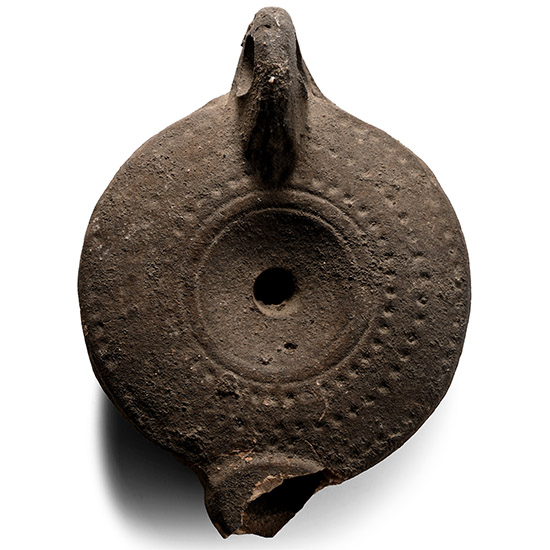
Romano-Egyptian Terracotta Toad Oil Lamp
Roman Period, 3rd century A.D.Estimate: £40 - 60 (+bp*)
Bids: 1 | Current Bid: £5
Squat in profile and discoid in plan, with a central perforation on the upper face and a pierced lug handle at the rear; concentric bands of pointillé ornament on the upper face and incised rings on the base; nozzle broken; supplied with an old handwritten collector's record slip made from an envelope. 97 grams, 11.3 cm
Found Alexandria, Egypt. From the estate of a deceased Sussex private collector since the early 20th century. Accompanied by an old original handwritten information slip. -
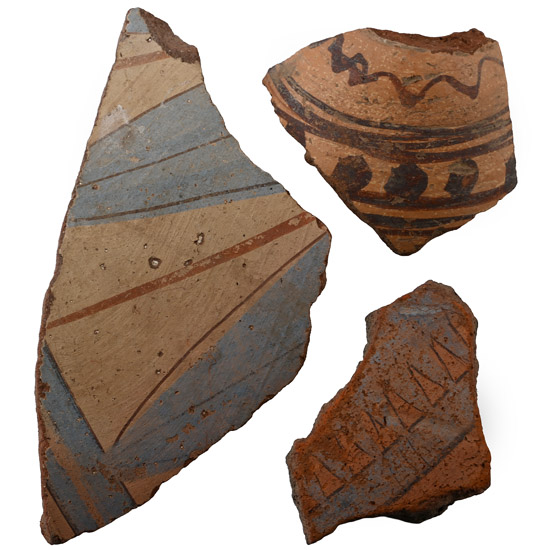
Large Egyptian Painted Bowl Fragments
New Kingdom, 18th Dynasty, Amarna Period, 1379-1362 B.C.Estimate: £80 - 100 (+bp*)
Opening Bid: £5
Two fragments of distinctive blue-painted pottery and one from a Mycenaean vessel. 221 grams total, 7.2-16.5 cm
Acquired in March 1979. From the private collection of Peter Clayton, FCILIP, Dip, Arch, FSA, FRNS, Hemel Hempstead, Hertfordshire, UK; formed since the late 1950s. Accompanied by an old handwritten information card by Peter Clayton, collection no.143.
The largest blue-painted fragment likely comes from the neck, and the smaller from the body, of a large storage vessel; intact examples of these vessels have been found at Amarna (cf. Seyfried, F. (ed.), In the Light of Amarna: 100 Years of the Nefertiti Discovery, Berlin, 2012, pp. 288-289, Cat. no. 68, for a near-complete example). Amarna has yielded the largest quantity of Late Helladic (LH IIIA2) Mycenaean pottery in Egypt. Analysis has revealed that several Mycenaean sherds excavated at Amarna in Egypt come from a production site in the northern Argolid, probably in the Mycenae-Berbati region.
