
Loading, please wait...
LOT 0451
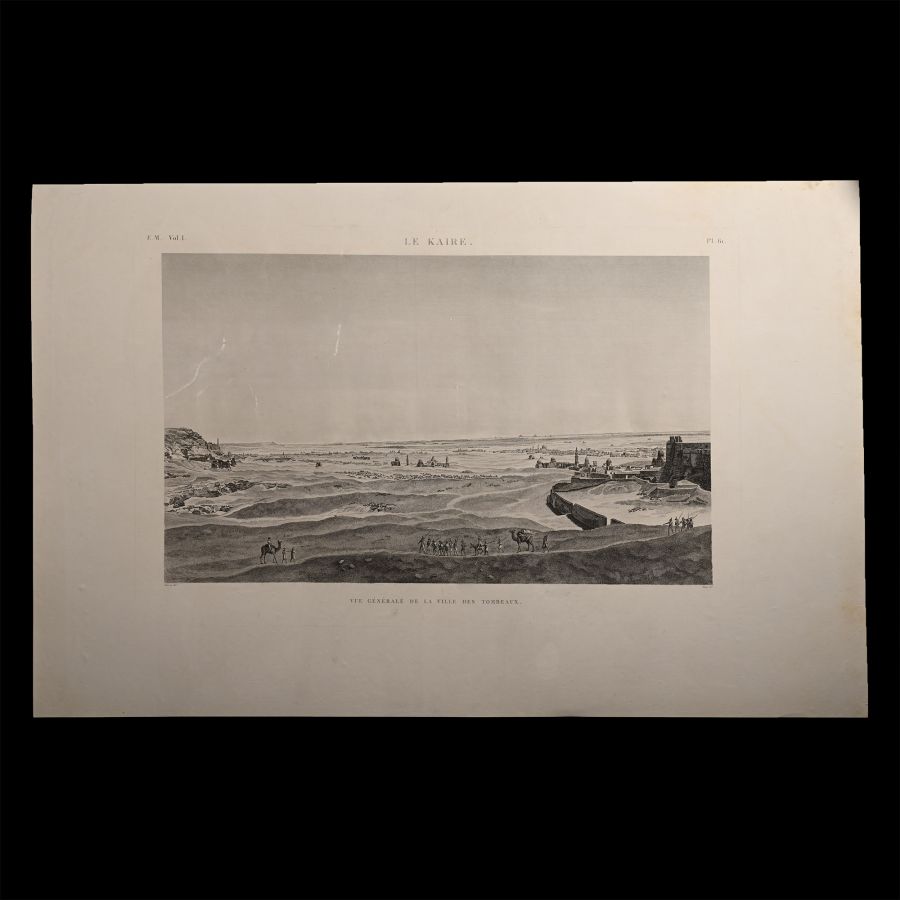
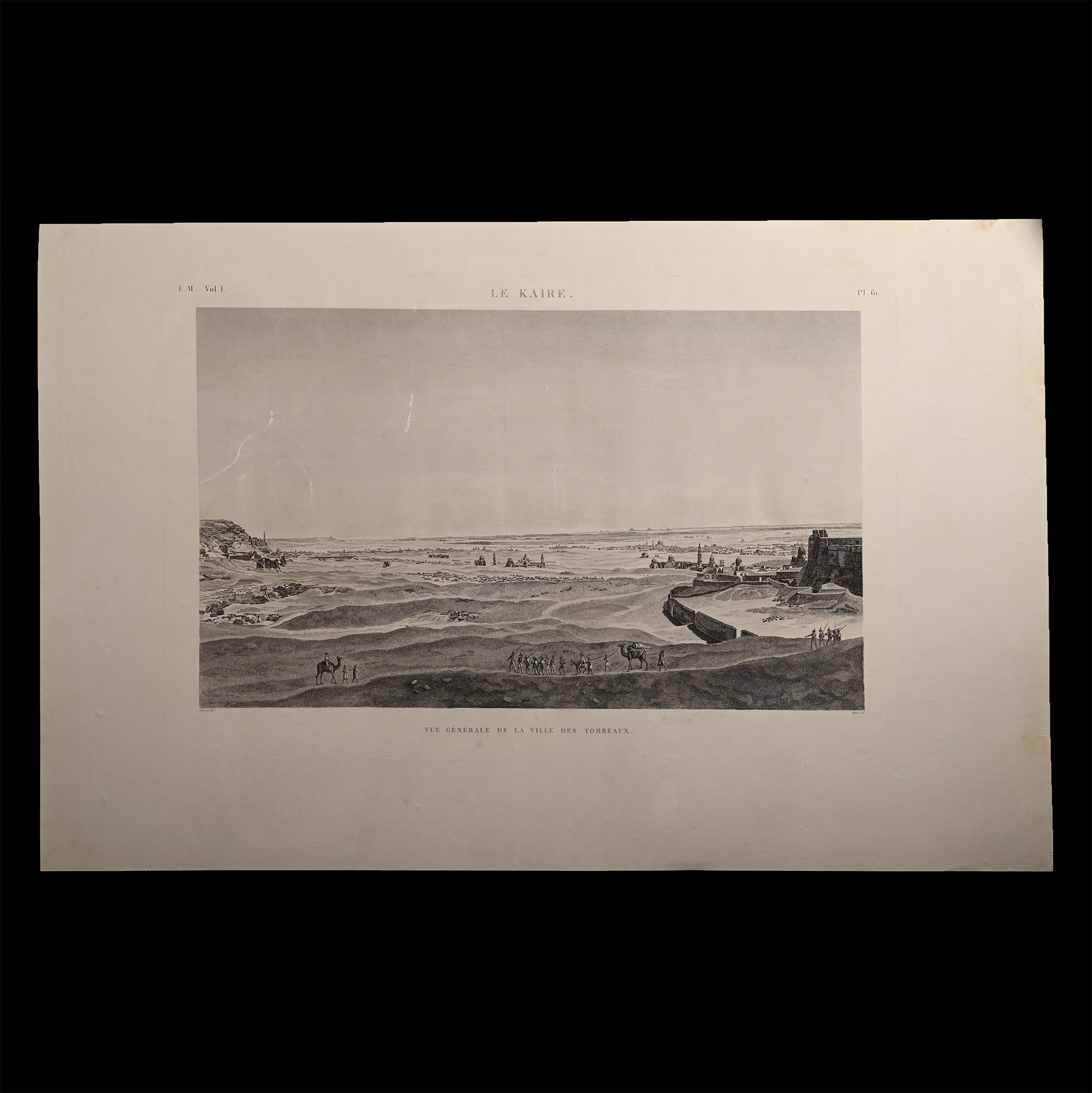
Very Large Egyptian Expedition Lithograph of Kaire
EARLY 19TH CENTURY A.D.
40 7/8 x 26 3/8 in. (259 grams, 104 x 67 cm).
Proof etching on laid paper of plate 61 from Vol .I of Description de l'Égypte : ou, Recueil des observations et des recherches qui ont été faites en Égypte pendant l'expédition de l'armée française. entitled Le Kaire. Vue générale de la ville des tombeaux.
ProvenanceFrom the collection of a North American priest.
Acquired between 1981-1996.
Property of a North American collector.
Produced between February 1802 and 1830 on the orders of Napoleon Bonaparte; published between 1809 and 1828. Just 1,000 copies were distributed to various institutions, printed on laid paper with an 'Égypte ancienne et moderne' watermark. The book is subtitled Recueil des observations et des recherches qui ont été faites en Égypte pendant l’expédition de l’Armée française, publié par les ordres de Sa Majesté l’Empereur Napoléon le Grand (Gathering of observations and discoveries which were made in Egypt during the expedition of the French army, published on the orders of His Majesty the Emperor Napoleon the Great). It was the world's first encyclopedia devoted exclusively to the remains of ancient Egypt. The plates of this book are the first to present the archaeological sites of Thebes (Luxor).
CONDITIONTimeLine Auctions follows a vetting process to ensure the authenticity and legality of all items, reinforcing our commitment to integrity and responsible trading. Each antiquity, antique, and coin lot undergoes thorough examination by a vetting committee of at least ten external specialists, professional trade association members, scientists, and archaeologists: Our Vetting Process
AUCTIONS:
TimeLine is a leading auction house specialising in antiquities, ancient art, collectables, natural history, coins, medals, and books. Our auctions offer museums, collectors, historians, and enthusiasts the opportunity to acquire unique and historically significant pieces.
LOT 0451
Very Large Egyptian Expedition Lithograph of Kaire
Estimate £80 - 100€93 - 116 (for guidance only)$108 - 135 (for guidance only)
-
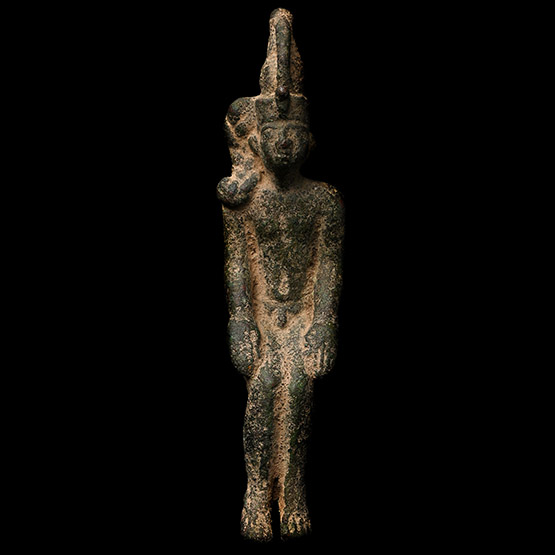
Egyptian Bronze Seated Harpocrates
Late Period, 664-332 B.C.Estimate: £800 - 1,000 (+bp*)
Opening Bid: £428
Substantial cast figurine modelled in the round of Harpocrates sitting with hands on his thighs, double crown and sidelock. 389 grams, 16.2 cm
From the collection of a gentleman, acquired on the London art market in the 1990s.
Harpocrates is the Greek rendering of the Egyptian Hor-pa-khered, which means ‘Horus the Child’. This name refers to Horus as the divine infant of Isis and Osiris. Wearing an amulet of Harpocrates was believed to give the wearer the same protection that Isis offered to her beloved son. Larger bronze statuettes probably served as votive offerings to Harpocrates to secure his favour and protection. -
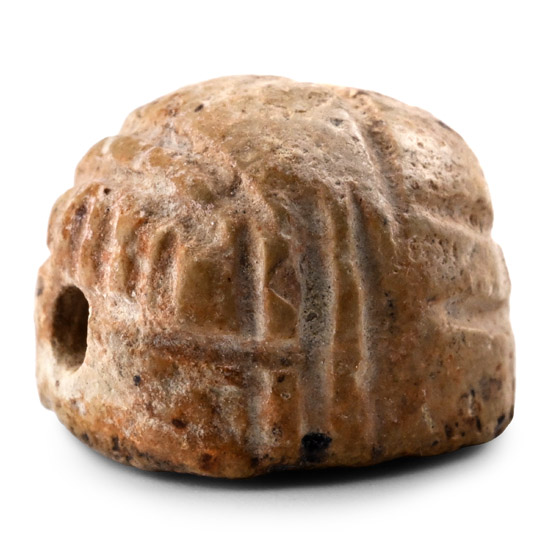
Phoenician Stone Scaraboid with Man Working in a Field
1st millennium B.C.Sold for (Inc. bp): £33
Domed body with incised detailing, underside showing a man tending his land. 3.21 grams, 15 mm
From a late Warwickshire numismatic collector, his collection formed from the early 1980s. -
.jpg)
Large Phoenician Alabaster Alabastron with Hieroglyphic Inscription
Circa 600 B.C.Estimate: £15,000 - 20,000 (‡+bp*)
Opening Bid: £7,500
Barrel-shaped in profile with a rounded base, broad shoulder and flared mouth, two lateral integral loop handles; incised hieroglyphic legend to the shoulder. 420 grams, 37 cm
Formerly in a private collection, Beirut, Lebanon, 1990s. Swiss private collection, acquired from Mr H., Geneva, 2010. This lot has been checked against the Interpol Database of stolen works of art and is accompanied by search certificate number no.13221-249178. Accompanied by a copy of an Art Loss Register certificate, no.S00059830
In the Phoenician necropolises of Andalusia, the ashes of the deceased were enclosed in luxurious alabaster urns of Egyptian manufacture. In the Phoenician necropolis of Almuñécar, for example, some urns preserved inscriptions and emblems of various Egyptian pharaohs, who ruled the Nile region between the 16th and 8th centuries B.C. Alabaster vessels of this type, originally containing fine wines, have been discovered, albeit in smaller numbers, in the royal palaces of Assur and Samaria in the East, as part of war booty or gifts exchanged between royal houses.
