
Loading, please wait...
LOT 0469
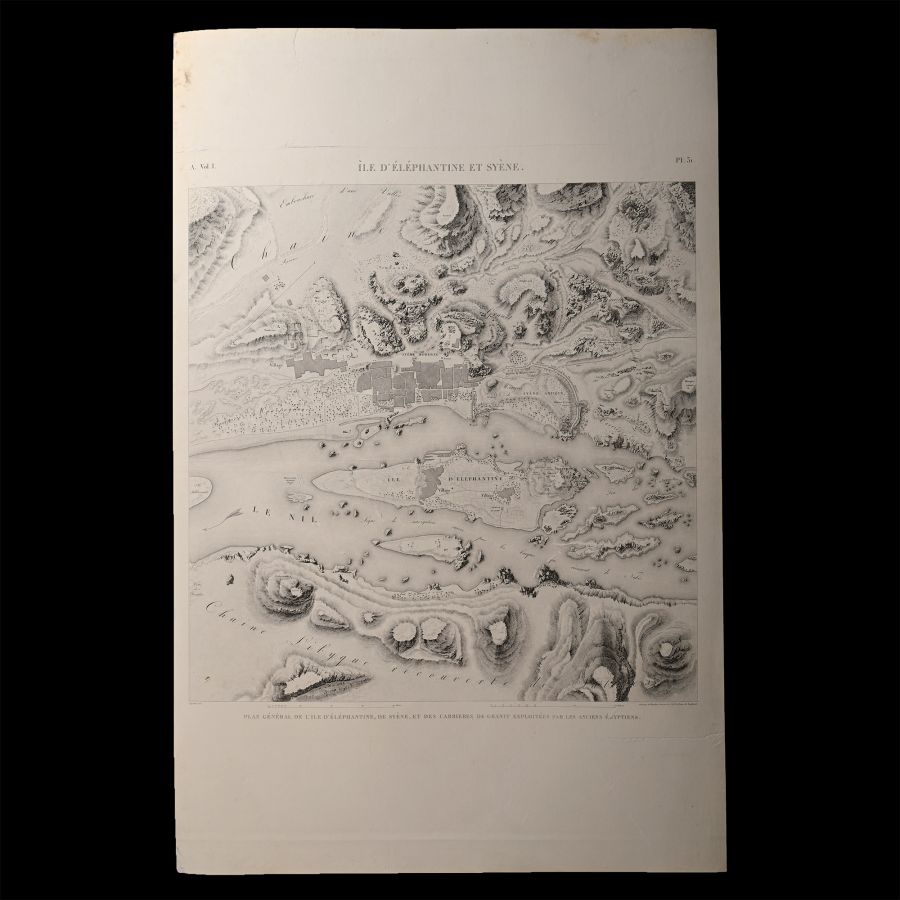
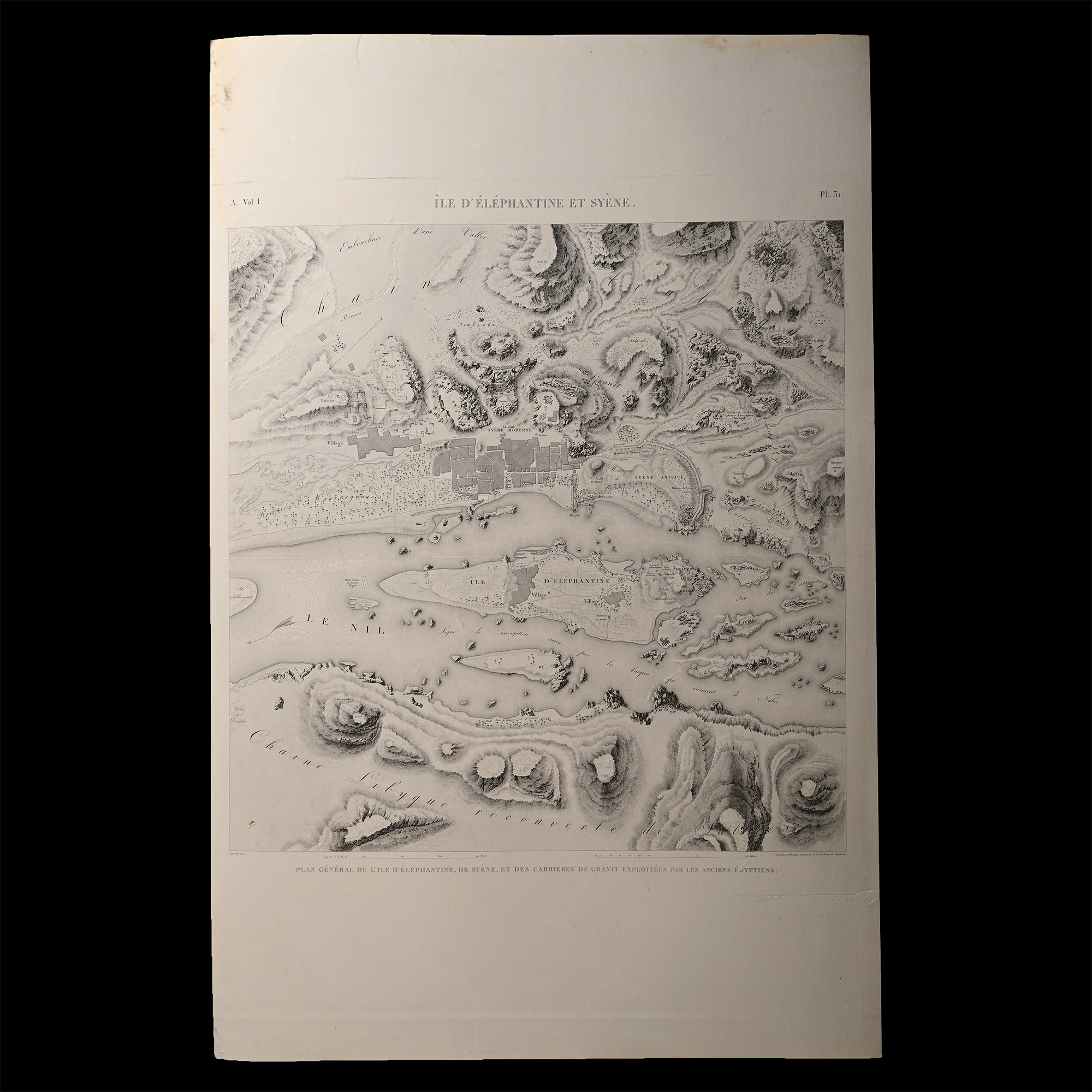
Very Large Egyptian Expedition Lithograph of Elephantine Island
EARLY 19TH CENTURY A.D.
41 1/2 x 27 1/8 in. (223 grams, 105.5 x 69 cm).
Proof etching on laid paper of plate 31 from Vol.I of Description de l'Égypte : ou, Recueil des observations et des recherches qui ont été faites en Égypte pendant l'expédition de l'armée française. entitled Ile d'Eléphantine et Syène. Plan général de l'Île d'Eléphantine, de Syène, et des carrières de granit exploitées par les Anciens Egyptiens.
ProvenanceFrom the collection of a North American priest.
Acquired between 1981-1996.
Property of a North American collector.
Cf. reprint of the whole work in Various, Recueil des observations et des recherches qui ont été faites en Égypte pendant l’expédition de l’Armée française, publié par les ordres de Sa Majesté l’Empereur Napoléon le Grand, Köln, 1989, p.76.
FootnotesProduced between February 1802 and 1830 on the orders of Napoleon Bonaparte; published between 1809 and 1828. Just 1,000 copies were distributed to various institutions, printed on laid paper with an 'Égypte ancienne et moderne' watermark. The book is subtitled Recueil des observations et des recherches qui ont été faites en Égypte pendant l’expédition de l’Armée française, publié par les ordres de Sa Majesté l’Empereur Napoléon le Grand (Gathering of observations and discoveries which were made in Egypt during the expedition of the French army, published on the orders of His Majesty the Emperor Napoleon the Great). It was the world's first encyclopedia devoted exclusively to the remains of ancient Egypt. The plates of this book are the first to present the archaeological sites of Thebes (Luxor). Elephantine Island holds archaeological remains that span the entire history of ancient Egypt. Syene is the Greek name for the ancient Egyptian city of Swennet, now known as Aswan.
CONDITIONTimeLine Auctions follows a vetting process to ensure the authenticity and legality of all items, reinforcing our commitment to integrity and responsible trading. Each antiquity, antique, and coin lot undergoes thorough examination by a vetting committee of at least ten external specialists, professional trade association members, scientists, and archaeologists: Our Vetting Process
AUCTIONS:
TimeLine is a leading auction house specialising in antiquities, ancient art, collectables, natural history, coins, medals, and books. Our auctions offer museums, collectors, historians, and enthusiasts the opportunity to acquire unique and historically significant pieces.
LOT 0469
Very Large Egyptian Expedition Lithograph of Elephantine Island
Sold for (Inc. bp): £98
-
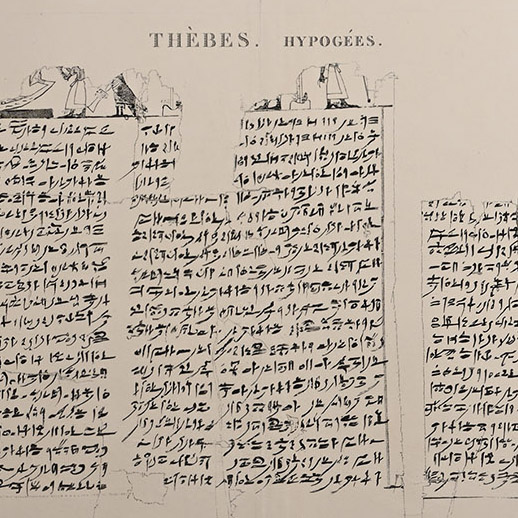
Very Large Egyptian Expedition Lithograph of the Hypogees Papyrus Manuscript from Thebes
Early 19th century A.D.Estimate: £80 - 100 (+bp*)
Opening Bid: £40
Proof etching on laid paper of plate 71 from Vol .II of Description de l'Égypte : ou, Recueil des observations et des recherches qui ont été faites en Égypte pendant l'expédition de l'armée française entitled Thèbes. Hypogées. Manuscrit sur papyrus. 264 grams, 102 x 69 cm
From the collection of a North American priest. Acquired between 1981-1996. Property of a North American collector.
Produced between February 1802 and 1830 on the orders of Napoleon Bonaparte; published between 1809 and 1828. Just 1,000 copies were distributed to various institutions, printed on laid paper with an 'Égypte ancienne et moderne' watermark. The book is subtitled Recueil des observations et des recherches qui ont été faites en Égypte pendant l’expédition de l’Armée française, publié par les ordres de Sa Majesté l’Empereur Napoléon le Grand (Gathering of observations and discoveries which were made in Egypt during the expedition of the French army, published on the orders of His Majesty the Emperor Napoleon the Great). It was the world's first encyclopedia devoted exclusively to the remains of ancient Egypt. The plates of this book are the first to present the archaeological sites of Thebes (Luxor). The papyrus manuscript was recovered from an underground tomb chamber (hypogeum). -
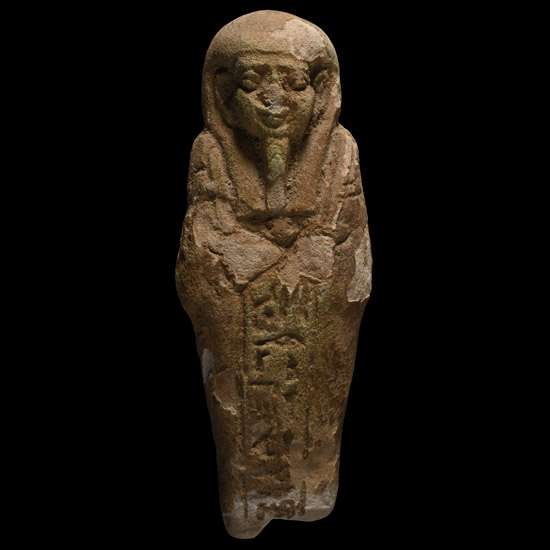
Egyptian Faience Hierogyphic Shabti
Late Period, 664-332 B.C.Sold for (Inc. bp): £221
With moulded facial features, tripartite wig, agricultural tools in the crossed hands and a seed-bag to the left shoulder; dorsal pillar; vertical panel to lower body with impressed hieroglyphic inscription: 'The illuminated one, the Osiris, the Controller of the Estates.... (sḥḏ wsı͗r ḫrp-ḥwwt....); lower legs absent. 56.3 grams, 95 mm
From the private collection of a Canadian gentleman living in Essex, UK, formed since the 1920s-circa 1990. Property of an Essex lady until the late 1990s; thence by descent. From the private collection of an Essex gentleman since the late 1990s. -
.jpg)
Egyptian 'Becker' Serpentine Vessel
New Kingdom, 18th Dynasty, circa 1450 B.C.Estimate: £2,500 - 3,500 (‡+bp*)
Opening Bid: £1,250
Piriform jar with wide, flat rim and short neck, narrow neck and flat base. 1.2 kg, 15.5 cm
Ex Becker collection, 1920s. Private collection, Los Angeles, USA, 1990s. Private European collection. Accompanied by an academic report by Dr Raffaele D’Amato. This lot has been checked against the Interpol Database of stolen works of art and is accompanied by a search certificate number no.12576-232111.
Three forms of serpentine were mainly used by the ancient Egyptians for stone vessels: a) green or grey serpentine with black veins; b) translucent green serpentine with black patches; c) granular black serpentine with intermixed grey or brown granules. Type a) serpentine, i.e. the green or grey one with black veins, has the longer time range, and was used for vessels from the Predynastic Period (Naqada II) through the New Kingdom. It was used for stone vessels, but also became common for statuettes and small toilet vessels. The class of green glazed kohl pots, many with carved or openwork decoration which are usually called ‘glazed steatite’ were more likely to be made of serpentine. The type here represented is a form known in the New Kingdom: a bag-shaped jar with neck, flat base, and wide thin rim. Similar vessels have been found in Thebes, Amarna, Kahun, among other localities.
