
Loading, please wait...
_900x900.jpg "Very Large Eastern Roman Blue Glass Bottle with Iridescence")
_200x200.jpg "Very Large Eastern Roman Blue Glass Bottle with Iridescence")
.jpg "Very Large Eastern Roman Blue Glass Bottle with Iridescence")
LOT 0147
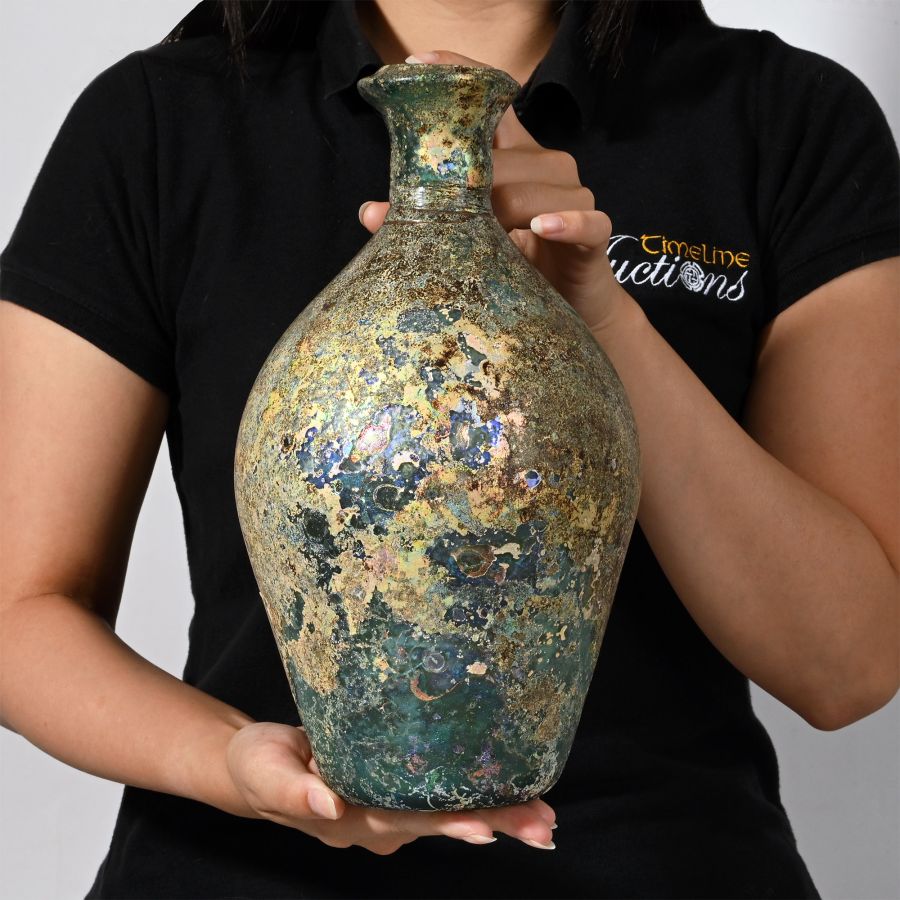
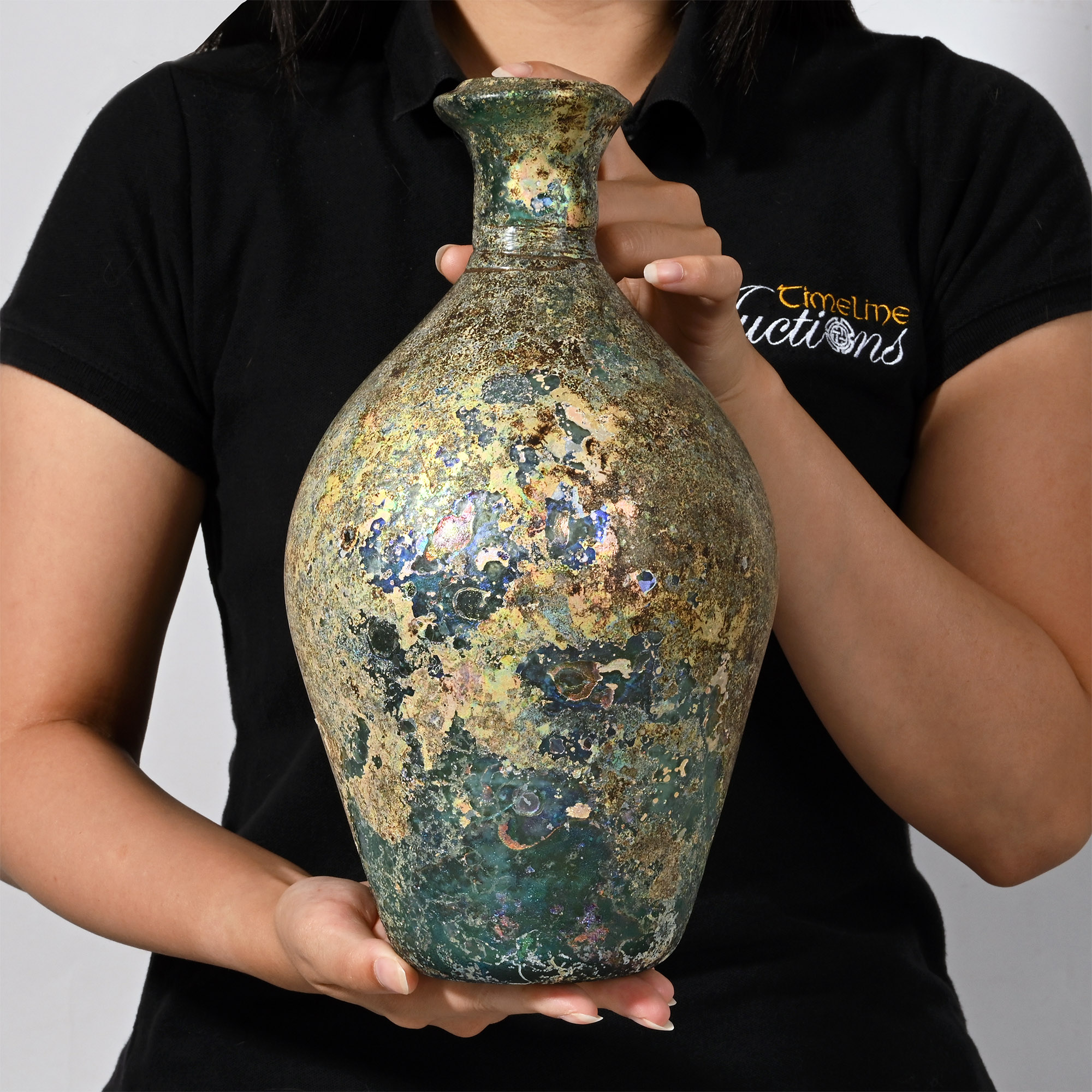
Very Large Eastern Roman Blue Glass Bottle with Iridescence
2ND-3RD CENTURY A.D.
11 1/2 in. (949 grams, 29.1 cm).
Piriform in profile with a narrow neck and flared mouth with a chamfered rim, dimple base.
ProvenanceFrom the Xavier Guerrand-Hermès private collection.
with Artcurial, Paris, 25 March 2014, no.39.
Private collection, London, UK.
This lot has been checked against the Interpol Database of stolen works of art and is accompanied by search certificate number no.12959-245241.
Cf. similar specimen in Kunstmuseum Luzern, 3000 Jahre Glaskunst, Luzern, 1981, p.78, no.253.
FootnotesOn ancient glass, iridescence is the soft play of colour that develops as the surface ages and becomes silica-rich. Minute layers form over time and break light into shifting blues, greens and golds. It is not a modern finish but something time has drawn out of the material itself, so the pattern and palette are unique to each piece. Collectors prize good, stable iridescence because it lifts the form: ribs read more crisply, profiles glow, and simple vessels take on depth and movement. Museums now tend to preserve these surfaces rather than polish them away, recognising both their beauty and what they tell us about an object’s long life (though it is not, by itself, a dating test). For display, iridescent glass performs brilliantly under gentle, directional light, where the colours “turn” as the vessel is moved. Well-preserved, even iridescence of this quality is not common and adds materially to the presence and desirability of the piece.
CONDITIONTimeLine Auctions follows a vetting process to ensure the authenticity and legality of all items, reinforcing our commitment to integrity and responsible trading. Each antiquity, antique, and coin lot undergoes thorough examination by a vetting committee of at least ten external specialists, professional trade association members, scientists, and archaeologists: Our Vetting Process
AUCTIONS:
TimeLine is a leading auction house specialising in antiquities, ancient art, collectables, natural history, coins, medals, and books. Our auctions offer museums, collectors, historians, and enthusiasts the opportunity to acquire unique and historically significant pieces.
LOT 0147
Very Large Eastern Roman Blue Glass Bottle with Iridescence
Sold for (Inc. bp): £3,120
-
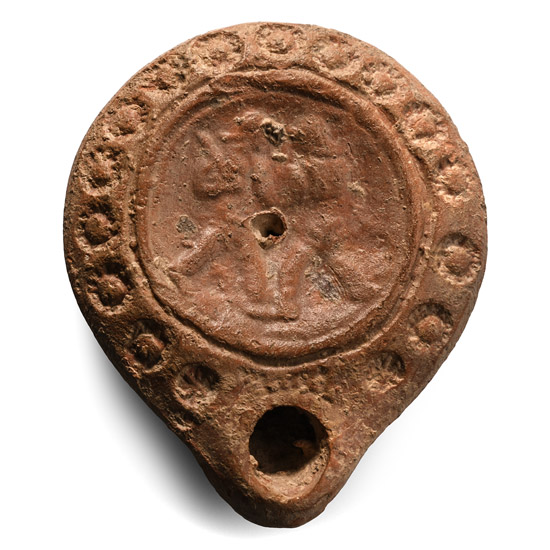
Roman Terracotta Oil Lamp with Fighting Gladiators
2nd century A.D.Estimate: £200 - 300 (+bp*)
Opening Bid: £100
Broad and squat with short stub nozzle, concentric rings to the base, row of impressed annulets to the shoulder, discus with central filler hole; low-relief scene of two murmillo gladiators in combat. 62 grams, 82 mm
From a German private collection, 1980s. Property of an Essex, UK, gentleman. -
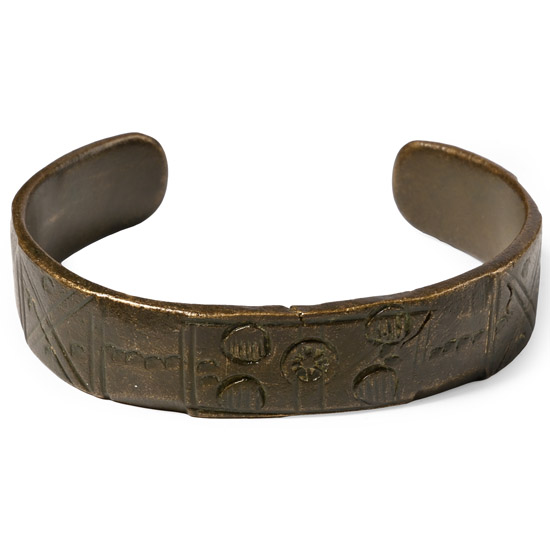
Late Roman Bronze Decorated Bracelet
5th-6th century A.D.Sold for (Inc. bp): £85
Penannular bracelet with rounded terminals, the upper face decorated with annulets and X-motifs, five large circlets with hatching at the centre. 30.2 grams, 57 mm
Ex German art market, 2000s. Acquired from an EU collector living in London. From the collection of a Surrey, UK, gentleman. -
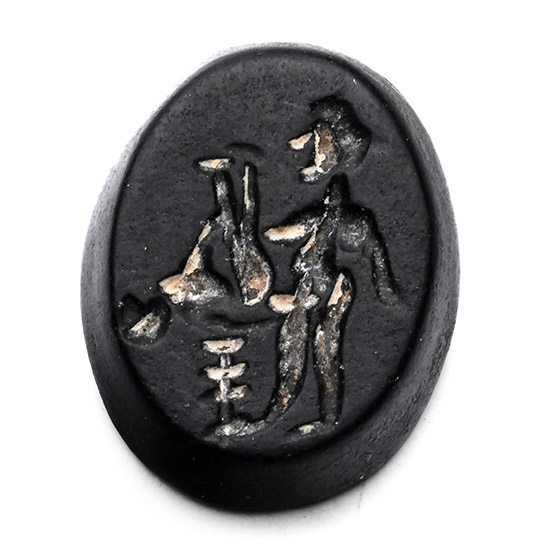
Roman Black Gemstone with Erotic Scene
1st-2nd century A.D.Sold for (Inc. bp): £208
Ellipsoid in plan with incuse nude female standing beside an ewer on a stand. 1.15 grams, 14 mm
Property of a European gentleman, acquired from the estate of a London collector (formed before 2000).
