
Loading, please wait...
LOT 1519
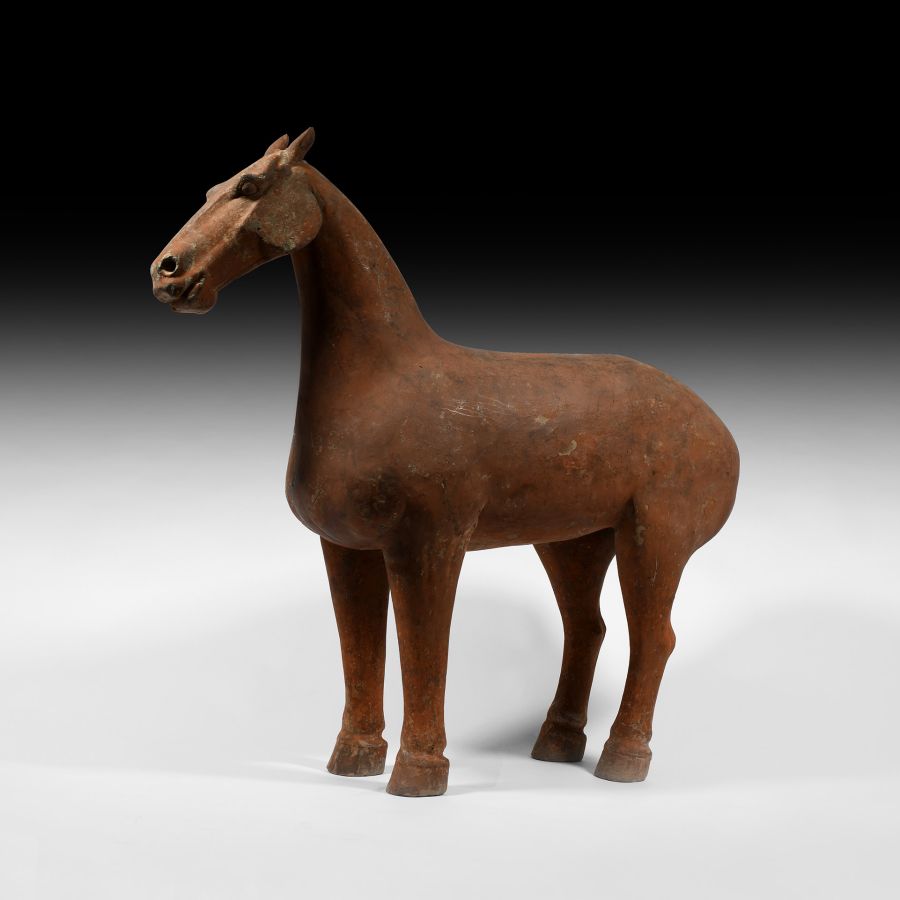
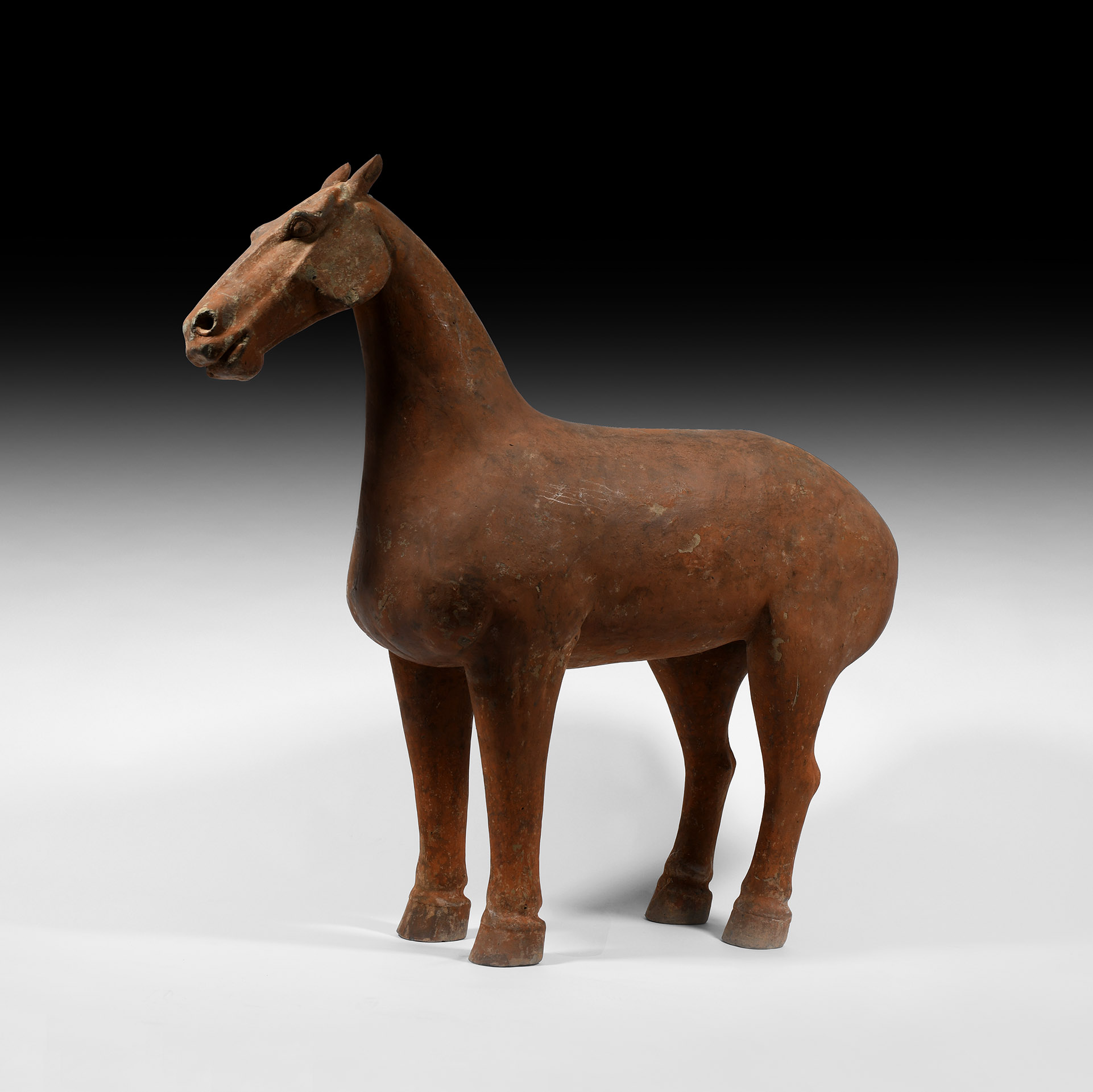
Very Large Chinese Han Standing Horse
HAN DYNASTY, 206 B.C.-220 A.D. OR LATER
29 1/8 in. (19.1 kg, 74 cm wide).
A ceramic horse figure modelled standing the round standing with its head oriented forwards, with semi-naturalistic anatomical and facial detailing; socket to rump for attachment of tail.
ProvenanceAcquired in the 1990s.
From a North Yorkshire private collection, UK.
Cf. Harrist, R.E. Jr., Power and Virtue The Horse in Chinese Art, New York, 1997, pp.54-55, for similar.
CONDITIONTimeLine Auctions follows a vetting process to ensure the authenticity and legality of all items, reinforcing our commitment to integrity and responsible trading. Each antiquity, antique, and coin lot undergoes thorough examination by a vetting committee of at least ten external specialists, professional trade association members, scientists, and archaeologists: Our Vetting Process
AUCTIONS:
TimeLine is a leading auction house specialising in antiquities, ancient art, collectables, natural history, coins, medals, and books. Our auctions offer museums, collectors, historians, and enthusiasts the opportunity to acquire unique and historically significant pieces.
LOT 1519
Very Large Chinese Han Standing Horse
Estimate £800 - 1,000€930 - 1,160 (for guidance only)$1,080 - 1,350 (for guidance only)
-
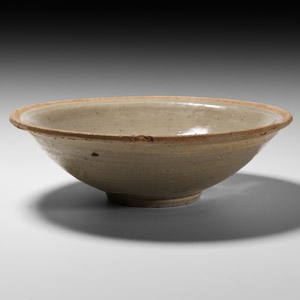
Chinese Tang Whiteware Dish
Tang Dynasty, 618-907 A.D. or laterSold for (Inc. bp): £13
A glazed ceramic whiteware bowl with low basal ring, broad body and flared rim. 190 grams, 15.5 cm wide
Ex specialist Japanese collection of oriental ceramics, 1970s. -
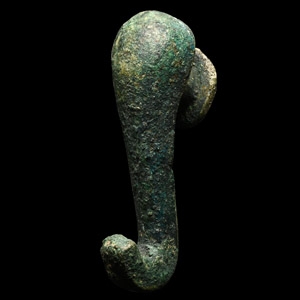
Chinese Bronze Belt Hook
Han Dynasty, 206 B.C.-220 A.D.Sold for (Inc. bp): £7
A bronze belt hook with a tapering profile and one hooked terminal, discoid lug to reverse. 31.4 grams, 48 mm
Acquired 1980s. Private UK collection. Property of a Sussex, UK, teacher. -
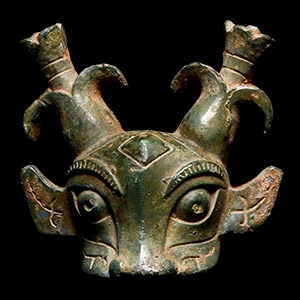
Chinese Han Style Bronze Animal Finial
19th century A.D. or earlierEstimate: £250 - 350 (+bp*)
Opening Bid: £125
A bronze finial or mount in the form of the head of a fantastical creature, with bovine-like ears and eyes, bifurcated horns with erupting flowers, a lozenge in relief to its forehead and detailing to eyebrows and upper lip; hollow reverse with tapering rectangular lug. 90 grams, 60 mm high
Fine condition.
Acquired 1980-1990s. From a West Country collection.
