
Loading, please wait...
LOT 1150
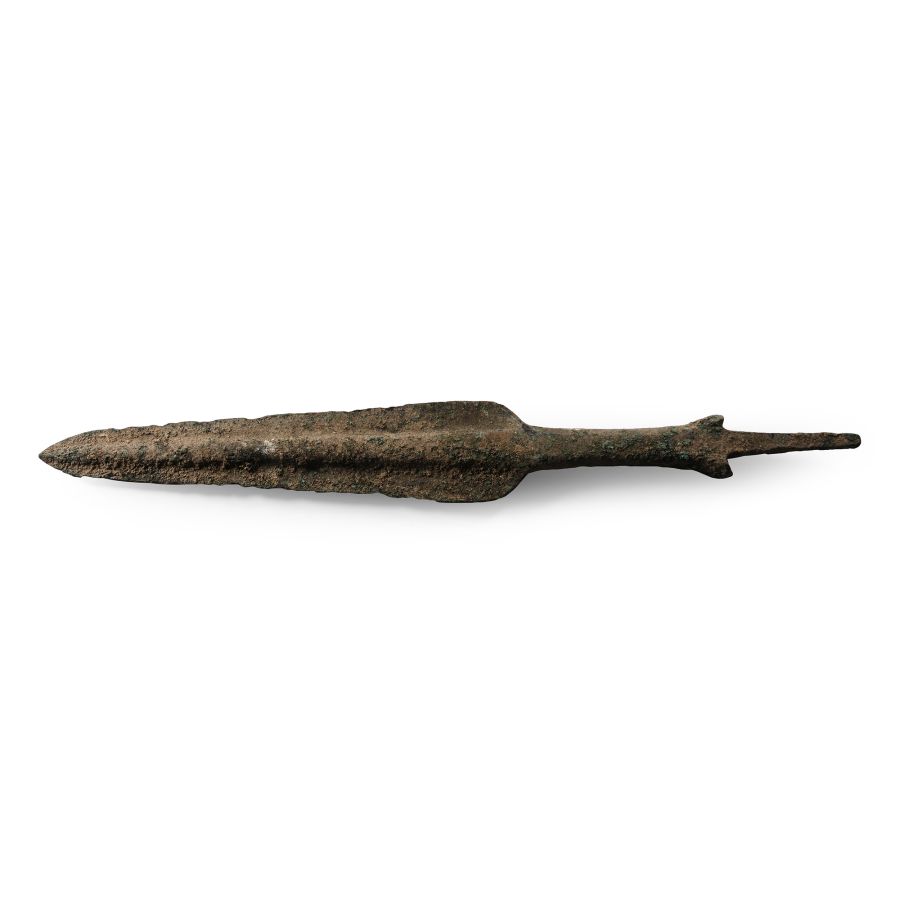
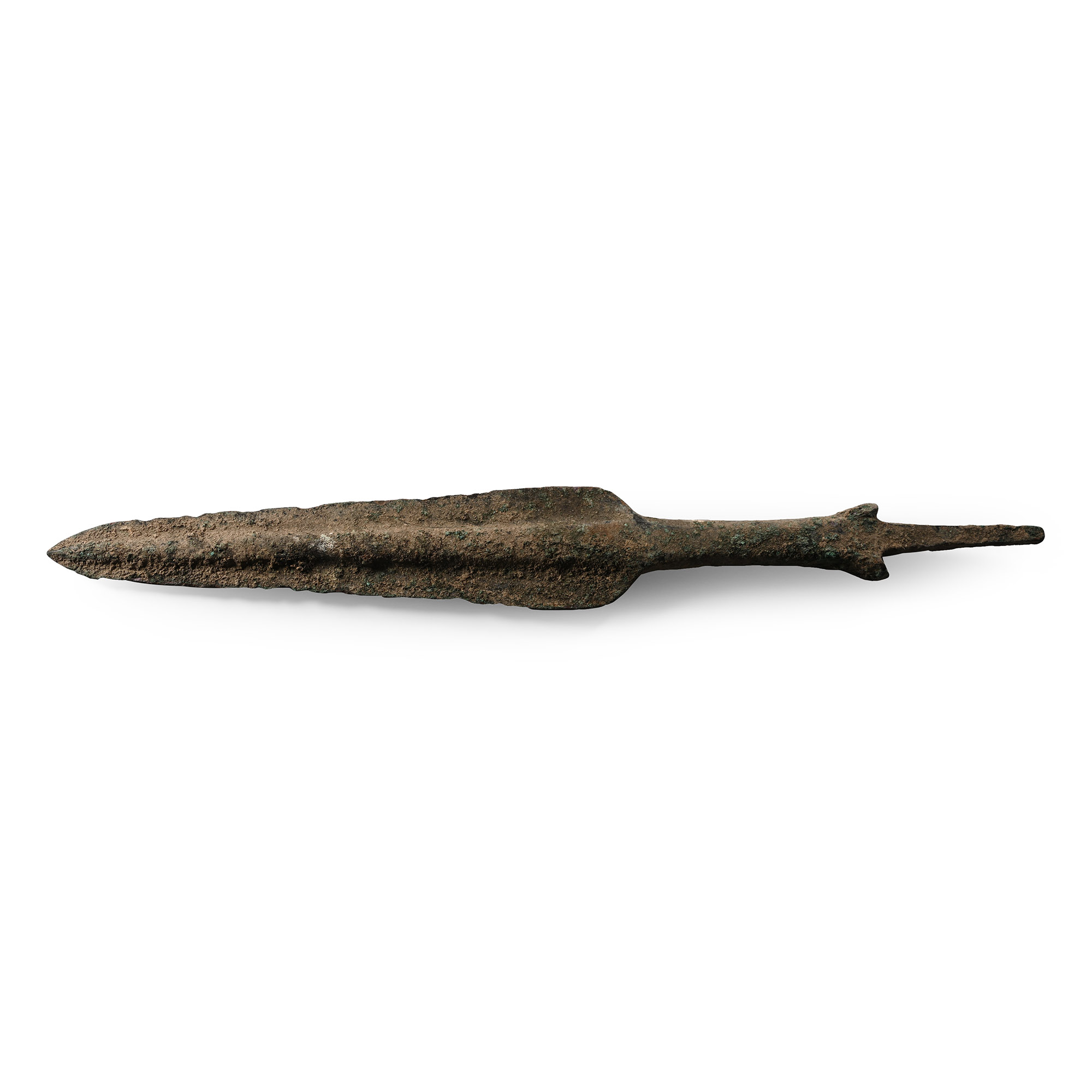
Very Large Amlash Bronze Spearhead
12TH-11TH CENTURY B.C.
9 1/2 in. (396 grams, 24.2 cm).
Leaf-shaped blade with raised midrib extending to a square-section shank, flared below with a square-section tang.
ProvenanceAcquired in the 1990s.
Ex Abelita family collection.
This lot has been cleared against the Art Loss Register database, and is accompanied by an illustrated lot declaration signed by the Head of the Antiquities Department, Dr Raffaele D'Amato.
See Khorasani, M.M., Arms and Armour from Iran. The Bronze Age to the End of the Qajar Period, Tübingen, 2006, s. cat 280, for type.
FootnotesThe weapon belongs to the type 1 of the Khorasani spearhead classification, mainly from Marlik or Amlash areas. Similar pieces have been dated by Stutzinger to 1200-1100 B.C.
CONDITIONTimeLine Auctions follows a vetting process to ensure the authenticity and legality of all items, reinforcing our commitment to integrity and responsible trading. Each antiquity, antique, and coin lot undergoes thorough examination by a vetting committee of at least ten external specialists, professional trade association members, scientists, and archaeologists: Our Vetting Process
AUCTIONS:
TimeLine is a leading auction house specialising in antiquities, ancient art, collectables, natural history, coins, medals, and books. Our auctions offer museums, collectors, historians, and enthusiasts the opportunity to acquire unique and historically significant pieces.
-
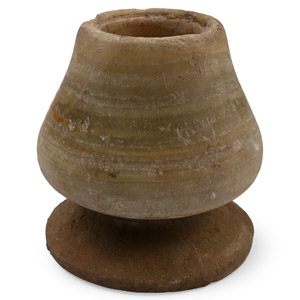
Mesopotamian Stone Vessel
1st millennium B.C.Sold for (Inc. bp): £156
With broad domed base, narrow neck, conical bowl with stepped rim. 703 grams, 84 mm high
From a collection formed before 1990. Ex Mayfair, London, UK, gallery, 2000s. This lot has been cleared against the Art Loss Register database, and is accompanied by an illustrated lot declaration signed by the Head of the Antiquities Department, Dr Raffaele D'Amato. -
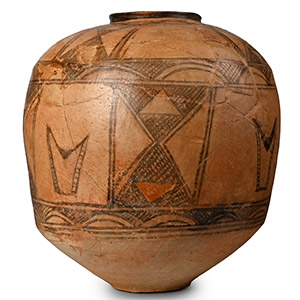
Gigantic Western Asiatic Pottery Jar
Circa 3000 B.C.Sold for (Inc. bp): £2,984
Barrel-shaped in profile with low rim to the mouth; painted dentilled band to the shoulder with eight panels below alternating plain and hatched; similar pattern to the sidewall, the plain panels with swallowtail motif. 11.9 kg, 53 cm high
with Mahboubian Gallery, London, 1974. This lot has been checked against the Interpol Database of stolen works of art and is accompanied by search certificate number no.12811-241409. This lot has been cleared against the Art Loss Register database, and is accompanied by an illustrated lot declaration signed by the Head of the Antiquities Department, Dr Raffaele D'Amato. -
.jpg)
Western Asiatic Bronze Blade
2nd-1st millennium B.C.Sold for (Inc. bp): £286
With a short tang and long blade with swept shoulders, raised midrib. 454 grams, 52.2 cm
Acquired 1980-2015. Ex Abelita family collection. This lot has been cleared against the Art Loss Register database, and is accompanied by an illustrated lot declaration signed by the Head of the Antiquities Department, Dr Raffaele D'Amato.
In the last ninety years, many such tanged blades have been considered coming from production centres of North-West Iran, like Amlash and Marlik, where similar specimens were found. Without context an accurate dating is impossible, but the shape recalls the rapiers of Bronze Age or Early Iron Age.
