
Loading, please wait...
LOT 0384
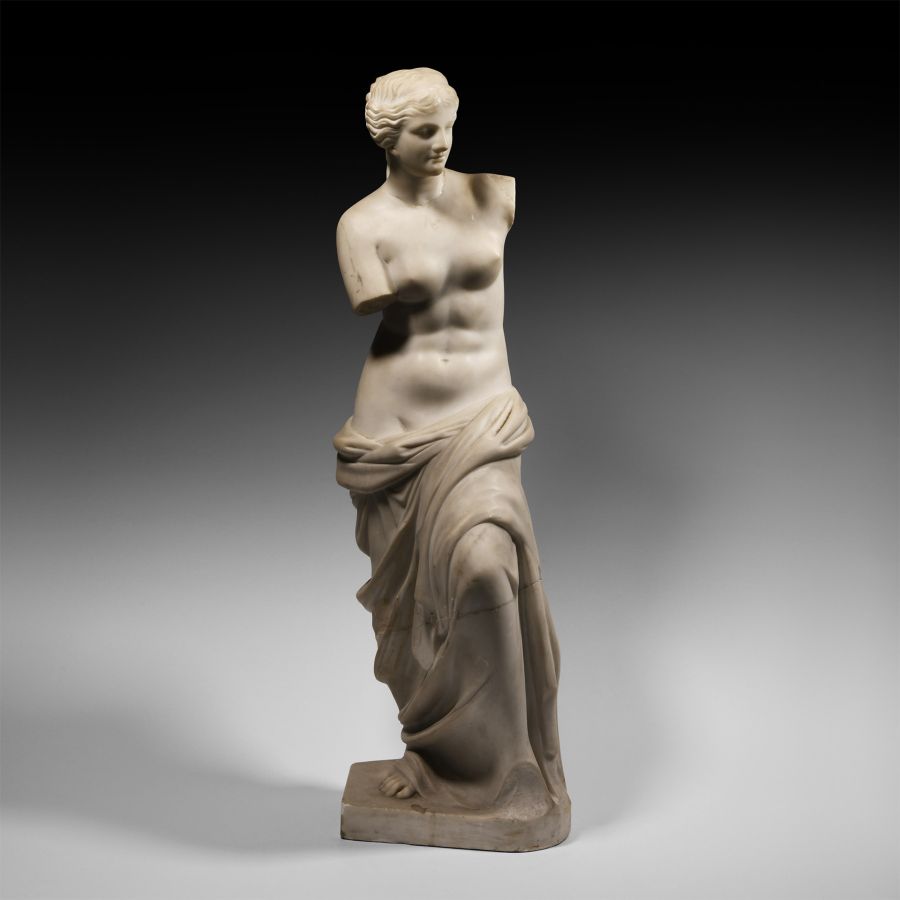
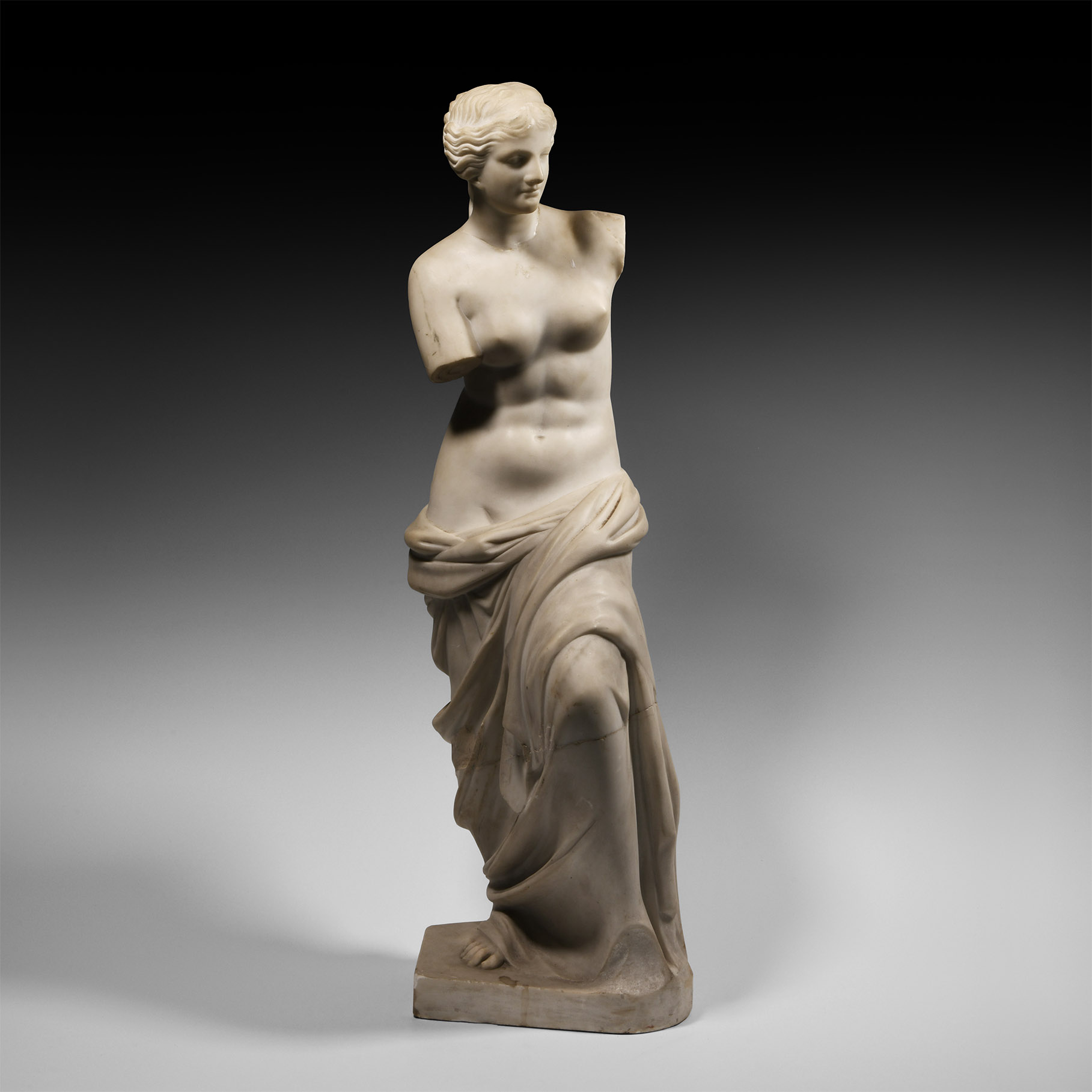
Venus of Milo Statue
19TH CENTURY A.D.
30 1/4 in. (34.8 kg, 77 cm high).
A white marble copy of the famous Venus of Milo, naturalistically portrayed with her garment having fallen from her shoulders, hanging loose at her waist and exposing her breasts.
ProvenanceFrench collection, 1960s-early 2000s.
From an important Paris gallery, France.
Aphrodite of Milos, better known as the Venus of Milo, is an ancient Greek statue and one of the most famous works of ancient Greek sculpture known today, created between 130-100 years B.C. The original is currently displayed at the Louvre in Paris.
CONDITIONTimeLine Auctions follows a vetting process to ensure the authenticity and legality of all items, reinforcing our commitment to integrity and responsible trading. Each antiquity, antique, and coin lot undergoes thorough examination by a vetting committee of at least ten external specialists, professional trade association members, scientists, and archaeologists: Our Vetting Process
AUCTIONS:
TimeLine is a leading auction house specialising in antiquities, ancient art, collectables, natural history, coins, medals, and books. Our auctions offer museums, collectors, historians, and enthusiasts the opportunity to acquire unique and historically significant pieces.
LOT 0384
Venus of Milo Statue
Estimate £1,200 - 1,700€1,390 - 1,970 (for guidance only)$1,620 - 2,300 (for guidance only)
-
Post Medieval Marble Bust of a Young Female
16th-17th century A.D. or laterEstimate: £4,000 - 6,000 (+bp*)
Opening Bid: £2,000
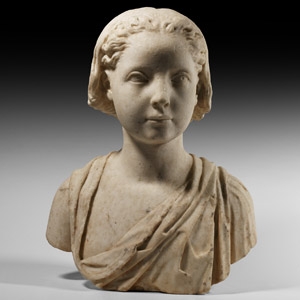
A naturalistic bust of a young female figure modelled facing, wearing a thin band in her cropped hair, deep folds in her garments; hollowed to reverse of base. 19 kg total, 41 cm high including stand
English private collection. This lot has been checked against the Interpol Database of stolen works of art and is accompanied by search certificate number no.11680-199822 -
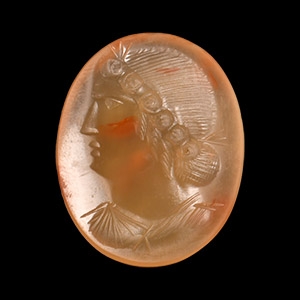
Post Medieval Apollo Gemstone
19th century A.D.Sold for (Inc. bp): £33
A carnelian intaglio bust of Apollo in profile with chlamys to the shoulder, diadem to the brow. 4.54 grams, 26 mm
Acquired in the late 1980s-early 1990s. Important North West London collection. -
.jpg)
Renaissance Gold Ring with Ruby and Enamelling
Late 16th century A.D.Sold for (Inc. bp): £14,300
A classic, Renaissance era gold ring composed of a slender D-section hoop, widening at the shoulders, fashioned as architectural capitals with strapwork and elaborate projecting scrolls in opaque white and blue enamel, embellished with red and green enamelled detailing; square bezel with box setting set with a table-cut ruby, pairs of blue enamelled cusplets to each of the four faces, stepped base below ornamented with a black enamelled bead moulded collar, bezel reverse of flat inverted pyramidal form and divided into four triangles, two with black enamelled hatching; retaining the majority of the original enamelling; accompanied by a Les Enluminures presentation box. 4.66 grams, 22.94 mm overall, 16.90 mm internal diameter (approximate size British H, USA 3 3/4, Europe 6.18, Japan 6)
Acquired from Les Enluminures Ltd, Illinois, USA, 2016. Property of an East Sussex collector. Accompanied by a Les Enluminures certificate of authenticity. Accompanied by a copy of the Les Enluminures invoice. This lot has been checked against the Interpol Database of stolen works of art and is accompanied by search certificate no.11670-197580.
Rubies were a potent symbol of status and social distinction in later medieval Europe, frequently adorning royal crowns. In the Renaissance, however, they conveyed a personal, more intimate message, their red colour, like the rose, emblematic of love. The intensity of the red colour was often enhanced with a foil lining to the setting and were popular as betrothal and wedding rings. It is believed that rubies symbolised the virtues of marriage and eternal matrimonial love. Such rings held an international appeal, making attribution to specific workshops or countries very difficult. The V & A Museum explains that 'Renaissance, the ring developed from the simple forms of the medieval period into a miniature work of art, combining the skills of the chaser, engraver and enameller as well as the stone cutter.'
