
Loading, please wait...
LOT 0367
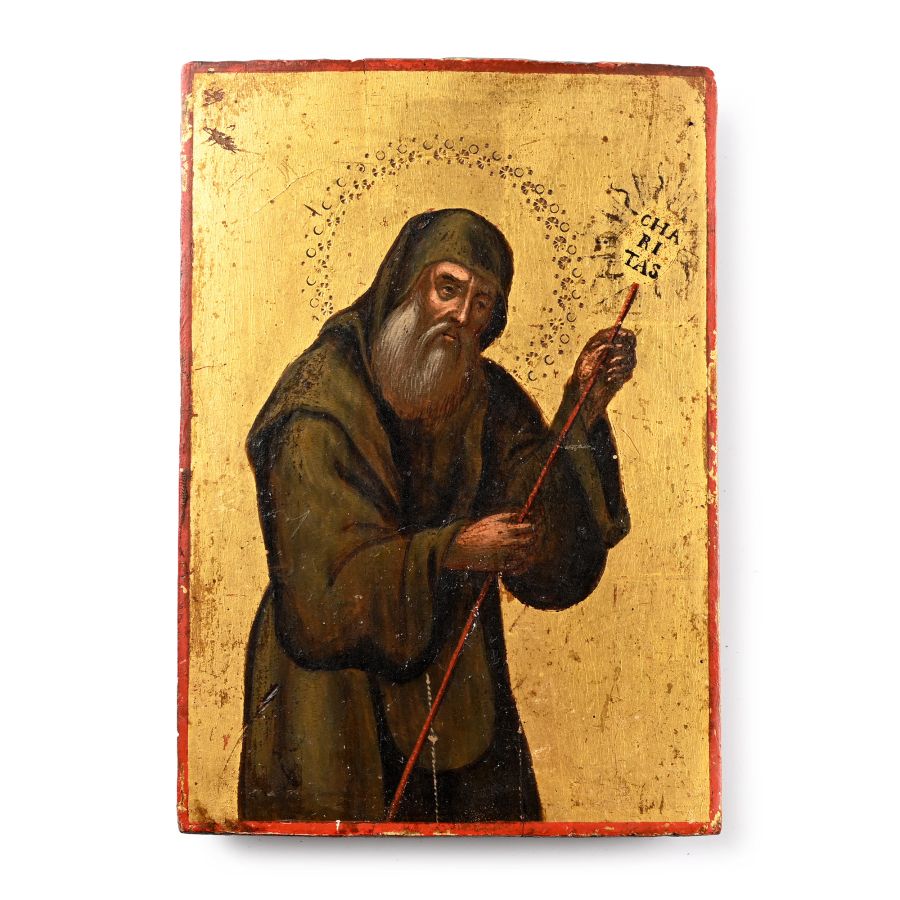
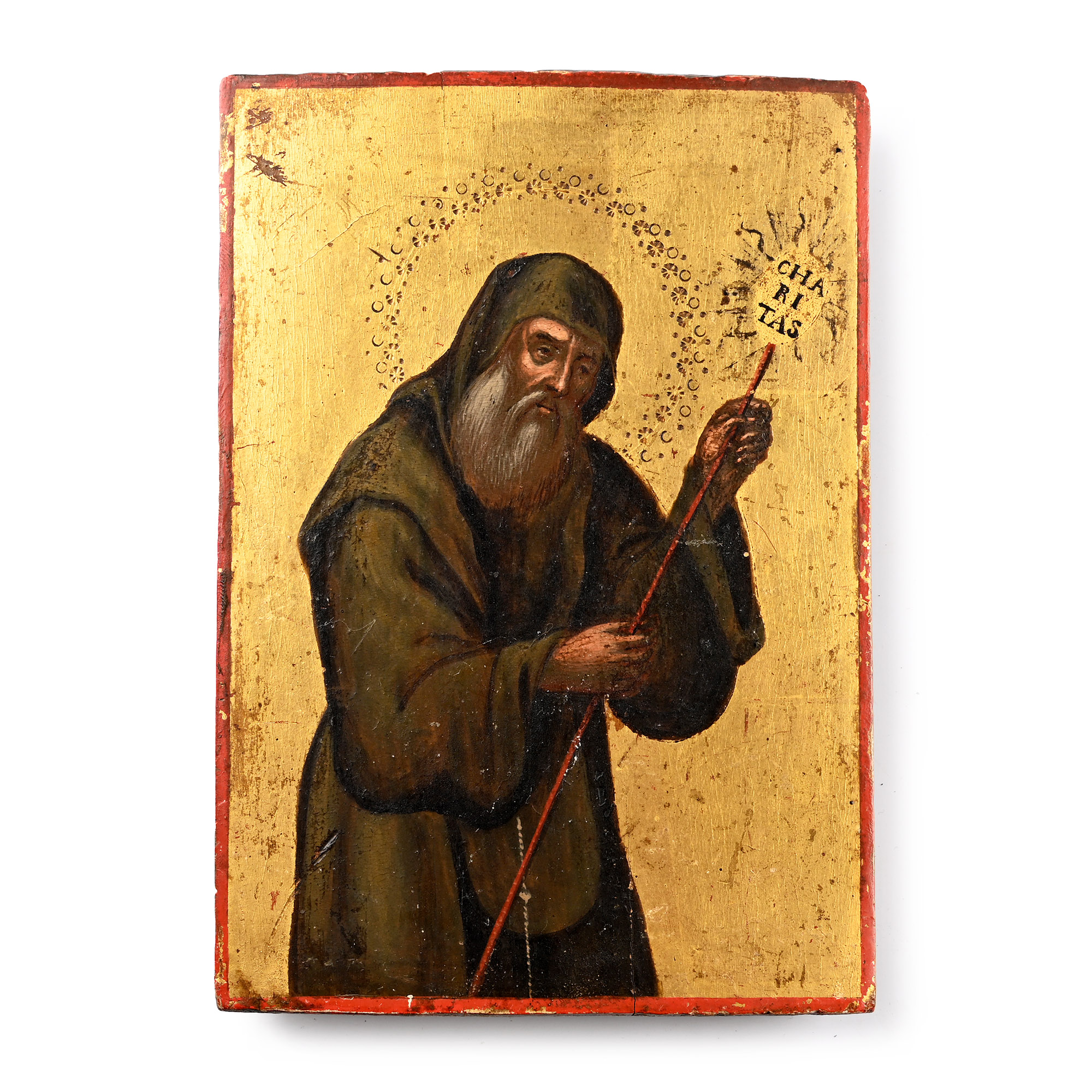
Veneto-Cretan Icon of St Francis of Paola
17TH CENTURY A.D.
7 1/4 x 5 1/8 in. (168 grams, 18.5 x 13 cm).
Tempera on wood panel, on a golden background, erect figure in three-quarter view in dark cowl and habit, holding a staff in both hands; halo ornately punched; the staff with nimbus finial surrounding majuscule legend 'CHA/RI/TAS' ('love, charity'); transverse mounting block to reverse and holes for another.
ProvenanceAcquired on the European art market.
Private collection, London, UK.
This lot is accompanied by an illustrated lot declaration signed by the Head of the Antiquities Department, Dr Raffaele D'Amato.
Francis of Paola (1416-1507) was an Italian monk and the founder of the Order of Minims, a religious order focused on humility, penance, and charity. Born in Paola, Calabria, he was known for his ascetic lifestyle and deep spirituality. Francis was credited with performing miracles, including healing the sick and even crossing the sea on his cloak. He became a spiritual advisor to King Louis XI of France in his final years. Canonized in 1519, Francis of Paola is venerated as the patron saint of sailors and fishermen, symbolising humility and devotion to God.
CONDITIONTimeLine Auctions follows a vetting process to ensure the authenticity and legality of all items, reinforcing our commitment to integrity and responsible trading. Each antiquity, antique, and coin lot undergoes thorough examination by a vetting committee of at least ten external specialists, professional trade association members, scientists, and archaeologists: Our Vetting Process
AUCTIONS:
TimeLine is a leading auction house specialising in antiquities, ancient art, collectables, natural history, coins, medals, and books. Our auctions offer museums, collectors, historians, and enthusiasts the opportunity to acquire unique and historically significant pieces.
-
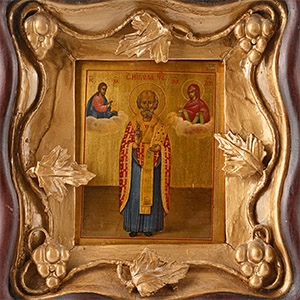
Russian Icon of Saint Nicholas in Byzantine Style
19th century A.D.Sold for (Inc. bp): £169
Gilt panel with hand-painted image of St Nicholas standing between busts of Jesus and Mary, Cyrillic text above; mounted in a wooden frame with grapevine surround and hinged glazed lid; old label to reverse 'O bache / Capitain'. 946 grams, 23 cm
From the private collection of a Canadian gentleman living in Essex, UK, formed since the 1920s-circa 1990. Property of an Essex lady until the late 1990s; thence by descent. From the private collection of an Essex gentleman since the late 1990s. This lot is accompanied by an illustrated lot declaration signed by the Head of the Antiquities Department, Dr Raffaele D'Amato. -

Stuart Period Gold Memento Mori Ring with Jewelled Skulls and Crossed Bones
17th century A.D.Sold for (Inc. bp): £12,350
Comprising a hefty hoop with scooped upper face, alternating applied skulls and crossed bones on the upper face decorated with white enamel, the eyes, noses and mouths of the skulls set with diamonds(?). 10.99 grams, 27.06 mm overall, 15.95 mm internal diameter (approximate size British K 1/2, USA 5 1/2, Europe 10.58, Japan 10)
Private collection of a North London lady before 2000. Property of a London, UK, gentleman. This lot has been checked against the Interpol Database of stolen works of art and is accompanied by search certificate number no.12771-237884. This lot has been cleared against the Art Loss Register database, and is accompanied by an illustrated lot declaration signed by the Head of the Antiquities Department, Dr Raffaele D'Amato.
The memento mori jewellery of the 16th and 17th centuries served as wearable ‘reminders of mortality’. Typical motifs within this genre included skulls, skeletons, crossbones, hourglasses, coffins, the gravedigger’s pick and shovel, and various other emblems of death and decay. -
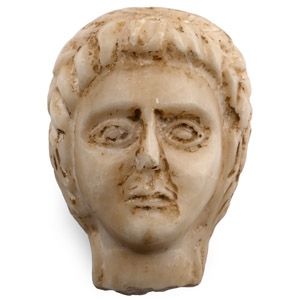
Grand Tour Marble Head of a Roman Gentleman
19th century A.D.Sold for (Inc. bp): £39
Carved in the round male head with laurel-leaf diadem to the brow; exaggerated eyes and small mouth. 360 grams, 85 mm
Acquired on the UK art market in the early 2000s. This lot is accompanied by an illustrated lot declaration signed by the Head of the Antiquities Department, Dr Raffaele D'Amato.
