
Loading, please wait...
LOT 0379
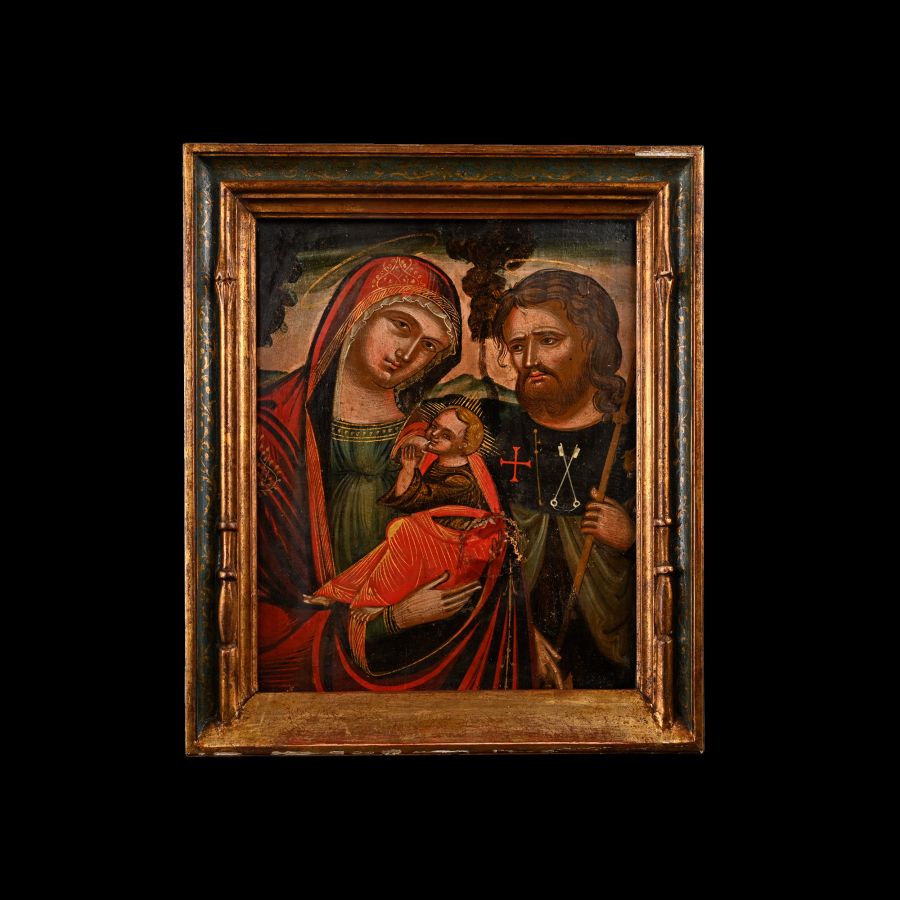
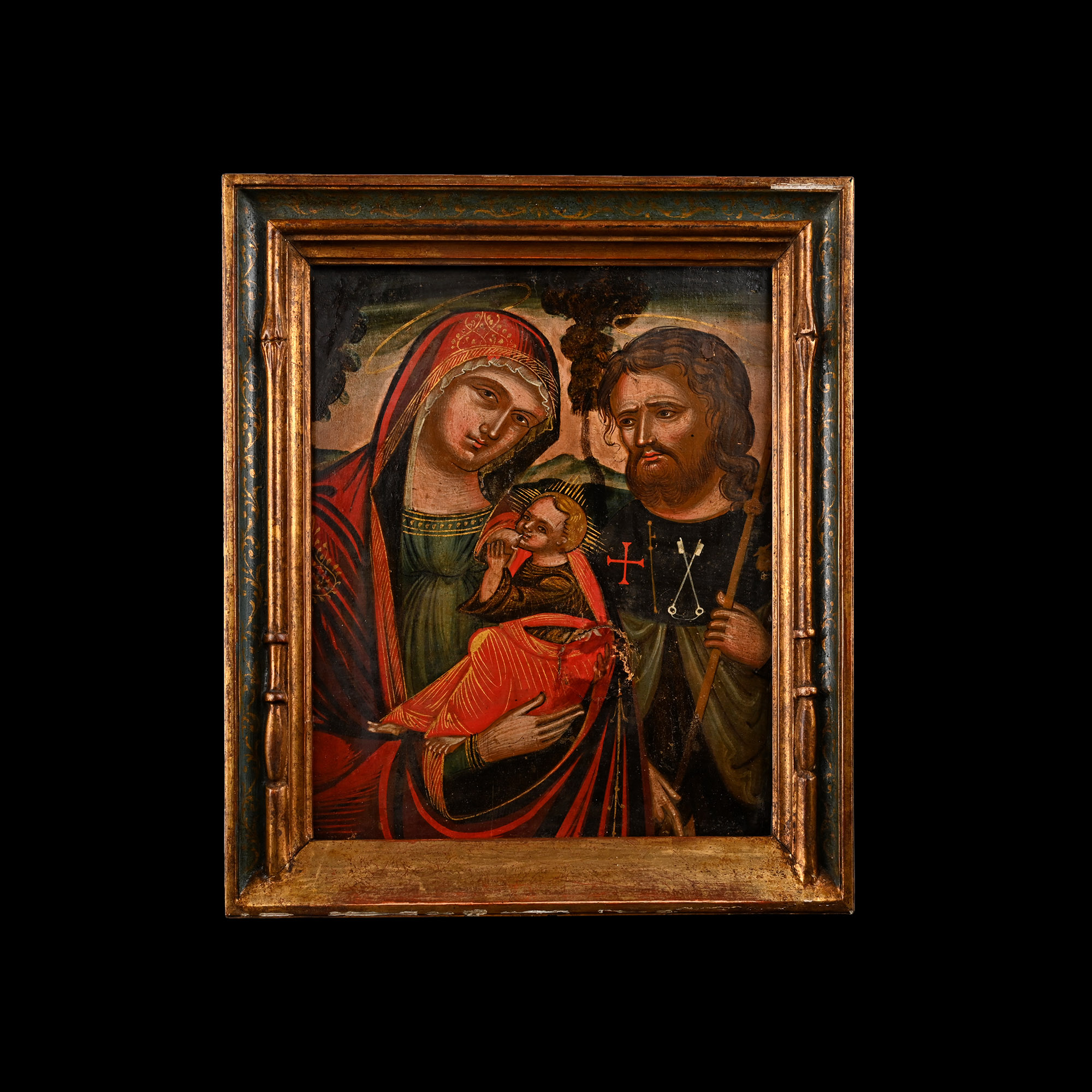
Veneto-Cretan Icon of Marcia Lactans with St Rock
17TH CENTURY A.D.
12 3/4 x 10 7/8 in. (857 grams, 32.5 x 27.5 cm).
Executed in oil and tempera on a slightly curved wooden panel base depicting the Theotokos (Mother of God), the infant Jesus and Saint Rock on a natural background; Mary with head bowed left wearing a red maphorion mantle over a dark blue robe, with elaborate golden saltires on the shoulders and head of the mantle, fine gold brocade to the hem of the blue robe, nursing the child; the infant Jesus facing away to left, supported on Mary's right arm and dressed in gold tunic, wrapped in a red shawl with gold highlights to folds, both hands holding the mother’s breast; the long-haired Saint Rock covered in a black tabarrino marked with his attributes, the red cross, the pilgrim's staff, the scallop shell and the keys, holds his walking stick in his hand; trees and mountain profiles in the background; gilded wooden frame surrounded by a blue indigo border with gold arabesques; from the Veneto-Cretan guild.
ProvenanceAcquired on the European art market.
Private collection, London, UK.
Accompanied by an academic report by Dr Raffaele D’Amato.
This lot has been checked against the Interpol Database of stolen works of art and is accompanied by search certificate no. 13065-249292.
Korban, H.K., Icons from the Orthodox World, London, 2013, pp.76-77.
LiteratureCf. a similar icon in Rosciano, Code of National Catalogue 1300094502, Soprintendenza per i beni storici ed artistici ed Etnoantropologici dell’Abruzzo.
FootnotesThe icon presents the type known in Greek as the Galaktotrophousa and in Russia as Mlekopitatelnitsa. Originating from the pagan iconography of Isis nursing Horus, the icon presents the Mother of God nursing the child. As is typical in traditional Orthodox iconography, conscious effort is made to remove the image from reality. That is why Mary’s breast is so oddly depicted and placed near her shoulder — an attempt to avoid any trace of sensuality.
CONDITIONTimeLine Auctions follows a vetting process to ensure the authenticity and legality of all items, reinforcing our commitment to integrity and responsible trading. Each antiquity, antique, and coin lot undergoes thorough examination by a vetting committee of at least ten external specialists, professional trade association members, scientists, and archaeologists: Our Vetting Process
AUCTIONS:
TimeLine is a leading auction house specialising in antiquities, ancient art, collectables, natural history, coins, medals, and books. Our auctions offer museums, collectors, historians, and enthusiasts the opportunity to acquire unique and historically significant pieces.
LOT 0379
Veneto-Cretan Icon of Marcia Lactans with St Rock
Estimate £3,500 - 4,500€4,060 - 5,220 (for guidance only)$4,730 - 6,080 (for guidance only)
-
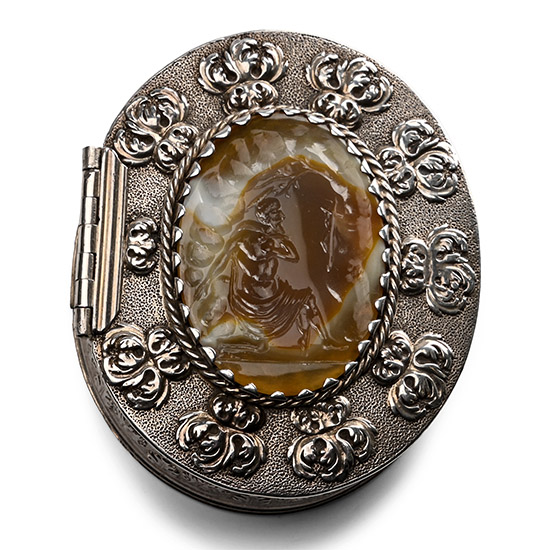
Post Medieval Silver Snuff Box Set with Agate Intaglio of Saint Jerome
Italy, 16th-17th century A.D.Estimate: £1,200 - 1,700 (+bp*)
Opening Bid: £600
Decorated with a repeating motif of acanthus leaves and facing masks of Bacchus; lid of set with an agate intaglio of Saint Jerome kneeling before a crucifix within a rope-twist and dog's tooth border, surrounded by leafy swags on a pounced field; old collector's label 'Walecki Collection 207006' to inner lid. 52.7 grams, 53 mm
Private collection, Europe. Acquired on the English art market. -
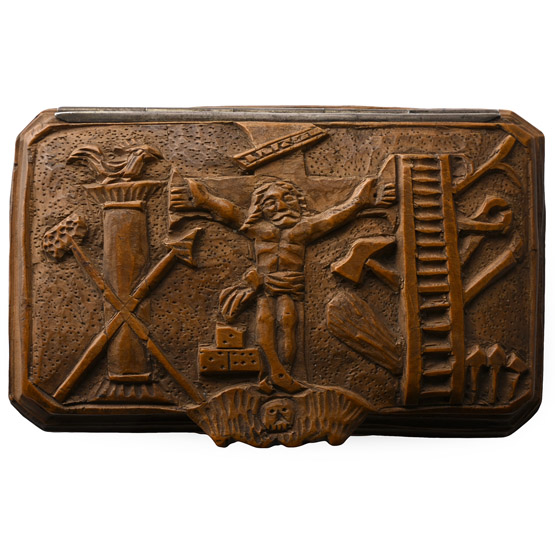
Post Medieval Boxwood Snuff Box with the Crucifixion
18th-19th century A.D.Sold for (Inc. bp): £234
Rectangular in profile with carving to the lid including crucified Christ, three dice, column with cockerel, ladder, spear and other symbols; foliage motif to body. 83 grams, 93 mm
Private collection, Europe. Acquired on the Belgian art market. -
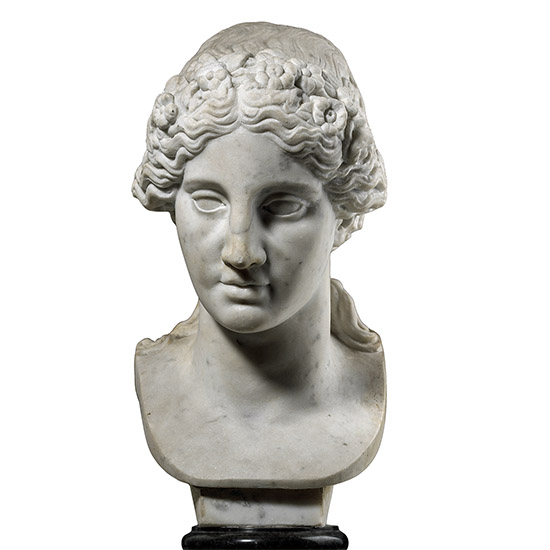
Marble Head of the Greek Goddess Aphrodite
18th-19th century A.D.Sold for (Inc. bp): £5,460
Modelled in the round as a bust of a youthful female, possibly Aphrodite with her hair bound by a narrow filet tied at the nape of the neck and the tails retained by a flat ribbon at the rear; the face perhaps modelled on the statue 'Aphrodite of Knidos' by Praxiteles; socket to crown of the head for attachment of a nimbus (now absent); mounted on a socle base. 12.6 kg, 40.5 cm
Acquired on the Los Angeles art market. Private collection, England. This lot has been checked against the Interpol Database of stolen works of art and is accompanied by search certificate number no.13095-249678.
This magnificent head of a woman with an elaborate hairstyle is in perfect harmony with the artistic works of several neo-classical sculptors of 18th century, yet subtly different from it in stylistic terms, like Giovanni Marchiori, and to the so-called stone Venus or Flora in the Museo Civico di Treviso.
