
Loading, please wait...
LOT 0320
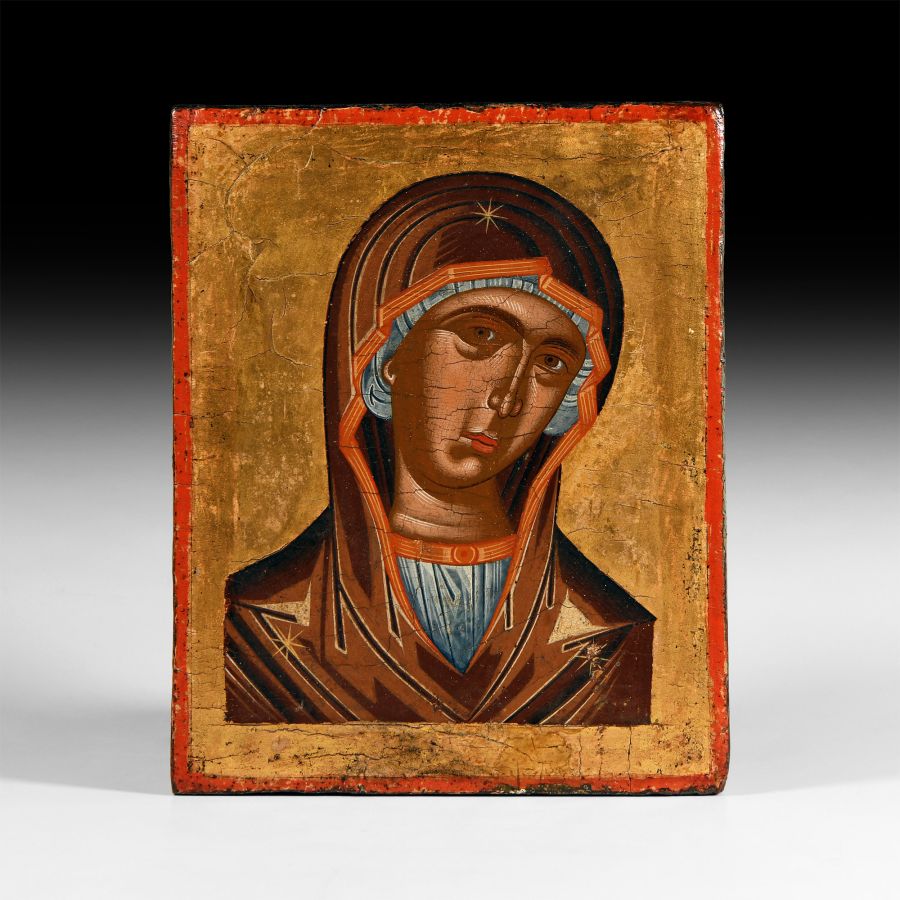
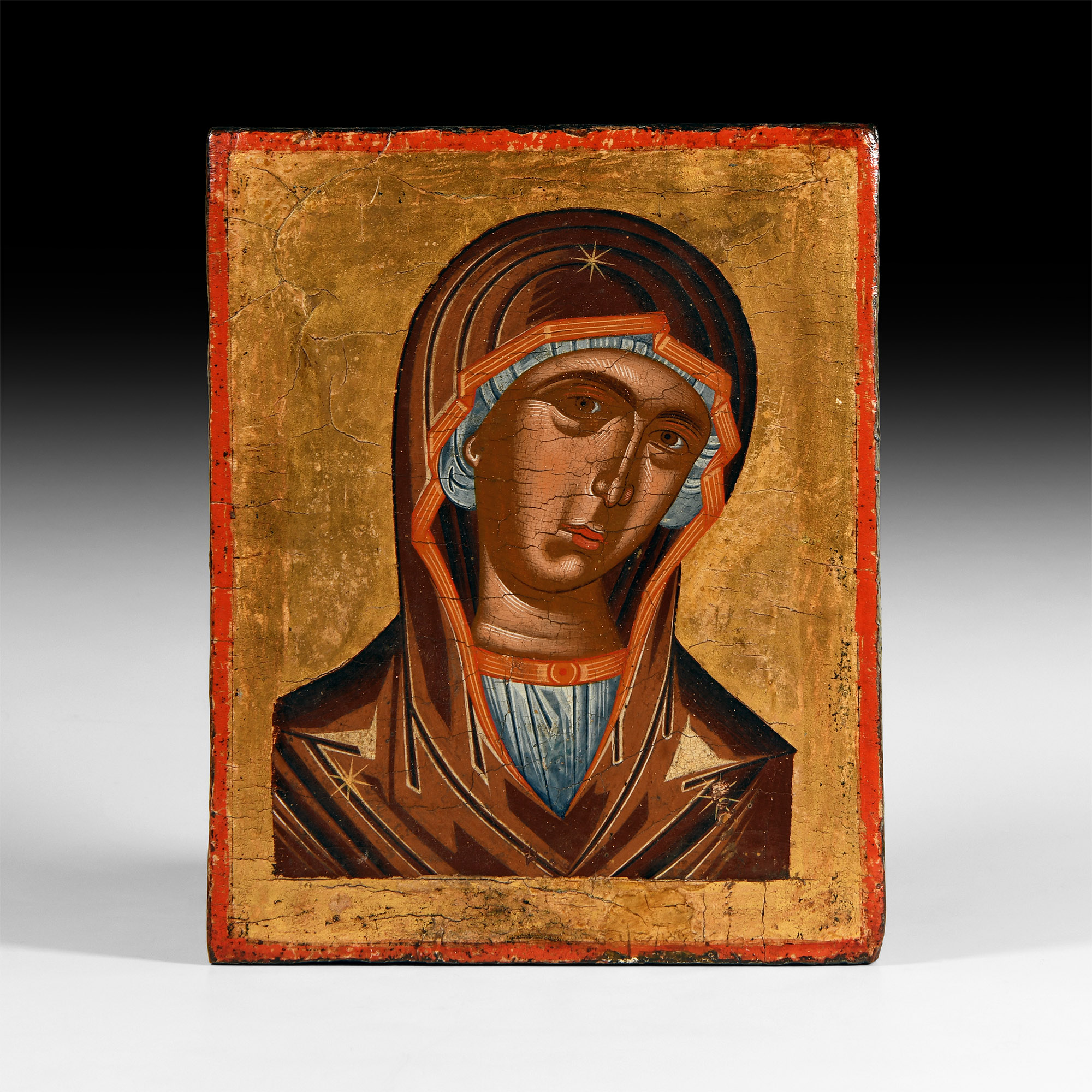
Veneto-Cretan Bust of the Virgin from a Deesis
17TH CENTURY A.D.
8 x 6 1/2 in. (554 grams, 20.2 x 16.5 cm).
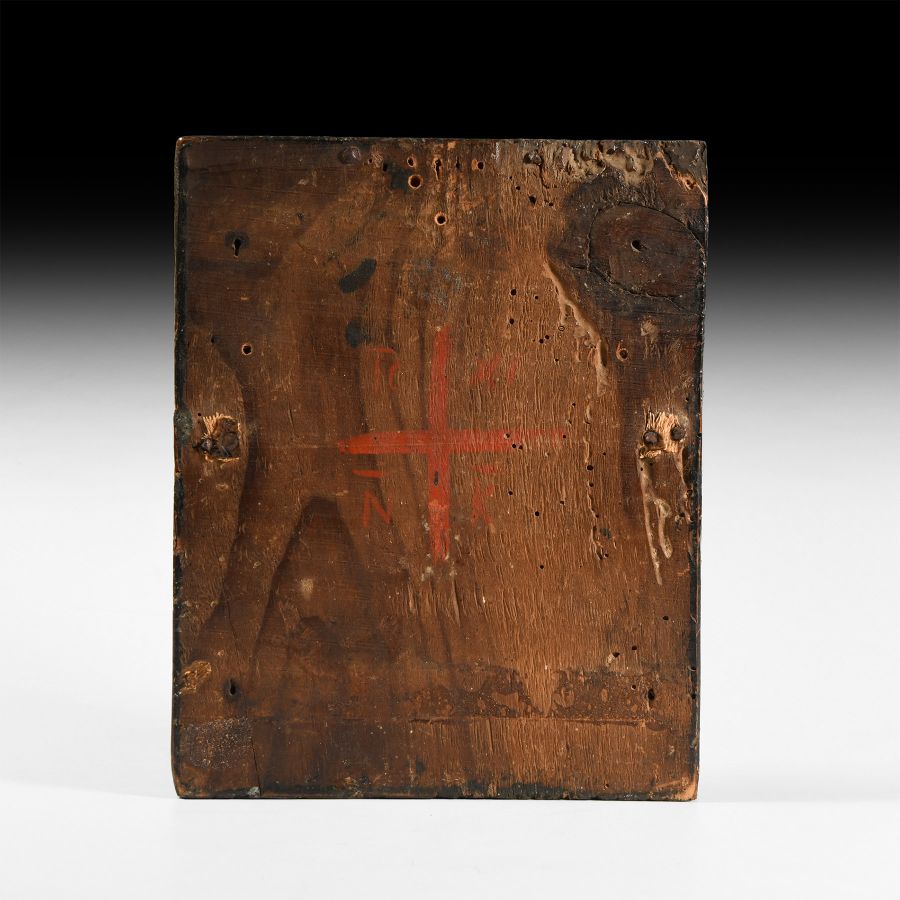
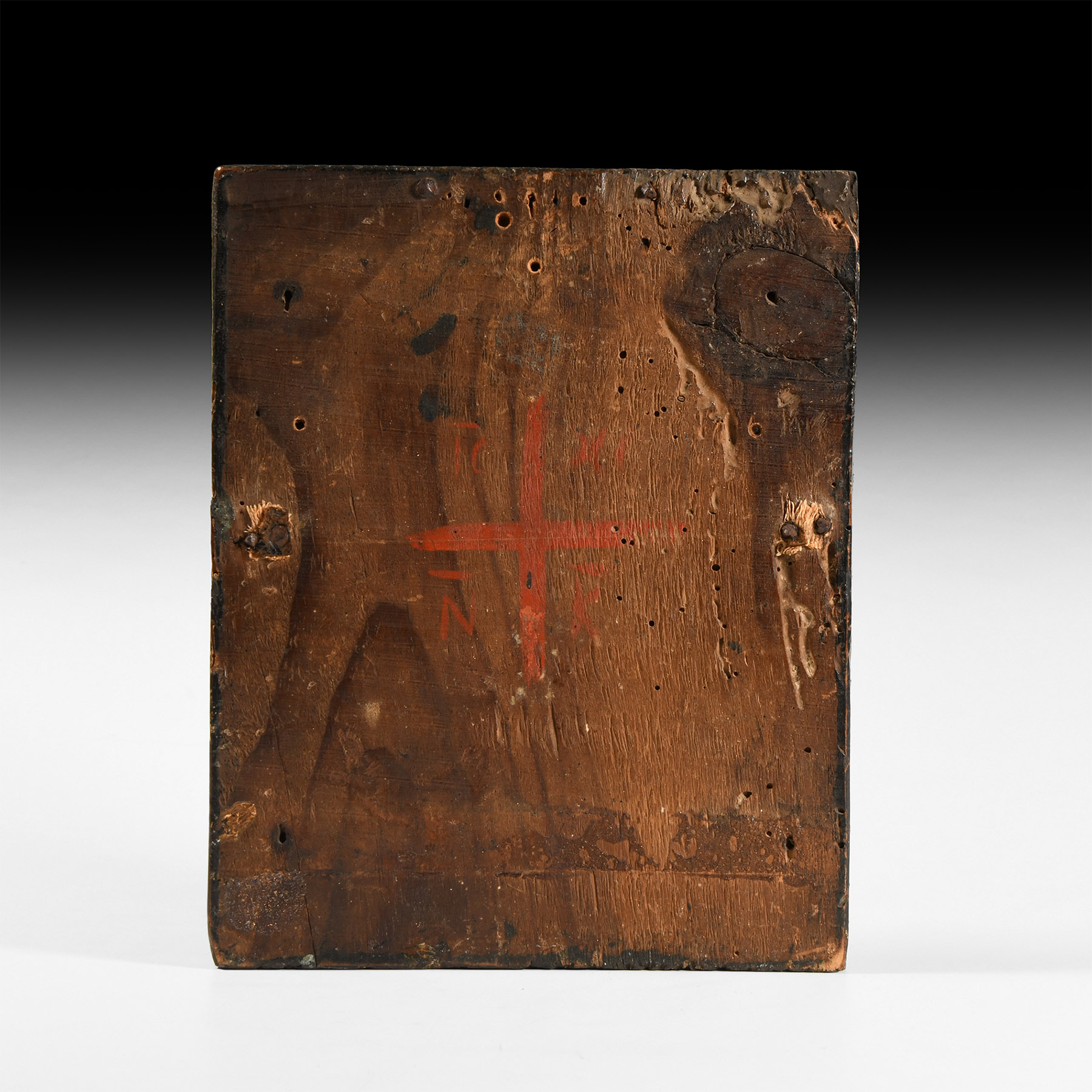
A small icon from a Deesis, tempera on wood, depicting Mary on a gilt background inclining her head to the right, wearing a maphorion embroidered with gold stars, blue veil and a chiton of same colour; the reverse with a painted red cross with Greek lettering 'IC XI N K' for 'Jesus Christ is winner'.
ProvenanceProperty of a London lady, part of her family's collection.
Accompanied by an academic report by Dr Raffaele D’Amato.
This lot has been checked against the Interpol Database of stolen works of art and is accompanied by searcher certificate no.11571-198600.
See Weizmann, K. et al., The Icon, New York, 1982; Psilakis, N., Byzantine Churches and Monasteries of Crete, Heraklion, 1998; Popescu, G.A., Cristiani d'Oriente, spiritualità, arte e potere nell'Europa Post-Bizantina, Milano, 1999; Geelmuyden Bulgurlu, V., Ulf, A., Lindgren N., Bodin H., Balicka-Witakowska, E., Five essays on icons, Stockholm & Istanbul, 2005.
FootnotesThis splendid specimen comes most probably from a large icon, where it was part of a Deesis. The image implies that the original icon represented Christ flanked by the Mother of God and John the Baptist, all three usually represented as a full figure. The Deisis or Deesis (Деисус, Gk. for “supplication”) was the depiction of the Virgin, John the Baptist and possibly many more saints interceding with Christ on behalf of mankind.
CONDITIONTimeLine Auctions follows a vetting process to ensure the authenticity and legality of all items, reinforcing our commitment to integrity and responsible trading. Each antiquity, antique, and coin lot undergoes thorough examination by a vetting committee of at least ten external specialists, professional trade association members, scientists, and archaeologists: Our Vetting Process
AUCTIONS:
TimeLine is a leading auction house specialising in antiquities, ancient art, collectables, natural history, coins, medals, and books. Our auctions offer museums, collectors, historians, and enthusiasts the opportunity to acquire unique and historically significant pieces.
LOT 0320
Veneto-Cretan Bust of the Virgin from a Deesis
Estimate £3,000 - 4,000€3,480 - 4,640 (for guidance only)$4,050 - 5,400 (for guidance only)
-
Post Medieval Gold 'More Assured then Professed' Posy Ring
Circa 18th century A.D.Sold for (Inc. bp): £1,040
A gold posy ring with D-section band, inscribed internally with 'More assured then professed' with long S's in lower case with small foliate scroll after. 2.42 grams, 18.46 mm overall, 16.65 mm internal diameter (approximate size British L, USA 5 3/4, Europe 11.24, Japan 10)
Acquired on the UK antiques market between 1974-1985. Albert Ward collection, Essex, UK. -
Decorated Bronze Container
Circa 17th-19th century A.D.Estimate: £1,000 - 1,400 (+bp*)
Opening Bid: £500
A bronze trinket-box or container with separate lid; the slightly flared body with three stub feet formed as bunches of grapes, field with frieze divided by twisted branches and leaves into three scenes featuring foxes and a snake; domed lid with with vines, leaves and bunches of grapes, knop handle formed as a twig stump. 1.28 kg, 12.3 cm high
English private collection. -
.jpg)
Gilt Framed Set of Historical Prints
19th century A.D.Sold for (Inc. bp): £13
A set of four framed and glazed historical prints: William Pitt, Earl of Chatham, engraved by W. Holl., published London, 1833, by Harding & Lepard; Horation, First Lord Walpole, engraved by W. Holl., published London, 1835, by Harding & Lepard; Henry Spencer, First Earl of Sunderland, engraved by H. Robinson, published London, 1832, by Harding & Lepard; Walter, First Lord Aston, engraved by W.T. Mote, published London, 1832, by Harding & Lepard. 2.35 kg total, 32.5 x 24.5 cm each
Fair to fine condition.
Ex property of a North London, UK, gentleman.
