Loading, please wait...

Vellum Manuscript Page Group Vellum Manuscript Page Group Vellum Manuscript Page Group
Use mousewheel to zoom in and out, click to enlarge
Details

LOT 0524

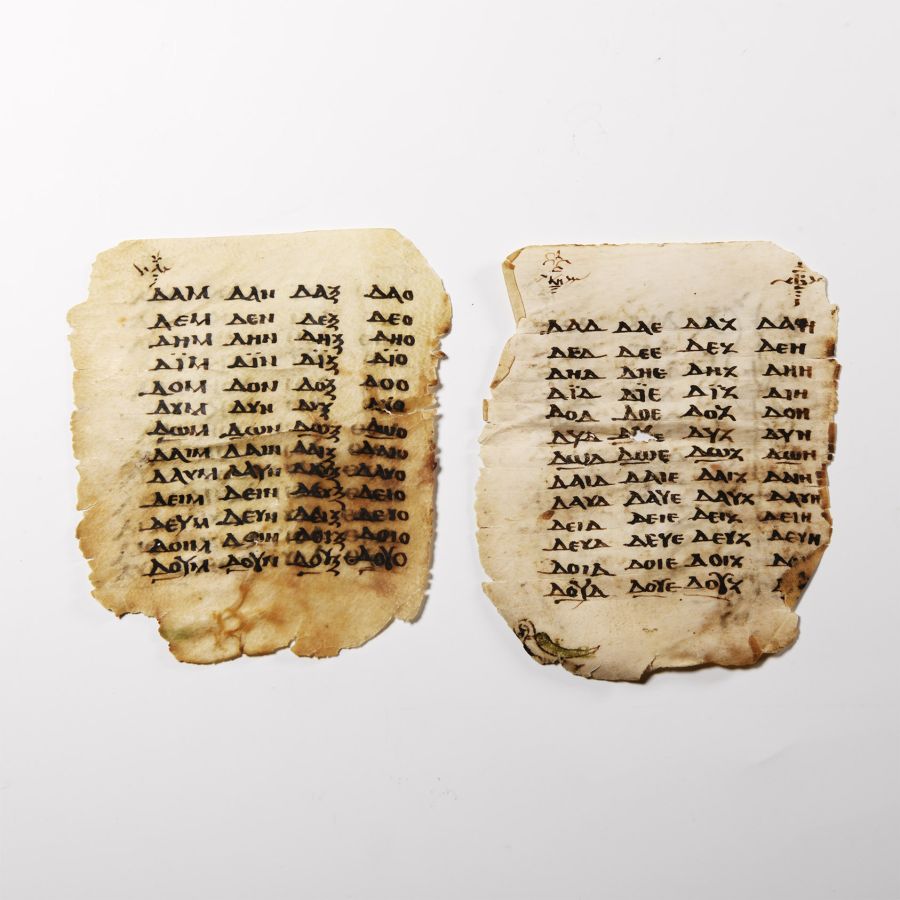
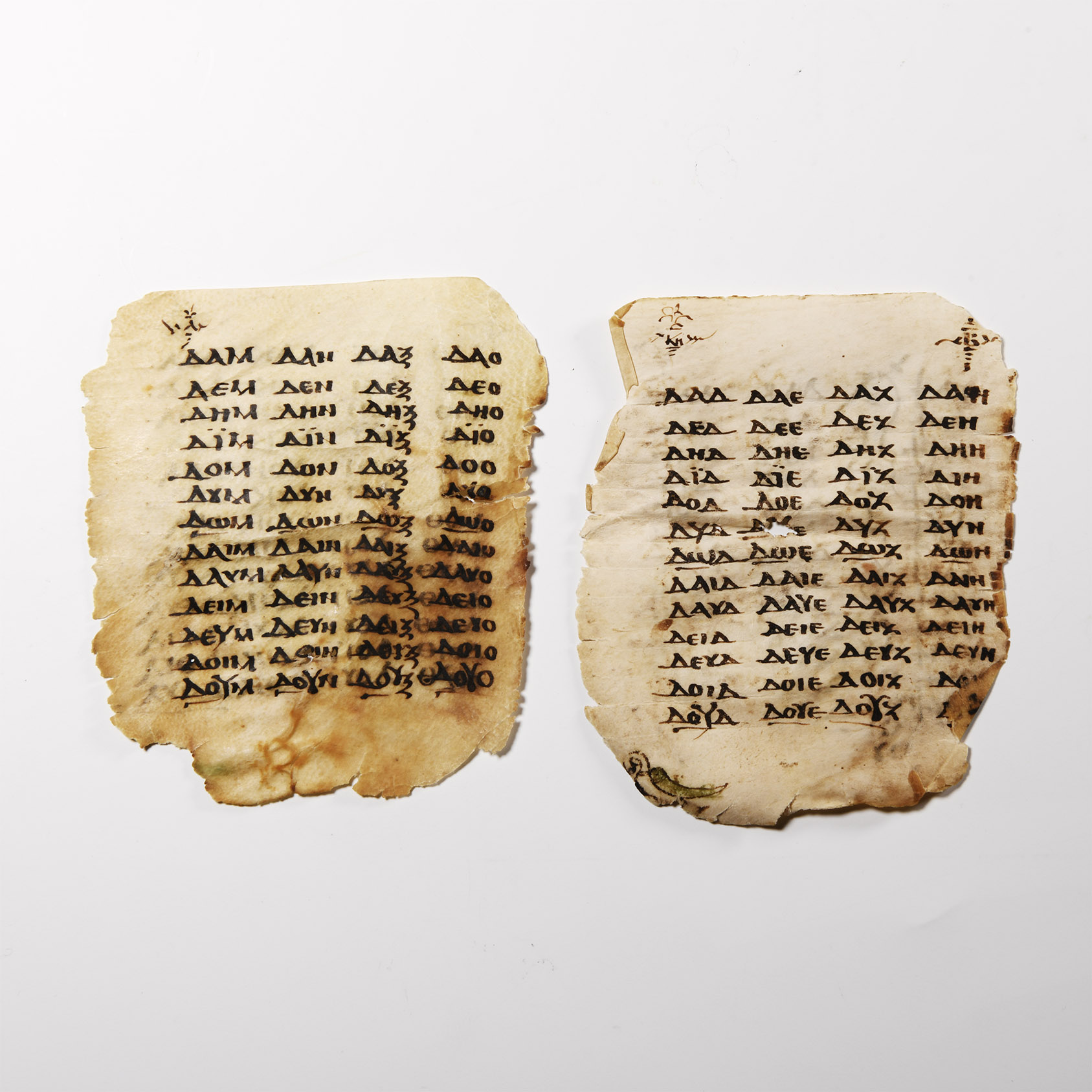
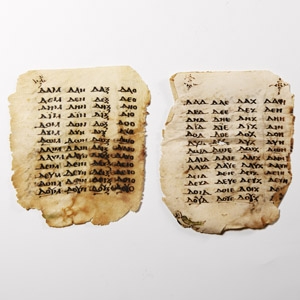
Vellum Manuscript Page Group

COPTIC, CIRCA 6TH-9TH CENTURY A.D.

4 3/8 x 3 1/2 in. (22 grams, 11 x 9 cm each).

Two pages from a codex each with four columns of Greek script text, possibly part of an alphabetical listing. [2, No Reserve]

Provenance

Acquired 1970s-1996.
Property of a North American collector.
London collection, 2016.

CONDITION
VETTING:

TimeLine Auctions follows a vetting process to ensure the authenticity and legality of all items, reinforcing our commitment to integrity and responsible trading. Each antiquity, antique, and coin lot undergoes thorough examination by a vetting committee of at least ten external specialists, professional trade association members, scientists, and archaeologists: Our Vetting Process


AUCTIONS:

TimeLine is a leading auction house specialising in antiquities, ancient art, collectables, natural history, coins, medals, and books. Our auctions offer museums, collectors, historians, and enthusiasts the opportunity to acquire unique and historically significant pieces.

LOT 0524

Vellum Manuscript Page Group

Sold for (Inc. bp): £2,860

Print page

RELATED LOTS
  • Greek Bronze Hephaistos Statuette
    Greek Bronze Hephaistos Statuette
    Circa 5th century B.C.

    Estimate: £20,000 - 30,000 (+bp*)

    Opening Bid: £10,000

    The elegant figure depicting the Greek god of fire and metalworking seated and nude except for the pilos on his head, lean body with naturalistic detailing, shown bearded and with curly hair emerging beneath the cap; he would have once held a pair of tongs in his left hand and a hammer in his right hand; accompanied by a custom-made display stand. 294 grams total, 13.5 cm high including stand

    Fine condition, wonderful state of preservation, very rare.

    with Elie Borowski, Basel. Subsequently in the collection of Denys Sutton (1917-1991), London, acquired from the above on 11 October 1963. Thence by descent. with Sotheby's, New York, 6 December 2012, lot 11. Accompanied by an academic report by Dr Raffaele D’Amato. This lot has been checked against the Interpol Database of stolen works of art and is accompanied by search certificate number no. 11827-207739.

    According to legend, Hephaistos was thrown into the ocean by his mother Hera and raised by the sea nymph Thetis. Upon his return to Olympus, he took his revenge by imprisoning his mother and obtaining the hand of the most beautiful of the goddesses, Aphrodite. He became the blacksmith of the gods. Sculptural depictions of the god, known as Vulcan to the Romans, are very rare. Hephaistos was the armourer of the heroes, and certainly his greatest artwork was making Achilles' armour.

    Lot Details

  • South Italian Blackware Kantharos with Ivy Branch
    South Italian Blackware Kantharos with Ivy Branch
    5th-4th century B.C.

    Estimate: £1,500 - 2,000 (‡+bp*)

    Opening Bid: £750

    The high-handled drinking cup with carinated lower body, discoid feet and vines painted to the equator. 472 grams, 23.3 cm high


    Acquired in Europe before 1994.

    Lot Details

  • Greek Marble Funerary Anthemion Stele
    Greek Marble Funerary Anthemion Stele
    4th century B.C.

    Sold for (Inc. bp): £17,550

    Comprising a tall, plain body with two rosettes; crowned by an elaborate palmette and volute design with shallow acanthus stalks and small rosettes; mounted on a custom-made display stand. 55.6 kg total, 105.5 cm high including stand (95.2 cm without stand)


    Private Swiss collection, acquired in the 1980s. with Ward & Co., New York, 2014. Private American collection, K.M., circa 2015-present. Accompanied by a copy of an Art Loss Register certificate number S00114167, dated 2 June 2016. Accompanied by an academic report by Dr Raffaele D’Amato. This lot has been checked against the Interpol Database of stolen works of art and is accompanied by a search certificate number no.11776-204598.

    These memorials, originally painted (see gravestone from Paramythion, cf. Brinkmann-Wünsche, 2004, pp.148ff.), were venerated by families, anointed with oil, decorated with ribbons, and graced with offerings of food. They rivalled each other in the increasingly ostentatious display of family status and wealth, so much so that by the end of the 4th century B.C., a sumptuary law was passed, abruptly ceasing their production. In their heyday, these stelae provided sculptors an opportunity to demonstrate their technical virtuosity with both ornamental and figural subjects. It was not unusual for the anthemion to be of higher quality than the figures sculpted and painted below it.

    Lot Details

Stay up-to-date with the latest from TimeLine Auctions by joining our mailing list