
Loading, please wait...
LOT 1401
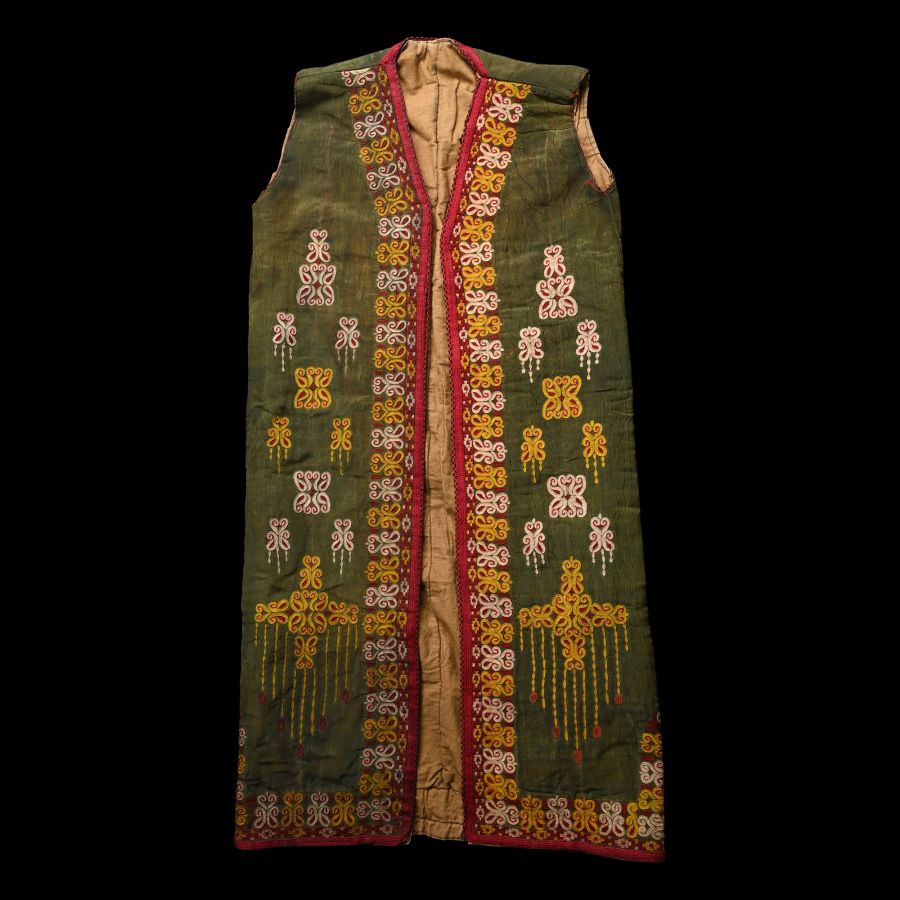
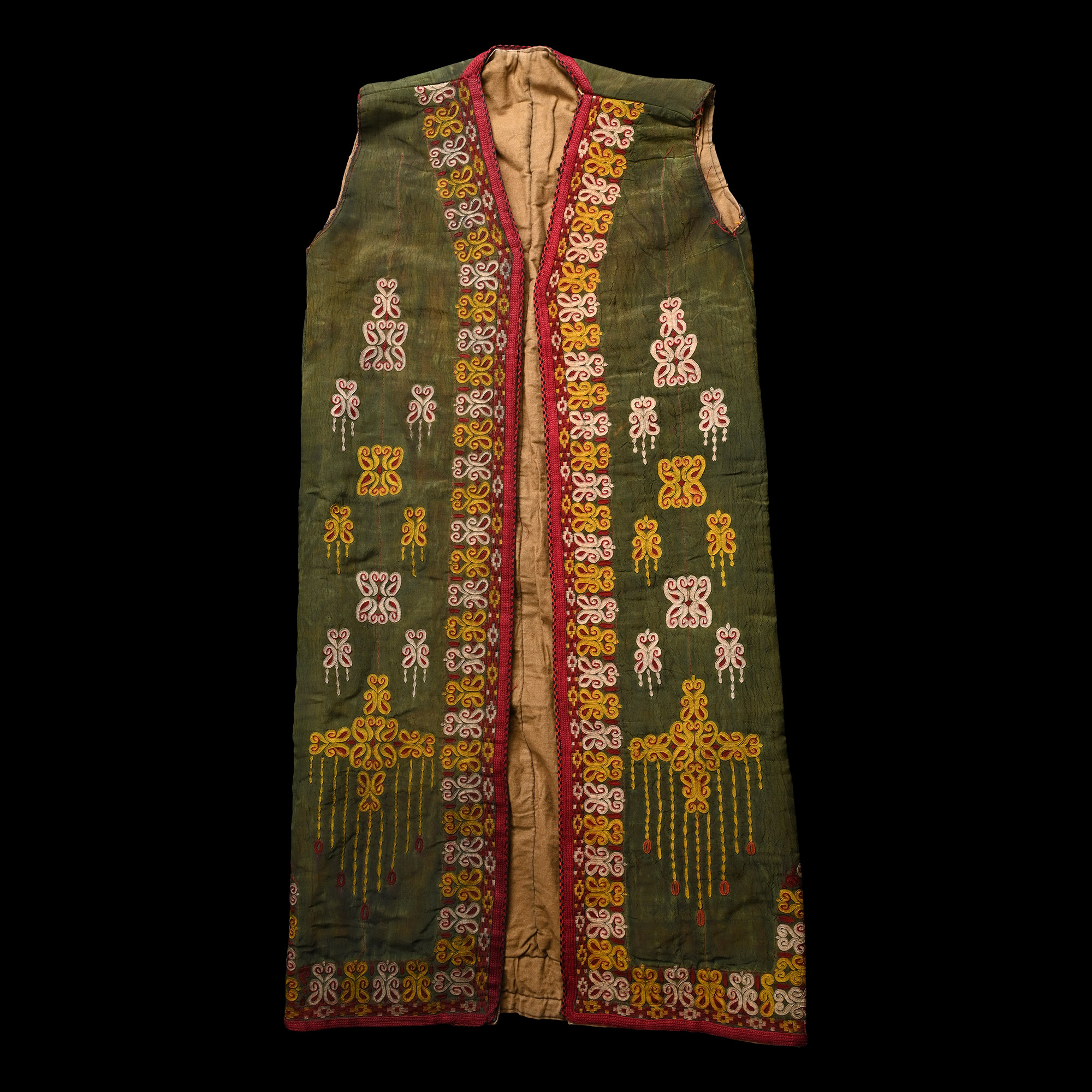
Uzbek Double-Sided Tunic
20TH CENTURY A.D.
46 1/2 in. (1.8 kg, 1.18 m long).
Reversible type in olive green with bands of floral and geometric embroidered designs, and plain brown cloth. [No Reserve]
ProvenancePrivate collection, UK.
CONDITIONTimeLine Auctions follows a vetting process to ensure the authenticity and legality of all items, reinforcing our commitment to integrity and responsible trading. Each antiquity, antique, and coin lot undergoes thorough examination by a vetting committee of at least ten external specialists, professional trade association members, scientists, and archaeologists: Our Vetting Process
AUCTIONS:
TimeLine is a leading auction house specialising in antiquities, ancient art, collectables, natural history, coins, medals, and books. Our auctions offer museums, collectors, historians, and enthusiasts the opportunity to acquire unique and historically significant pieces.
-
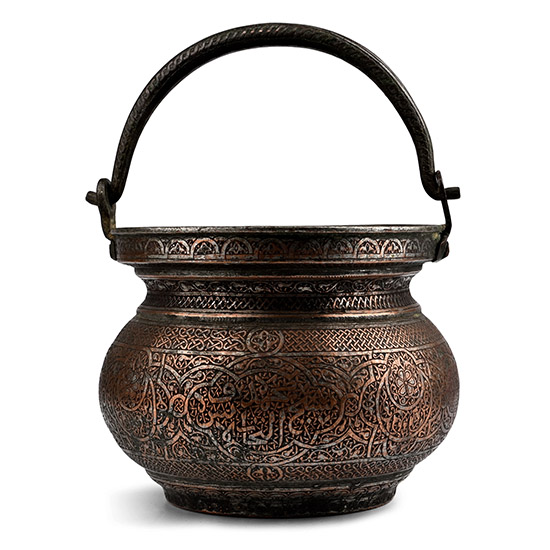
Western Asiatic Mamluk Style Copper Handled Calligraphic Vessel
20th century A.D.Sold for (Inc. bp): £234
Squat and with a low foot, broad carinated mouth; raised rim with brackets supporting a strap handle; dense knotwork and arcaded borders, rosettes and tendrils. 945 grams, 18 cm wide
Private collection, UK. -
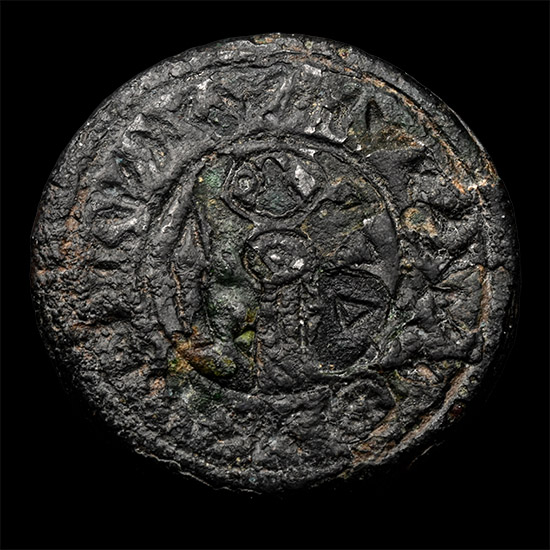
Hittite Silvered Bronze Domed Stamp Seal with Hieroglyphs
Circa 1500-1300 B.C.Sold for (Inc. bp): £247
Plano-convex in profile with gusset to the rim; underside: central panel with geometric design, hieroglyphic text to the border; obverse: central tondo with hieroglyphs, beaded ring and geometric border; transverse piercing; an important piece. 13.4 grams, 23 mm
From a London, UK, private collection.
The so-called 'Hittite hieroglyphs' encode texts in the Luwian language of Asia Minor. Hieroglyphic Luwian is a native script, also known as 'Anatolian hieroglyphs', which was used on official or royal seals and a few monumental inscriptions. -
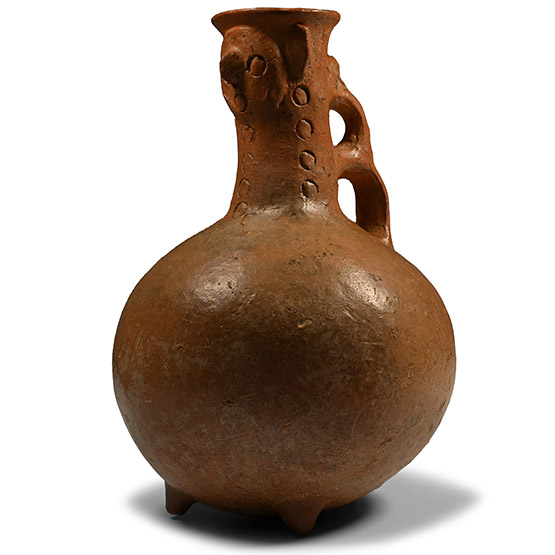
Amlash Terracotta Single-Handled Jug with Head Attachment
10th-8th century B.C.Estimate: £700 - 900 (‡+bp*)
Opening Bid: £360
Comprising a rounded body resting on three stub legs; funicular mouth and short neck; beneath the rim a mask with pinched nose and two pointed ears, impressed circular eyes and mouth; three vertical decorative strips impressed with the same tool as formed the eyes and mouth; tiered strap handle with two finger-grips to the outer face and impressed detailing running from the neck to the shoulder; rim and one foot partly restored. 723 grams, 20.6 cm
Ex Zackary, Los Angeles, 1960s. Thereafter London art market, 1992. Accompanied by a copy of an Art Loss Register certificate no.S00079639.
