
Loading, please wait...
LOT 1184
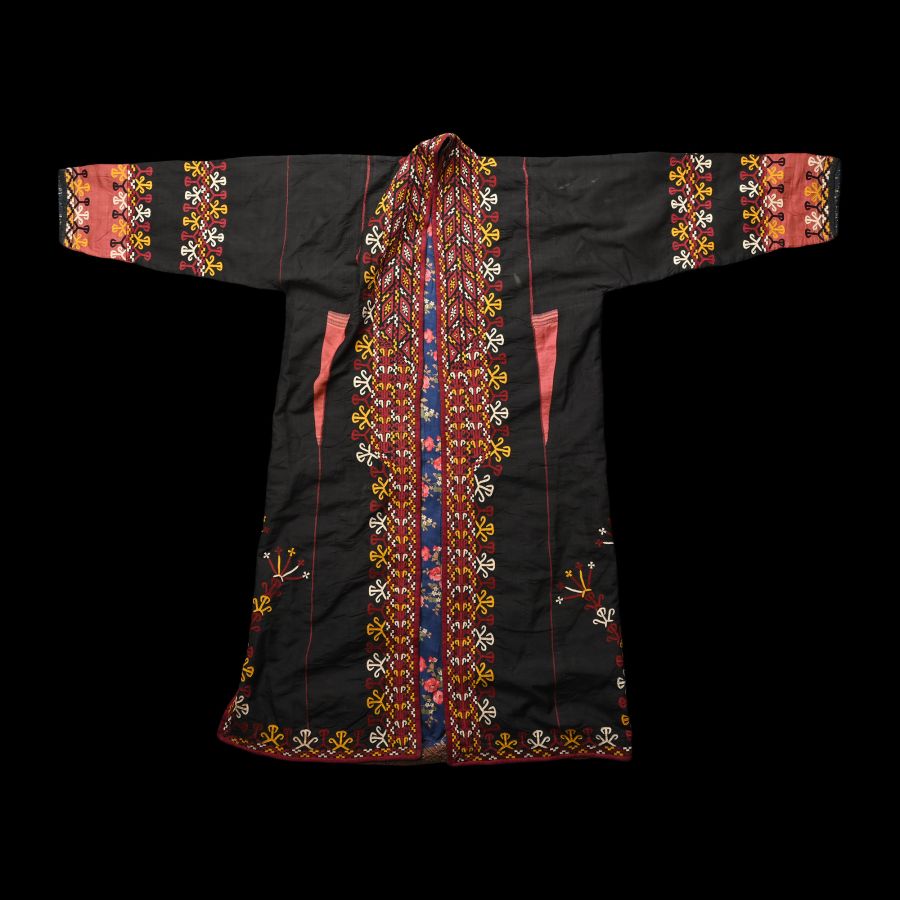
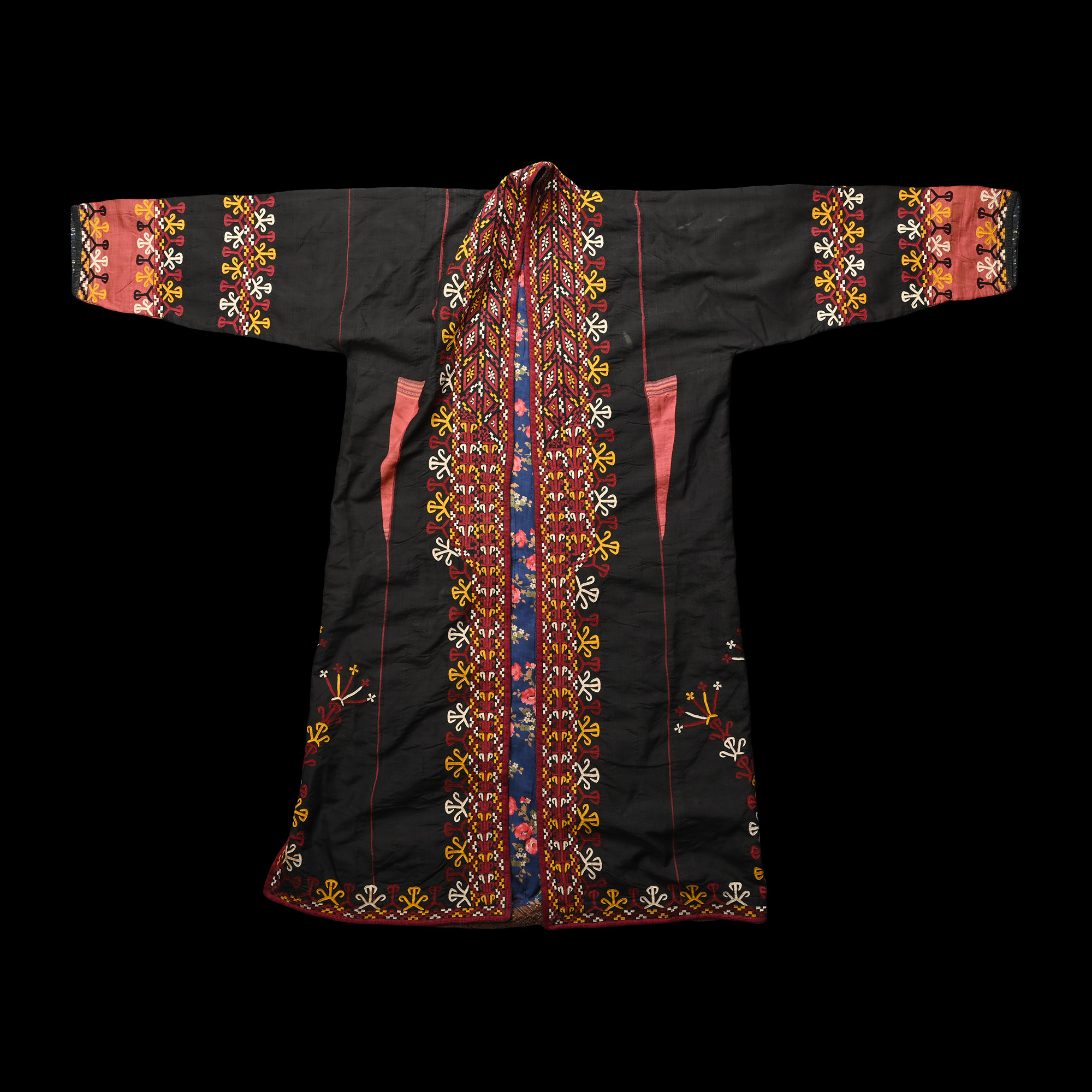
Uzbek Double-Sided Tunic
20TH CENTURY A.D.
41 1/8 in. (740 grams, 107 cm).
Reversible sleeved tunic with one side in dark blue with embroidered borders, the other in printed floral cotton. [No Reserve]
ProvenancePrivate collection, UK.
CONDITIONTimeLine Auctions follows a vetting process to ensure the authenticity and legality of all items, reinforcing our commitment to integrity and responsible trading. Each antiquity, antique, and coin lot undergoes thorough examination by a vetting committee of at least ten external specialists, professional trade association members, scientists, and archaeologists: Our Vetting Process
AUCTIONS:
TimeLine is a leading auction house specialising in antiquities, ancient art, collectables, natural history, coins, medals, and books. Our auctions offer museums, collectors, historians, and enthusiasts the opportunity to acquire unique and historically significant pieces.
-
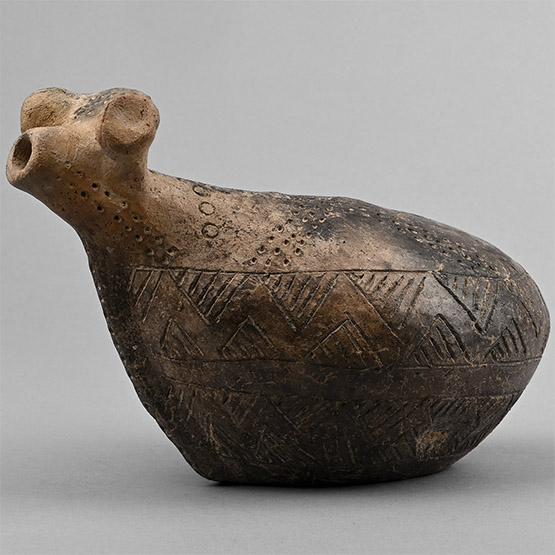
Anatolian Terracotta Ram Rhyton
19th-18th century B.C.Estimate: £3,000 - 4,000 (‡+bp*)
Opening Bid: £1,500
Ovoid in plan with ram-head finial and spout, filling-hole to the centre back and stub tail forming a handle; hatched panels to the sidewall with reserved running zigzag, radiating bands of impressed point ornament, head with forward-facing curled horns. 578 grams, 20.5 cm
with Artemis gallery, Münich. Acquired by the present owner from the above in 1992. Accompanied by a thermoluminescence analysis report no.N126a13 from Oxford Authentication. This lot has been checked against the Interpol Database of stolen works of art and is accompanied by a search certificate number no.12260-222201. -
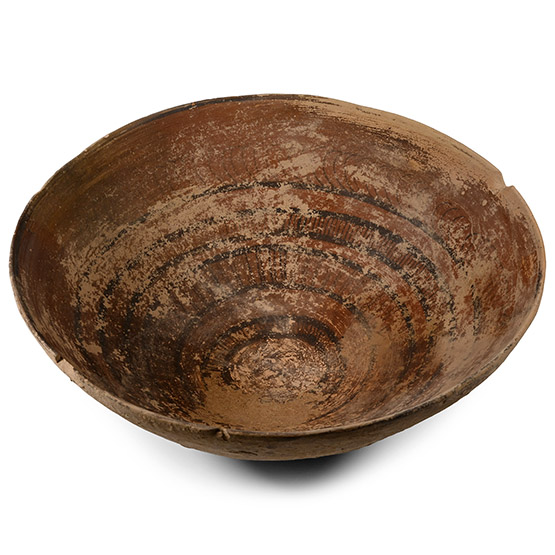
Western Asiatic Bichrome Terracotta Dish
1st millennium B.C.Sold for (Inc. bp): £46
Hemispherical in profile with circumferential painted bands to the inner face. 1.13 kg, 28.5 cm wide
Ex West London, UK, collection, 1990s. -
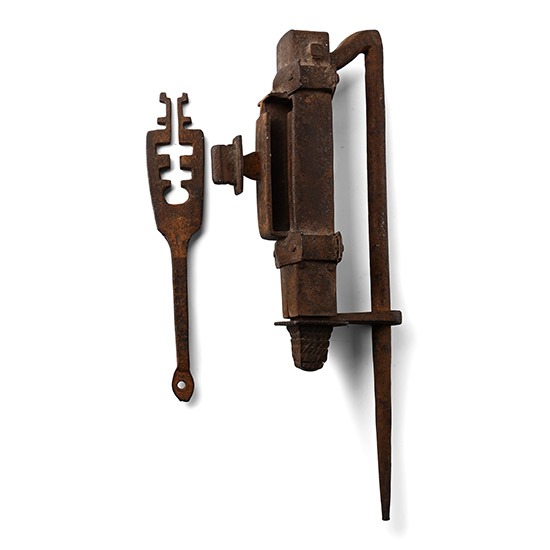
Large Ceremonial Iron Lock and Key
Late 19th-early 20th century A.D.Estimate: £150 - 200 (+bp*)
Opening Bid: £75
Substantial lock with spiked locking bar and mechanism; separate flat-section key with voided shank. 1.42 kg, 21.7-33.5 cm
Private collection, UK.
