
Loading, please wait...
_900x900.jpg "Uzbek Double-Sided Pringi Tunic")
_200x200.jpg "Uzbek Double-Sided Pringi Tunic")
.jpg "Uzbek Double-Sided Pringi Tunic")
LOT 1403
Uzbek Double-Sided Pringi Tunic
20TH CENTURY A.D.
46 1/2 in. (1.8 kg, 1.18 m long).
Reversible type in olive green with bands of floral and geometric embroidered designs, and plain brown cloth. [No Reserve]
ProvenancePrivate collection, UK.
LiteratureCf. Mohamed, N., ‘The Traditional Style of women’s clothing in Uzbekistan during the 13th – 14th AH/19th-20th centuries’ in Journal of the general union of Arab Archaeologists, January, 2022, no.7 (1), pp.204-221, fig.2, for the style of dress.
CONDITIONTimeLine Auctions follows a vetting process to ensure the authenticity and legality of all items, reinforcing our commitment to integrity and responsible trading. Each antiquity, antique, and coin lot undergoes thorough examination by a vetting committee of at least ten external specialists, professional trade association members, scientists, and archaeologists: Our Vetting Process
AUCTIONS:
TimeLine is a leading auction house specialising in antiquities, ancient art, collectables, natural history, coins, medals, and books. Our auctions offer museums, collectors, historians, and enthusiasts the opportunity to acquire unique and historically significant pieces.
-
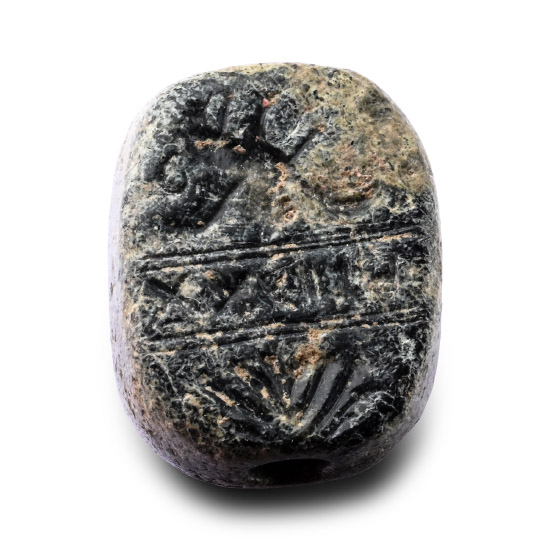
Western Asiatic Inscribed Seal Matrix with Aramaic Inscription
1st millennium B.C.Estimate: £300 - 400 (+bp*)
Opening Bid: £150
Scaraboid in black glass with gryphon to the underside beneath transverse band with 'ΡΙIΛΚΧ' inscription. 3.53 grams, 17 mm
From an important collection formed before 1988, London and Geneva. Accompanied by a previously illustrated catalogue card with provenance. -
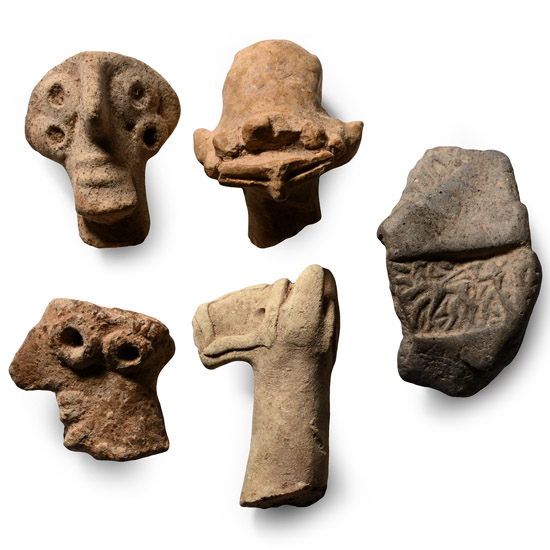
Western Asiatic Terracotta Idol Head and Other Fragment Collection
1st millennium B.C.Sold for (Inc. bp): £169
Comprising: a horse head, three idol heads and a fragment with an impressed motif. 70.1 grams total, 30-47 mm
From the private collection of a European gentleman (1942-2024), formed since the 1970s. -
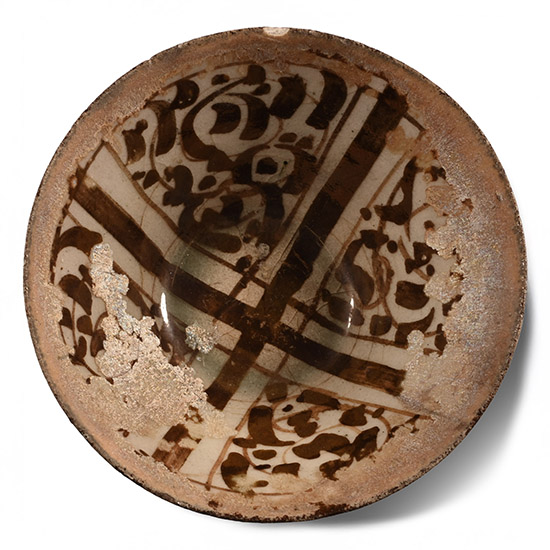
Syrian Lustre Pottery Bowl
13th century A.D.Sold for (Inc. bp): £546
Conical in profile with ring foot; glazed inner face with reserved cross and panels of calligraphic text; text to underside inside foot; old collectors' labels to sidewall. 142 grams, 13.8 cm
with Christie's, London, Islamic Manuscripts, Miniatures, and Works of Art, 10 October 1989, no.485. Private collection, London.
