
Loading, please wait...
LOT 1422
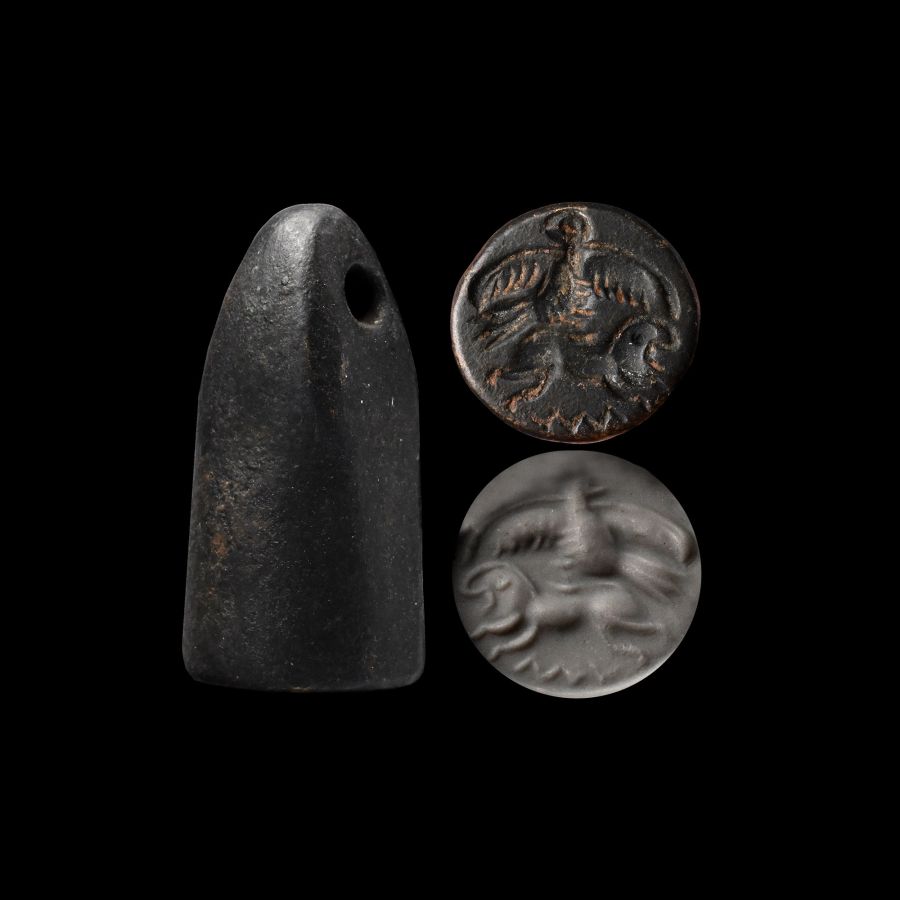
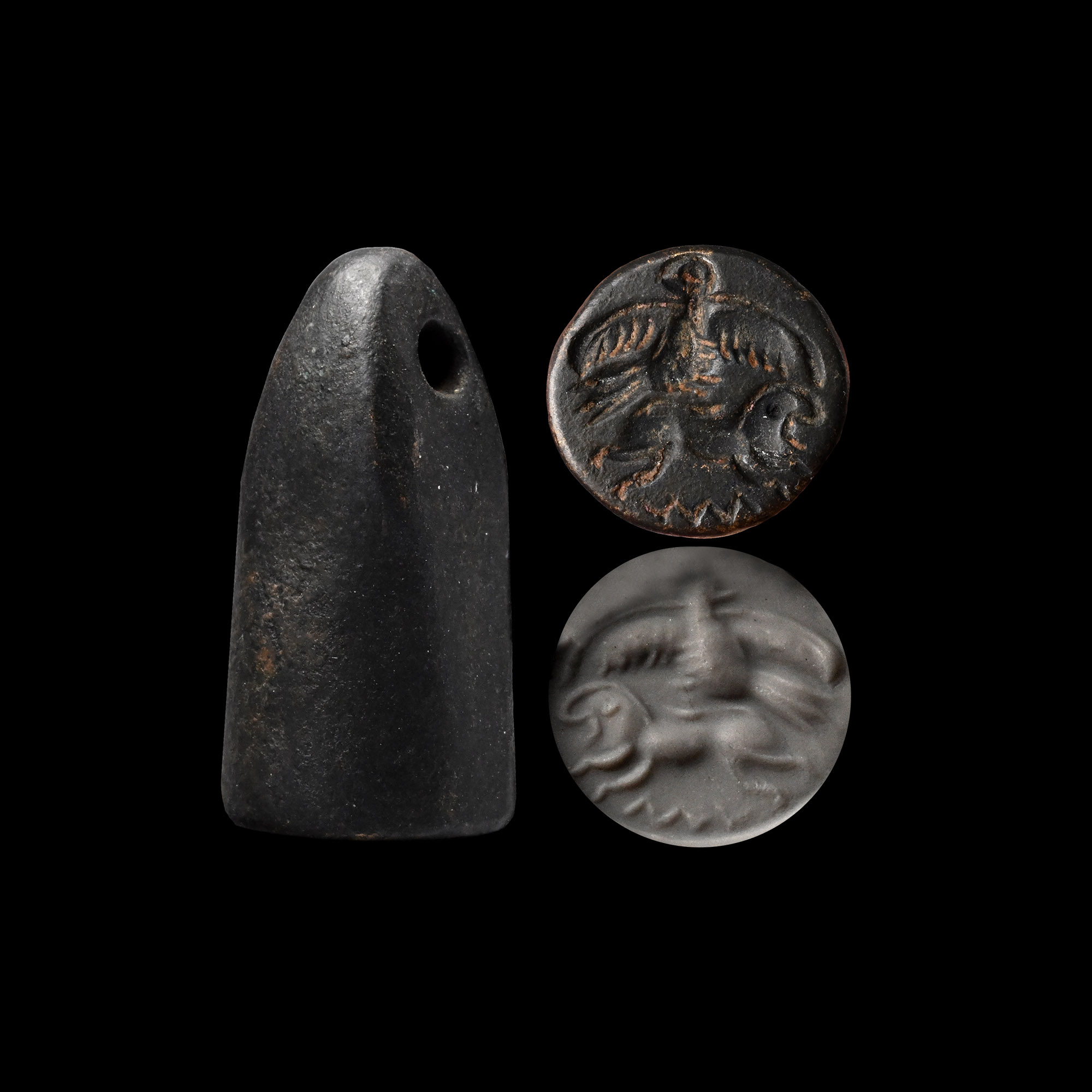
Urartu Hematite Stamp Seal with Eagle and Lion
8TH-5TH CENTURY B.C.
7/8 in. (15.4 grams, 23 mm).
Columnar in form with hole for suspension, incuse running beast with bird in flight above; supplied with a museum-quality impression.
ProvenanceAcquired in 1993.
Private collection, thence by descent.
Private collection, since the late 1990s.
TimeLine Auctions follows a vetting process to ensure the authenticity and legality of all items, reinforcing our commitment to integrity and responsible trading. Each antiquity, antique, and coin lot undergoes thorough examination by a vetting committee of at least ten external specialists, professional trade association members, scientists, and archaeologists: Our Vetting Process
AUCTIONS:
TimeLine is a leading auction house specialising in antiquities, ancient art, collectables, natural history, coins, medals, and books. Our auctions offer museums, collectors, historians, and enthusiasts the opportunity to acquire unique and historically significant pieces.
-
.jpg)
Old Babylonian Terracotta Head of a Demon
1900-1800 B.C.Estimate: £1,200 - 1,700 (‡+bp*)
Opening Bid: £600
Modelled in the round, depicting the (severed?) head of a Mesopotamian demon, with iconic facial features in relief; hollow with a vent to the neck; produced from a two-piece mould, with a median seam through the facial features. 191 grams, 87 mm
Private collection, Israel. with Holy Land House of Antiquities, Jerusalem, 1980s. Acquired by the current owner from the above, 2001. This lot has been checked against the Interpol Database of stolen works of art and is accompanied by a search certificate number no.12878-241678.
Within traditional Mesopotamian religion, Humbaba was a creature regarded as the guardian of the cedar forest and the brother of Pazuzu. He was represented as a giant who had been raised by the sun god, Shamash. However, this head could also refer to another deity or demon, like one of the heads found in the Kish excavations. -
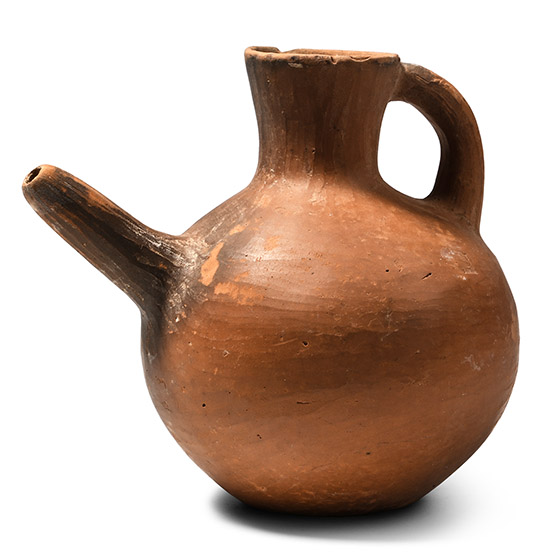
Western Asiatic Pottery Pouring Vessel
1st millennium B.C.Estimate: £100 - 140 (+bp*)
Opening Bid: £50
Globular in profile with slender angled spout, conical mouth and strap handle. 188 grams, 10 cm
From the collection of a gentleman, 1988-2000s. -
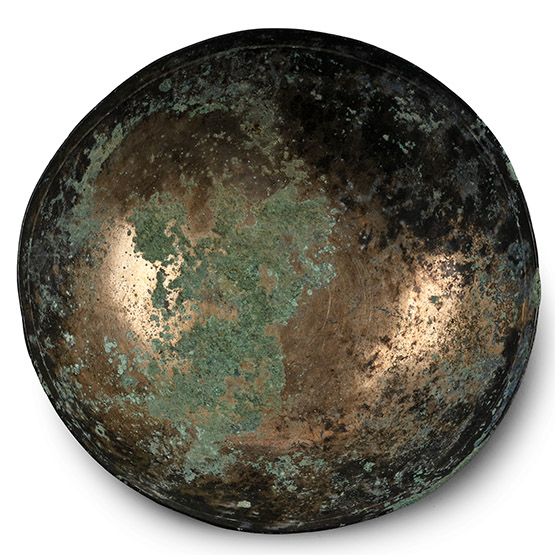
Sasanian Bronze Bowl
3rd-7th century A.D.Sold for (Inc. bp): £52
Hemispherical in profile with an incised ring to the inner face beneath the rim. 130 grams, 15.5 cm
From the collection of North West London, UK, gentleman, 1990-2000s.
