
Loading, please wait...
LOT 1120
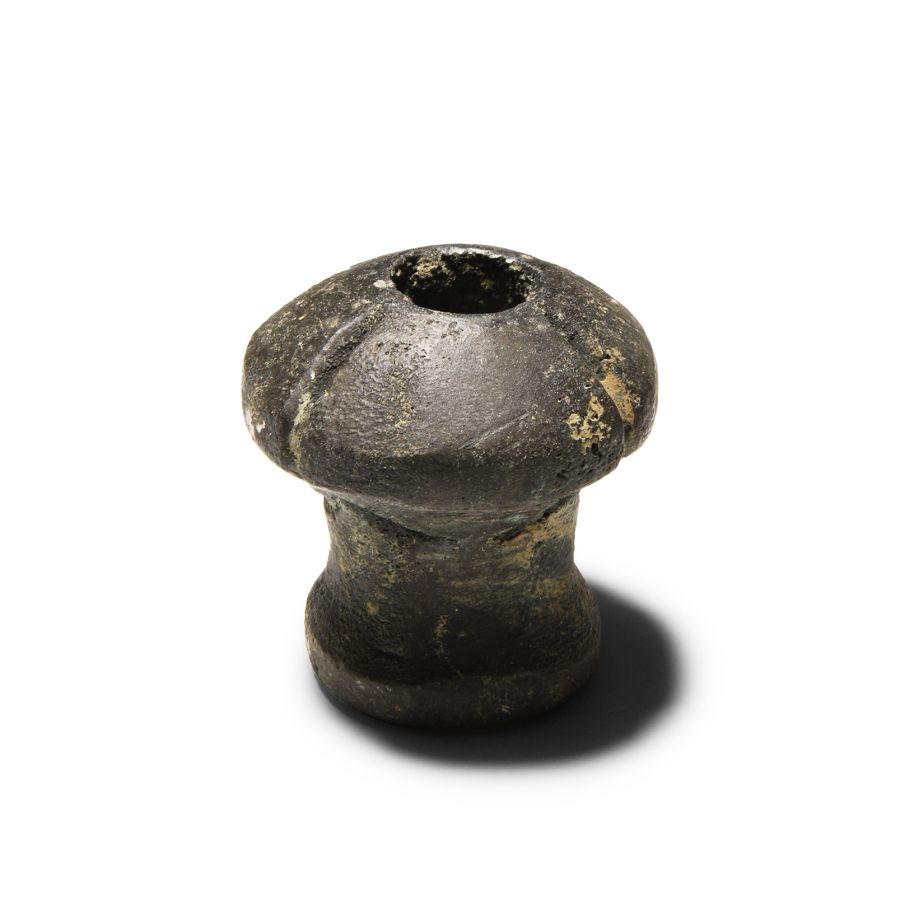
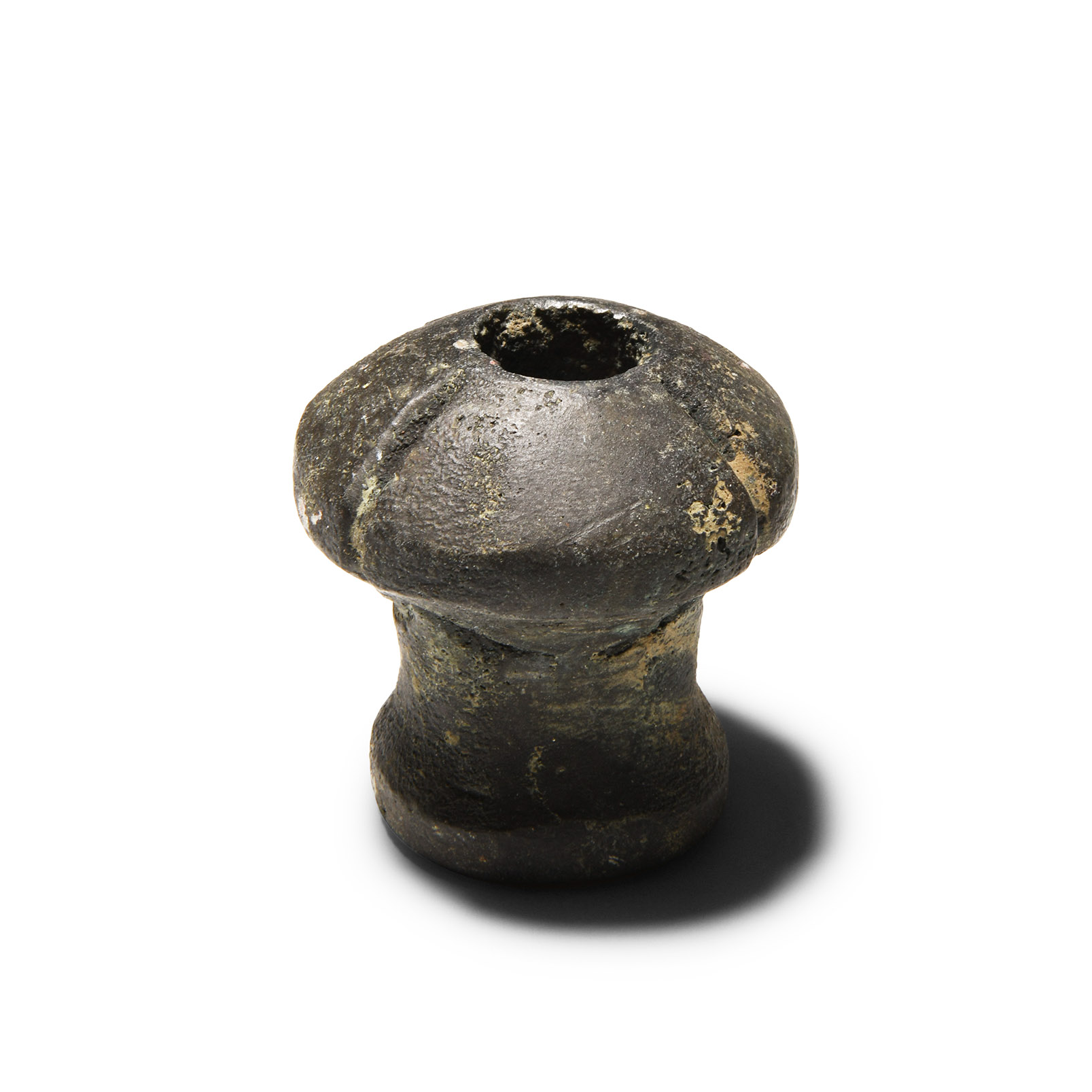
Urartu Bronze Mace or Sceptre Head
9TH-8TH CENTURY B.C.
2 3/8 in. (490 grams, 60 mm).
With cylindrical head and narrow flanged base, the head divided in four petals. [No Reserve]
ProvenanceAcquired on the UK art market.
Property of a Ruislip, UK, gentleman, by inheritance.
See Gorelik, M., Weapons of Ancient East, IV millennium BC-IV century BC, Saint Petersburg (2003), pl.XXXI, no.94, for a similar mace.
FootnotesAssyrian and Urartian officers are identified by their weapons in the reliefs. It is not so easy to definitely identify cavalry officers on the palace reliefs of the Assyrian kings, but their identification is based mainly on the context they appear in, and on some insignia (mace, sceptre) they carry with them. Hence, the mace was not only a practical weapon, but also a command insignia.
CONDITIONTimeLine Auctions follows a vetting process to ensure the authenticity and legality of all items, reinforcing our commitment to integrity and responsible trading. Each antiquity, antique, and coin lot undergoes thorough examination by a vetting committee of at least ten external specialists, professional trade association members, scientists, and archaeologists: Our Vetting Process
AUCTIONS:
TimeLine is a leading auction house specialising in antiquities, ancient art, collectables, natural history, coins, medals, and books. Our auctions offer museums, collectors, historians, and enthusiasts the opportunity to acquire unique and historically significant pieces.
-
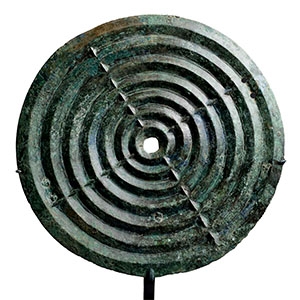
Villanovan Bronze Breast Plate
Circa 7th century B.C.Sold for (Inc. bp): £2,990
Featuring a central circular void and a series of concentric triangular-section ridges and incorporating an X or cross motif; accompanied by a custom-made display stand. 1.36 kg total, 32.6 cm high including stand
with H. Cahn, Basel. Subsequently Tajan auction, 8 February 2008, lot 251. -
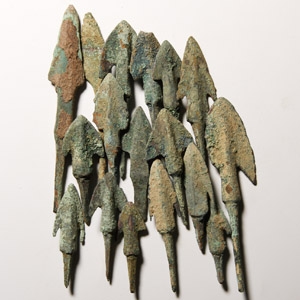
Luristan Bronze Arrowhead Group
12th-10th century B.C.Sold for (Inc. bp): £117
Comprising seventeen tanged arrowheads, most of them having large elongated triangular blades and raised midrib; one with long tang. 105 grams total, 34 - 82 mm
Acquired 1980-2015. Ex Abelita family collection.
Most of these arrowhead seem to belong to the type V, subcategory types A and C according to the classification of Khorasani and Negahban. In the four categories of triangular bronze arrowheads from Luristan, Marlik and Northern Iran individuated by Negahban, subtypes A and C are small triangular arrowheads with barbed shoulders. The arrowhead with squared shoulders belongs to type III of the same classification. -
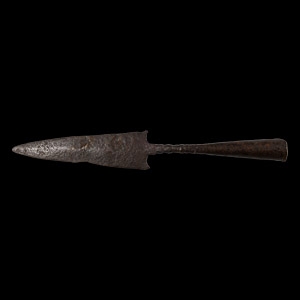
Ummayad Bronze Spearhead
7th-8th century A.D.Estimate: £250 - 350 (+bp*)
Opening Bid: £133
Formed with a broadly triangular blade, narrow neck and tapering round-section socket. 245 grams, 34 cm
Ex old English collection. The Kusmirek Collection, UK.
The basic Arabic term for a spear or lance, whether used by cavalry or infantry, was rumh. In the 7th century it normally would have been ten or twelve cubits long, i.e. four and a half metres.
