
Loading, please wait...
LOT 0860
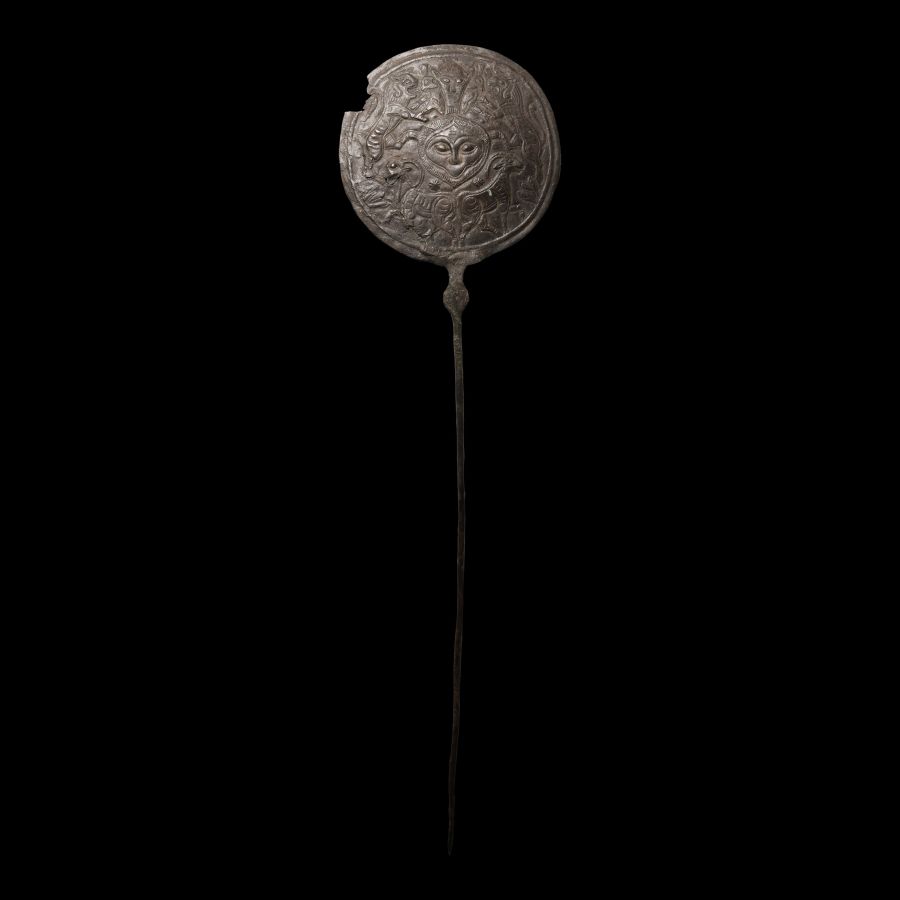
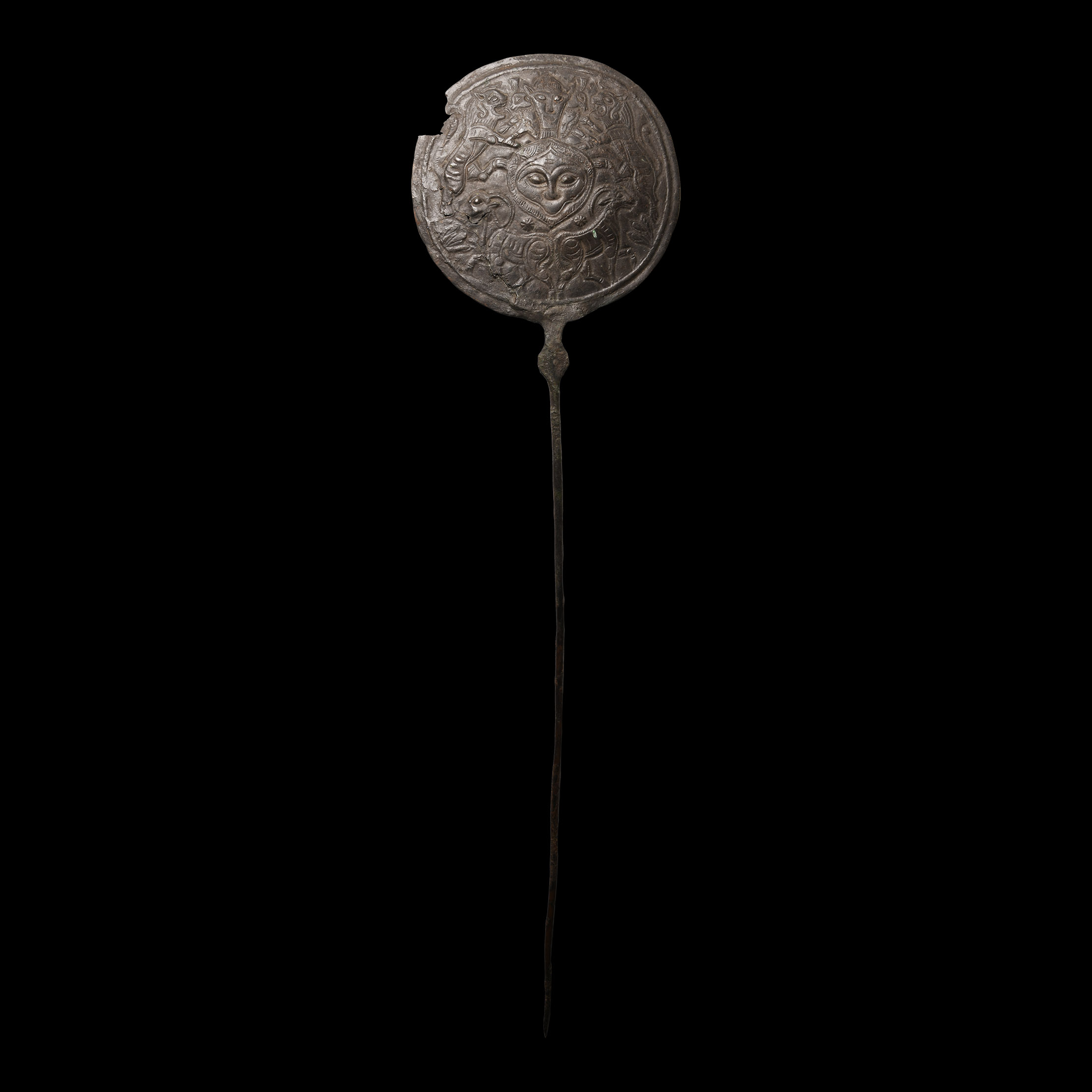
Urartian Pin with Repousse Decorated Disc
7TH-6TH CENTURY B.C.
17 in. (88 grams, 43 cm long).
A bronze dress pin comprising a round-section tapering shank with hipped bulb below the head; discoid head with raised border, repoussé design featuring a central facing mask with lentoid eyes and piriform face, hatched hair and beard; below, two rosettes above the backs of addorsed advancing goats with decorated and segmented bodies; plant motifs before the goats' chests and leaping lions above with gaping mouths flanking the mask of a master of animals with ibexes emerging from the cheeks; mounted on a stand; chipped.
ProvenanceAcquired 1970s-1990s.
Ex Rabi Gallery, Mayfair, London, U.K.
From a specialist collection of pottery.
Cf. Muscarella, O.W., Bronze and Iron. Ancient Near Eastern Artifacts in the Metropolitan Museum of Art, New York, 1988, items 310, 312, 313.
CONDITIONTimeLine Auctions follows a vetting process to ensure the authenticity and legality of all items, reinforcing our commitment to integrity and responsible trading. Each antiquity, antique, and coin lot undergoes thorough examination by a vetting committee of at least ten external specialists, professional trade association members, scientists, and archaeologists: Our Vetting Process
AUCTIONS:
TimeLine is a leading auction house specialising in antiquities, ancient art, collectables, natural history, coins, medals, and books. Our auctions offer museums, collectors, historians, and enthusiasts the opportunity to acquire unique and historically significant pieces.
LOT 0860
Urartian Pin with Repousse Decorated Disc
Estimate £700 - 900€810 - 1,040 (for guidance only)$950 - 1,220 (for guidance only)
-
.jpg)
Miniature Tel Brak Marble Eye Idol
Circa 3100-3000 B.C.Sold for (Inc. bp): £264
A miniature marble 'eye' idol composed of a squat, carinated body and two piercings to the head. 2.92 grams, 18 mm
Fine condition, repaired.
Acquired 1960-2010. Old French collection of Dr Delattre, who collected principally prehistoric objects but also ancient bronzes, natural history and curiosity around the world. Property of a French collector. -
.jpg)
Amlash Handled Jar
1st millennium B.C.Sold for (Inc. bp): £279
An unusual ceramic vessel with carinated body, cylindrical neck, everted rim, forked handle with finial at the apex, base composed of six applied pellets and cones, the handle and body decorated with pellets and incised chevrons. 670 grams, 27 cm
Fine condition, handle restored.
Acquired 1970s-2010. Ex important Japanese collection. -
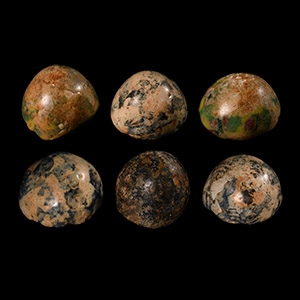
Western Asiatic Glass Gaming Piece Collection
9th-10th century A.D.Estimate: £500 - 700 (+bp*)
Opening Bid: £250
A group of six plano-convex glass gaming pieces. 40 grams total, 17-20 mm
Acquired in the late 1980s-early 1990s. Important North West London collection.
